Get Full Government Meeting Transcripts, Videos, & Alerts Forever!
Get email alerts on the Animal Services topic
No spam. Unsubscribe anytime.
Farmers Branch animal services: shelter near capacity, $1.5 million donation to fund expansion study
Summary
New Animal Services Manager Tyler Winkler outlined shelter layout and seasonal intake trends, reporting current flexibility to house roughly 70–107 animals and a $1.5 million donation earmarked for expansion; staff will proceed with an architect needs assessment and recommended flexible housing retention.
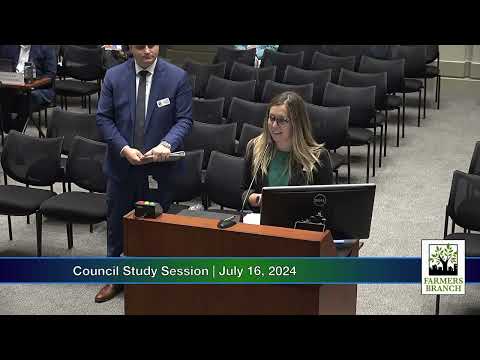
Tyler Winkler, the city’s newly introduced animal services manager, told the Farmers Branch City Council on Tuesday that the shelter has 25 dog kennels, 25 cat kennels and identified a baseline capacity of about 70 animals but is currently flexing spaces and using foster homes to manage surges.
Winkler said the shelter currently had roughly 70 animals in building at the time of his presentation and that staff were using flex rooms and foster placements to service a total care population that he cited as 107 animals with 39 in foster homes.
"We have identified our capacity at 70 animals," Tyler Winkler said, describing the mix of hold kennels, adoption kennels, isolation and quarantine facilities. He also described seasonal intake spikes — "kitten season" and summer litters — and said staff have been able to place animals into foster care to ease pressure.
Assistant to the city manager Jennifer Ramey told the council the city has a $1,500,000 donation designated to expand humane housing capacity at the shelter and that staff are working with an architect to complete a needs assessment and design.
"We would be utilizing that donation... to be able to put that towards an expansion in humane animal capacity," Ramey said. Staff emphasized the importance of preserving flexible rooms that can range from housing a single medical case to an 11‑kitten litter.
Council members asked about intake breakdowns and enforcement; staff provided year‑to‑date intake figures and return‑to‑owner numbers (staff reported 698 intakes to date, with 105 animals returned to owners) and described steps to reduce outside intake, including a conversational intake approach and expanded microchipping and field return practices.
Ending: Staff will proceed with the needs assessment and return with design and budget recommendations; the council thanked staff for the summary and welcomed Tyler Winkler.