Get Full Government Meeting Transcripts, Videos, & Alerts Forever!
Get email alerts on the Main Street Programs And Local Planning topic
No spam. Unsubscribe anytime.
Oakland County Main Street official urges Clawson DDA to pursue strategic plan; board forms advisory committees
Summary
Annika Norris of Oakland County Main Street briefed the Clawson DDA on Main Street services, grants and accreditation; the board voted to form advisory committees (events/organization/promotion) and authorized staff to solicit multiple proposals for a strategic-planning workshop.
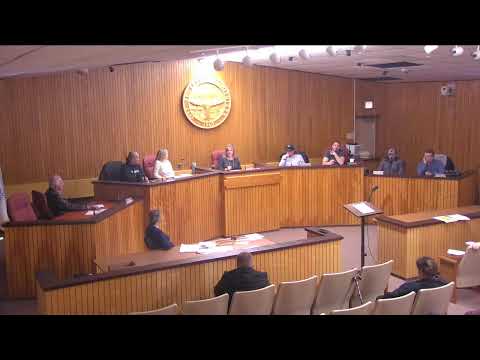
Annika Norris, a representative of Oakland County Main Street, told the Clawson Downtown Development Authority on Jan. 15 that the county program offers technical assistance, grant partnerships and accreditation resources to help downtowns strengthen economic vitality and historic character.
"Main Street is an economic development tool — it provides organization and all the tools you need to be an economic development group for your community," Norris said, summarizing the program’s four core points: economic vitality, design, organization and promotion. She told the board that select-level communities receive an annual $10,000 technical-assistance allocation and access to a range of grant opportunities, including local bank partnerships that offer $2,500 awards and other facade and placemaking grants up to $5,000.
The presentation outlined how Main Street pairs with tax-increment financing under PA 57 to focus investment within downtown TIF districts, while county staff — architects, urban planners and marketing specialists — provide on-the-ground help. Norris also described Redevelopment Ready Community (RRC) certification administered by the Michigan Economic Development Corporation as a way to make permitting and zoning processes more developer-friendly.
Board members pressed for practical next steps. Committee member (speaker 2) moved to establish advisory committees to focus on design/economic vitality, organization and promotion so volunteers and staff can pursue projects outside the full-board meeting schedule. The motion was seconded and approved by voice vote.
"We can't get it all done here," Norris told members, urging the board to use committees and the county’s technical assistance to execute projects and strengthen volunteer engagement.
The board also authorized staff to solicit proposals for a strategic-planning workshop. Committee member (speaker 2) moved that Kristen reach out to a facilitator recommended in the county training; the motion was seconded, amended to require at least two competitive proposals, and approved.
City staff and board members discussed immediate operational items that would benefit from the new committees and the strategic plan: vendor signup and payment processes for the spring opener, reserving a Cinema in the Streets supplier, volunteer recruitment and a proposed joint biweekly events newsletter with the Chamber of Commerce. Staff noted a recent submission to renew the DDA’s Main Street membership and agreed to bring proposals and budget details back at the next meeting.
The board approved the consent agenda (including December 2024 minutes) and accepted the December financial report by voice vote. City staff also proposed inviting engineers and planners to the Feb. 19 meeting to discuss road and crosswalk changes after two recent pedestrian incidents were raised by members.
The DDA’s immediate tasks are to form the advisory committees, gather competitive proposals for a strategic-planning workshop, and return with cost and scheduling details at the next meeting.