Get Full Government Meeting Transcripts, Videos, & Alerts Forever!
Get email alerts on the Parkland Dedication topic
No spam. Unsubscribe anytime.
Consultant says Pflugerville's legal cap for parkland dedication calculates to about $9,163 per home; commission to review
Summary
At a Planning and Zoning Commission meeting, Dr. John Crompton presented a step-by-step calculation using Pflugerville data that produces a modeled maximum parkland dedication fee of roughly $9,163 per dwelling unit under Dolan rough-proportionality rules; staff will update figures and circulate comparisons for further discussion.
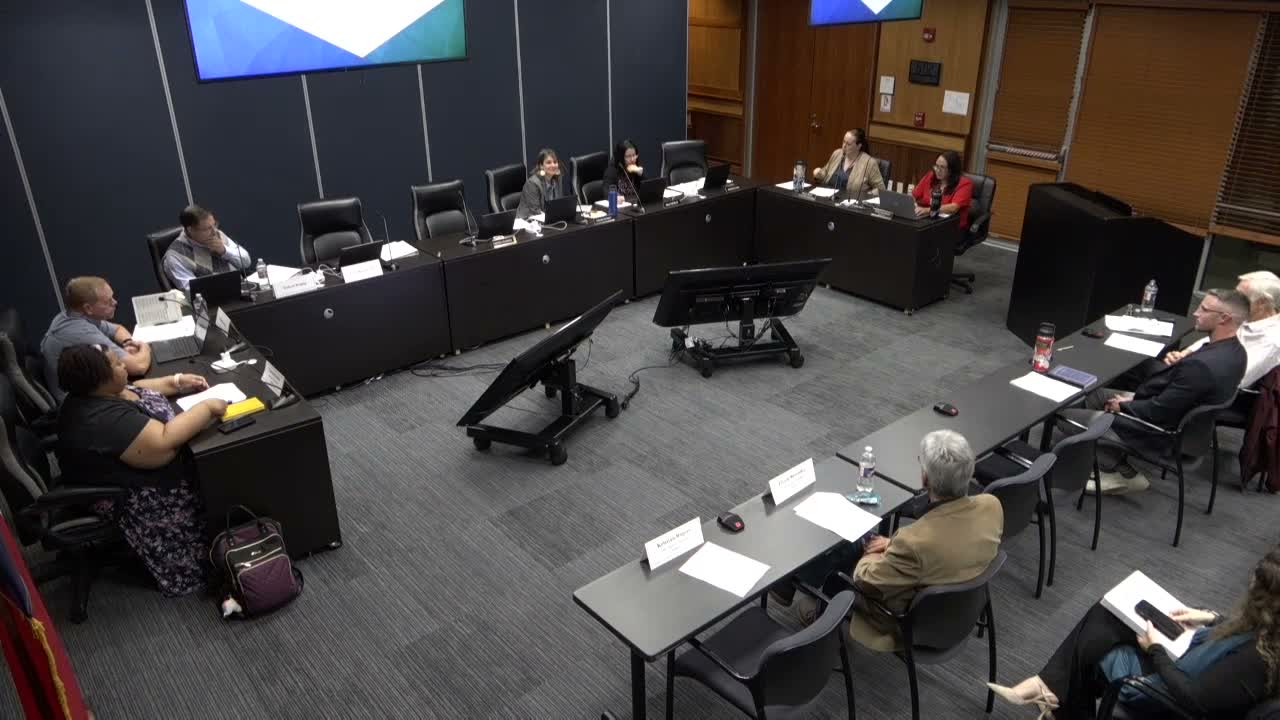
At a Planning and Zoning Commission meeting in Pflugerville, Dr. John Crompton, a professor at Texas A&M University, told commissioners that applying constitutional proportionality standards to the city's data yields a modeled maximum parkland-dedication fee of about $9,163 per dwelling unit. The presentation, conducted during the Unified Development Code (UDC) amendment discussion, was described by Crompton as a legal cap rather than a policy recommendation.
Why it matters: Parkland-dedication requirements determine whether new developments must give land or pay fees for parks; those revenues affect whether cities can maintain service levels without raising taxes. Crompton framed the rule as one of three ways to pay for growth and said failing to capture those costs at the front end often forces cities to make up the difference through bonds and higher taxes later.
Crompton walked commissioners through his method and the legal constraints that shape it. He reviewed key case-law principles—referring to the Nolan nexus requirement and the Dolan rough-proportionality standard—and said Texas precedent (he cited College Station v. Turtle Rock) and state statute require individualized findings tying exactions to the impacts of a proposed development. "That is your cap," Crompton said of the computed $9,163 figure, adding that "that is not a recommendation for what you should apply. That's a political decision." The consultant emphasized that the city must be able to justify the required amounts using local service-level data.
On the numbers: Crompton said he used Pflugerville figures supplied by staff: a population of about 65,191, roughly 23,985 housing units, and parks-acreage data from the parks department (he referred to just under 1,400 acres of parkland and two citywide parks that meet citywide criteria). He described three components used in his calculation: (1) citywide parkland land value and per-unit allocation, (2) maintained neighborhood/community park land and development costs, and (3) nondeveloped/passive parkland values. Summing land and development components, he reported a modeled cap near $9,163 per dwelling unit. Crompton stressed that the number is a maximum justified by his interpretation of proportionality rules, not an automatic fee the city must adopt.
Policy design recommendations and limitations: Crompton recommended simplifying zone structures (he suggested using the three existing zones rather than many small zones), including detailed calculations in an appendix to the ordinance, setting a 10-acre minimum for any park the city would accept in lieu of a fee, and staging fee increases over several years to allow developers time to adapt. He also noted that dedication fees are capital-only (upfront) and do not cover ongoing operations and maintenance for parks; the ordinance cannot obligate operational funding for city or HOA maintenance.
Questions from commissioners and public commenters focused on equity and implementation. A resident raised concerns that many local parks are HOA-owned and vary widely in quality; Crompton said ordinances commonly allow discounts when HOAs meet standards and noted the draft includes a 25% discount provision. Commissioners asked staff to circulate the current fee formula and the recent Kelly Lane Park bid Crompton used as an example so they could verify assumptions; staff agreed to update population, housing and acreage figures and send comparative benchmarks.
Next steps: Staff said the draft numbers will be updated and shared with the commission for further review; no formal motion or vote occurred on the parkland-dedication ordinance during this meeting. The chair adjourned the discussion at 6:58 p.m., and the UDC parkland-dedication item will return for further consideration once staff circulates updated data and supporting documents.
Representative quotes from the meeting include: "That is your cap," Dr. John Crompton said of the calculated fee. Jeff Bache, assistant parks and recreation director, told the commission the draft figures are Crompton's recommendations and "are not set in stone." A resident noted local variation in park ownership and upkeep, saying the community has "10 or 12 total parks, 4 of which I think... are owned and maintained by the city," and asked how the proposal would affect HOA-maintained spaces.
Records and legal references: Crompton cited the Nolan nexus principle and the Dolan rough-proportionality requirement as the legal basis for needing a local, individualized calculation to justify a fee cap; he also referenced the 1984 College Station case as the Texas turning point that permitted parkland-dedication exactions under state courts. Staff will provide ordinance text, the numeric appendix Crompton recommends, and the Kelly Lane Park bid used in the calculation so commissioners can verify assumptions.