Get Full Government Meeting Transcripts, Videos, & Alerts Forever!
Get email alerts on the Udc Rewrite topic
No spam. Unsubscribe anytime.
Pflugerville kicks off Unified Development Code rewrite, consultants press council on ADUs, density and parking reform
Summary
Consultants from Friese Nichols presented a modular UDC rewrite to Pflugerville council on Nov. 25, asking for direction on accessory dwelling units, housing diversity, block lengths, a point-based system and parking reforms and announcing upcoming public engagement.
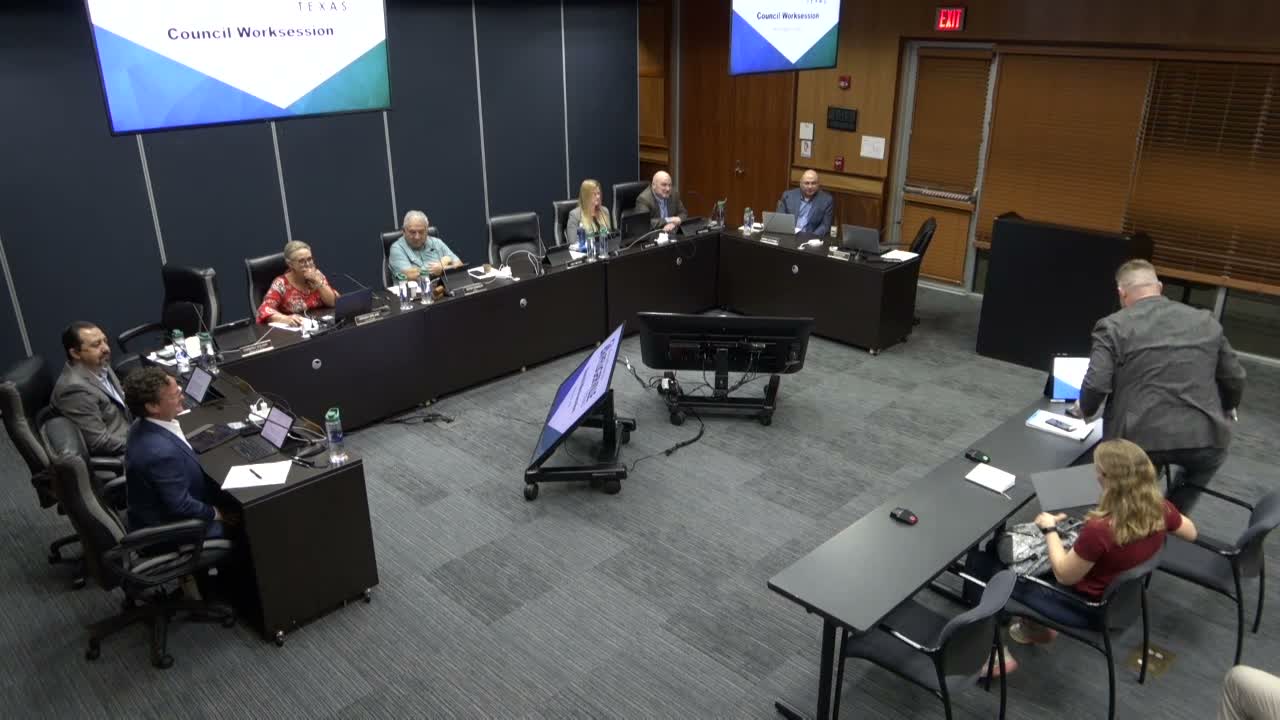
Consultants from Friese Nichols asked Pflugerville councilors at a Nov. 25 work session for policy direction as they begin drafting a rewrite of the city’s Unified Development Code.
Chance Parks of Friese Nichols opened the presentation by outlining the rewrite approach: modular delivery of code chapters, an emphasis on clarity and usability, and a focus on housing diversity, mixed-use development and pedestrian-friendly design. “We like to break it into pieces so you can actually digest it,” Parks said.
The team asked the council whether to broadly enable accessory dwelling units (ADUs). Erica Craycraft (Friese Nichols) told councilors that city regulations cannot override private homeowner-association covenants: if an HOA prohibits ADUs, a city ordinance alone will not permit the ADU within that HOA area. “If you live in an HOA that restricts your use of ADUs, which is almost everywhere in Pflugerville, the city is hands off,” the consultant said, urging that the council consider permit pathways such as preapproved plans or expedited building permits to help homeowners who can build ADUs.
Councilors and consultants also discussed build-to-rent housing, condoized single-family products, private streets and the trade-offs that affect financing and long-term maintenance. Consultants advised crafting code language that preserves adaptability — for example, making sure build-to-rent units can be converted to ownership in the future when feasible.
On neighborhood design, the consultants recommended shorter block lengths and more frequent pedestrian connections in denser areas to support walkability; they described downtown as an example of a successful walkable node to replicate. The team also proposed a point-based system that would let developers choose a mix of measures to meet a performance threshold in exchange for incentives or administrative approval pathways, and they noted peer examples such as Edmond, Oklahoma and Bee Cave.
Parking reform was raised as a timely topic: consultants described a range of approaches from dropping minimum parking requirements for some uses to setting maximums, and urged councilors to weigh market impacts and neighborhood goals when choosing a direction.
Friese Nichols said the project includes community outreach, a project website and virtual engagement opportunities that will invite resident and stakeholder feedback. The consultants recommended continued conversations with the school district and business community to understand future workforce and housing needs.
No formal council action was taken; the consultants will move from this policy discussion into drafting code modules and return with public engagement opportunities and draft language for council consideration.