
City Council authorizes negotiations with CCDP for Inner Harbor desalination despite wide public opposition
Get AI-powered insights, summaries, and transcripts
Sign Up Free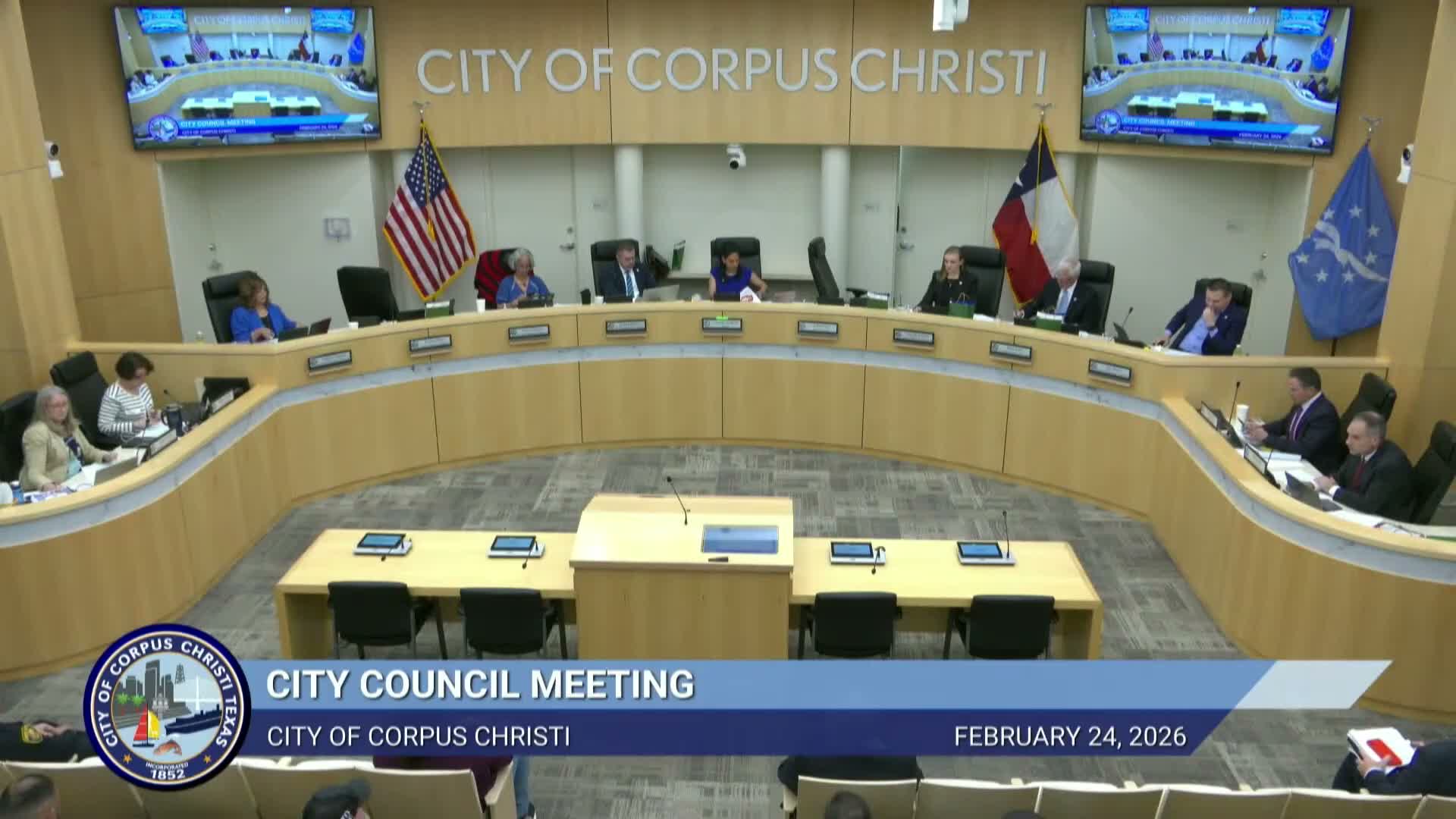
Summary
After hours of public comment — largely from Hillcrest residents and environmental scientists urging delay until far‑field modeling is complete — the Corpus Christi City Council voted to direct staff to negotiate a design‑build agreement with Corpus Christi Desal Partners (Acciona/MasTec) to develop a demonstration plant, 60% design and a guaranteed maximum price; councilmembers said the vote does not commit city funds today.
The Corpus Christi City Council on Feb. 25 voted to authorize staff to negotiate with Corpus Christi Desal Partners (a joint proposal led by Acciona Agua and MasTec) to advance a proposed Inner Harbor seawater desalination facility through a demonstration plant, 60% design and a guaranteed‑maximum‑price (GMP) process.
The action, approved 5–3–1, directs staff to draft a contract and return to council in the April–May time frame for formal consideration. City Manager Peter Zanoni and Corpus Christi Water Chief Operating Officer Nick Winkelman told the council that the vote carries no immediate fiscal commitment; it authorizes negotiations only.
The meeting’s public comment period ran more than four hours, with roughly 67 people signed up. Speakers opposing the Inner Harbor site focused on environmental risk to the bay, the effect of concentrated brine discharge on fisheries and wetlands, and equity concerns for Hillcrest residents. Arman Alex, a lifelong Corpus Christi resident, told the council: “Do not contract a group of people to design a new noose and then call it a ribbon cutting,” urging a ‘no’ vote on any contract. Marine scientists and members of environmental groups called repeatedly for the council to wait for results from the far‑field modeling advisory committee before authorizing further work.
Supporters included local business groups and industrial water customers who argued the region needs drought‑resilient sources to avoid curtailment and major job losses. Ginny Cross of the Corpus Christi Chamber of Commerce and representatives from Gulf Coast Growth Ventures and H‑E‑B said industry, employers and retailers rely on stable water supplies.
Presenters for Corpus Christi Desal Partners laid out a revised, price‑focused plan the team said they developed in 12 weeks after the council authorized a no‑cost engagement in November. Efrain Rodriguez of Acciona and MasTec representatives described a modified plant layout and operational changes intended to lower capital cost and accelerate schedule; they proposed combining design and demonstration phases with a target full‑production date in 2029 if milestones and permitting progress on schedule.
The proposal shown to council lists a total project estimate of $978.8 million and an annual operating cost of about $32 million, producing a treated‑water unit cost the city estimated at roughly $8.05 per 1,000 gallons. Corpus Christi Water staff said adding the project as modeled would increase the utility’s raw water rate by about $2.30 per 1,000 gallons, which the utility estimates would raise the average residential bill roughly $13.80 per month (based on an average 6,000 gallons/month household); the city also noted the calculations excluded possible grant or low‑interest bond support that could lower customer impacts.
Councilmembers asked detailed technical and financial questions: how the team validated local unit costs, schedule risks (including permitting and the demonstration review by TCEQ), the approach to brine dispersion and monitoring, and how the city would manage long‑term operation. Project proponents said they used locally validated unit pricing and engineering quantities, proposed dissolved‑air flotation media pretreatment to reduce footprint and improve effluent quality, and described multiple “levers” — design and procurement adjustments — to preserve price certainty as design progresses.
Opponents noted the port’s prior modeling and studies and urged the council to await the far‑field model that the city’s advisory committee is now selecting; staff said modeler qualifications were due Feb. 23 and the committee will meet March 5. Several council members said they would prefer more far‑field modeling but voted to authorize negotiations so the city can advance the procurement timeline and preserve options to bring projects back for council approval. Mayor Paulette Guajardo emphasized the vote will not obligate funds today and that the proposal will return to council for a final decision once the city and the CCDP team complete negotiations and the independent cost validation.
The council also directed staff to pursue an independent owner’s representative and cost estimator during negotiations and to prepare a request for proposals for a long‑term operations agreement so the city can consider third‑party management proposals alongside the design‑build contract.
What happens next: staff will continue the far‑field model selection process, negotiate the design‑build and demonstration agreement, and bring a contract and independent cost validation back to council. The mayor and staff warned the council that timing for the far‑field model and permitting could affect whether the April target is feasible and pledged to keep the public informed as work progresses.
The council’s direction is procedural — advance negotiations, do not yet borrow or spend — but it sets the project on a path that sponsors and opponents said could determine the city’s long‑term water portfolio.