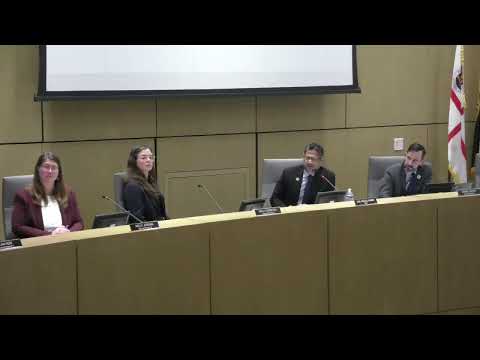
Council postpones decision on liquor-license recommendation after staff update and council debate
Loading...
Summary
After a lengthy discussion about city versus county enforcement authority and an updated compliance spreadsheet from staff, the council voted to postpone action on annual liquor-license renewal recommendations to March 3 for further follow-up with the Board of License Commissioners and updated enforcement status.
The City of College Park on Feb. 24 deferred action on its annual liquor-license renewal letter to the Prince George’s County Board of License Commissioners, asking staff and the city attorney to gather additional information and return at the next council meeting.
Director of Public Services presented an updated red-folder spreadsheet summarizing city-level compliance checks and outstanding notices of violation. He explained the city’s enforcement scope (nonresidential occupancy permits and the city liquor license) and noted that county agencies handle health, fire and other state-regulated matters. Several council members expressed concern that the packet’s original draft would have listed 16 establishments as noncompliant and asked whether the city should send a blanket letter supporting renewals, decline to send any letter, or identify particular businesses for protest.
Council members Oates and others urged caution about sending a letter that might imply city approval despite county-level matters. Council members Mitchell, Hernandez and Jordan noted tradition and ongoing coordination with the board, and several members stressed the value of not unduly harming small businesses while ensuring compliance. Staff said many previously flagged city violations have been addressed and that outstanding items are subject to reinspection; the director said most businesses are likely to reach compliance with a short timeframe.
After discussion the council voted to postpone the item to the March 3 meeting to allow staff and the city attorney to: confirm deadlines with the Board of License Commissioners, update the compliance spreadsheet, and provide guidance on whether the city should send an endorsement letter or identify specific establishments for protest. The council directed staff to continue code-enforcement follow-up and to report back on any county-level adjudication that would affect the city’s recommendation.