Get Full Government Meeting Transcripts, Videos, & Alerts Forever!
Get email alerts on the Parks And Recreation topic
No spam. Unsubscribe anytime.
Consultant: Pflugerville faces large baseball and softball field deficits; commission backs staff to advance feasibility study
Summary
Park Hill told the Pflugerville Parks & Recreation Commission the city is roughly 11% short of field capacity and faces deficits of about 13 baseball and 14 softball fields (≈95 acres short today, growing to ~177 acres by 2035); commissioners voted to advance the feasibility study for planning, zoning and future bond consideration.
Chad Davis, a landscape architect from Park Hill, told the commission the firm conducted face-to-face outreach with local leagues and compared local demand to National Recreation and Park Association benchmarks. "So, yes, we absolutely did" public engagement, Davis said, listing youth and adult groups that participated.
The study found that Pflugerville—urrently lacks most city-run baseball and softball fields: Park Hill counted roughly one city softball field against an NRPA-recommended 15 and two city baseball diamonds against a similar recommendation. Davis presented those shortfalls as acreage deficits—about 31 acres for softball today and roughly 41 acres for baseball—and said the total acreage shortfall across sports is about 95 acres in 2025, rising to about 177 acres by 2035. He also compared hours requested vs. allotted, saying roughly 11–11.5% of field-hour requests were being denied in 2025 despite scheduling changes that raised allocated hours.
Staff and commissioners discussed how to use the study: as a guiding document for prioritizing field types (baseball/softball flagged as the most severe), for identifying suitable parcels and for forming a funding strategy that could include phased bond proposals and other funding sources. Staff noted the $80 million construction-only estimate provided by Park Hill does not include land acquisition; with contingencies and inflation, consultants gave scenarios that ranged far higher depending on timeline and scope. One staff member explained the department currently subsidizes recreational leagues and is pursuing a cost-recovery analysis to guide fee policy. "Y'all are still subsidizing the recreational leagues around 50%," staff said during the discussion.
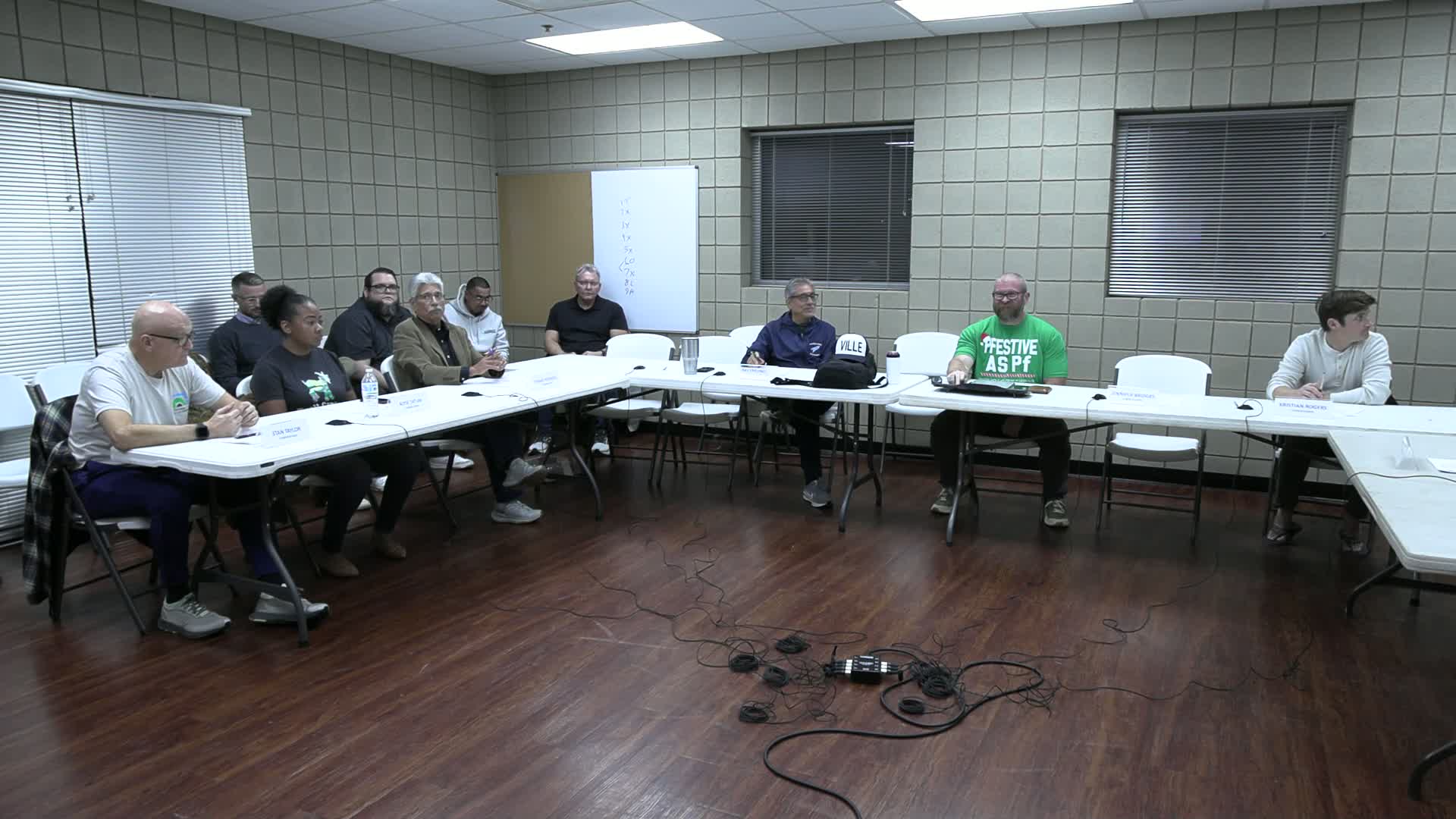
Commission action: a commissioner moved that the board adopt a staff recommendation to move the feasibility study forward (so it can be refined and sent to planning and zoning and ultimately city council and bond council). The motion was seconded and passed; the vote was recorded in the transcript only as "motion carries," with no roll-call vote printed.
The commission irected staff to incorporate commissioner comments and to provide the full Park Hill report and underlying meeting notes from stakeholder interviews as the study advances toward the next decision points (planning and zoning, bond council, and potential voter consideration).