Get Full Government Meeting Transcripts, Videos, & Alerts Forever!
Get email alerts on the Commission Restructure topic
No spam. Unsubscribe anytime.
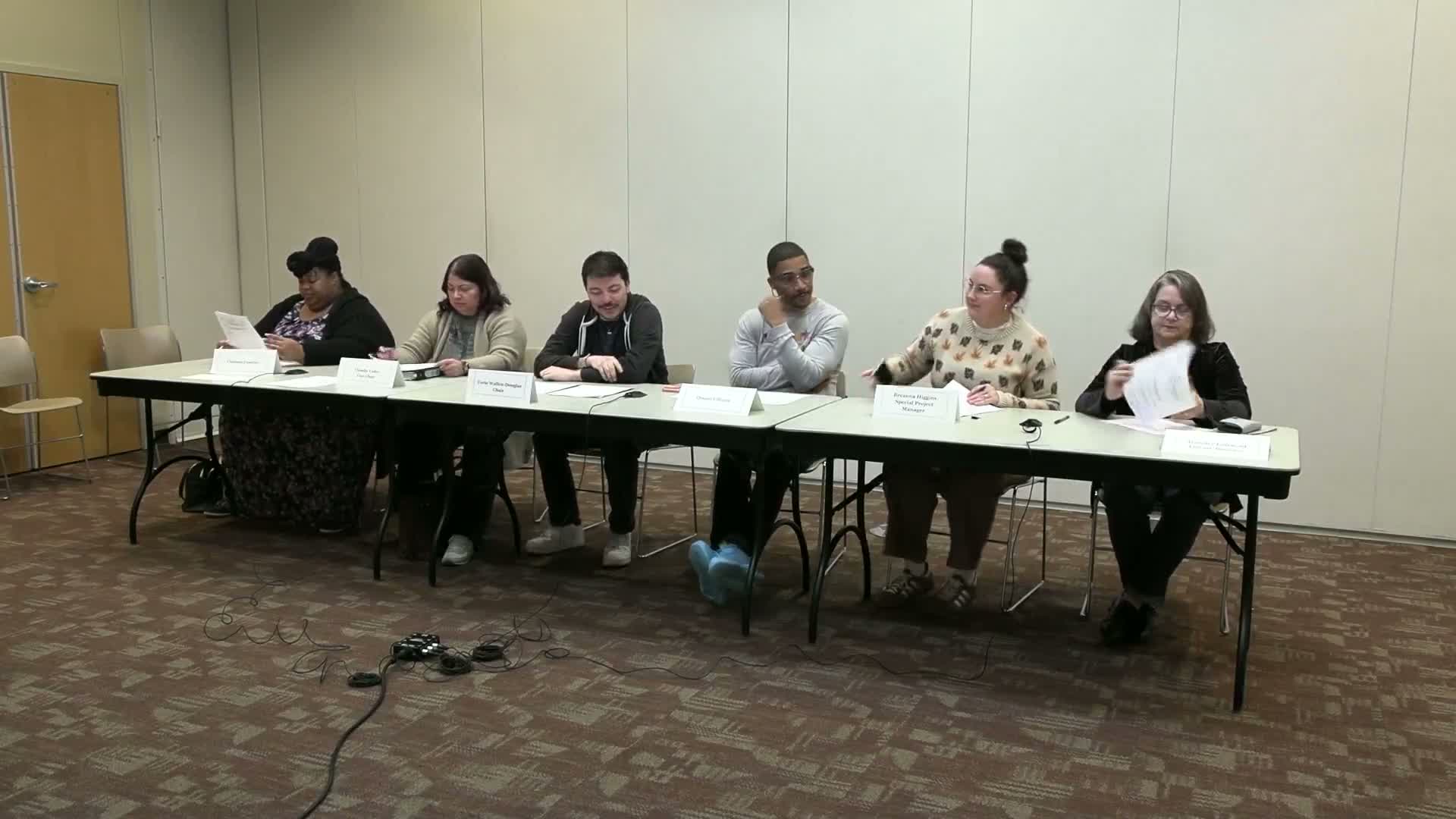
Equity Commission debates rebranding as a task force or advisory board; staff to draft ordinance edits
Summary
Staff proposed converting the commission into an initiative-focused equity task force (or similar advisory body); commissioners raised concerns about the term "task force," suggested alternative labels and asked staff to keep meeting frequency flexible. Staff will redline the ordinance for City Council review (two readings).
Staff presented a proposal to amend the ordinance that created the Equity Commission so the body would operate more like an initiative-focused group (described as an 'equity task force') that meets as needed to review specific initiatives and provide targeted feedback. Staff said they would draft redline edits and forward them to City Council for the two readings required for ordinance changes.
"Our proposal will be to make those edits, and then in January, when that task force is then set, that we go through kind of what the rules and procedure look like for creating what those initiatives are with the input of the task force," staff (S6) said, describing a process to bring specific initiatives to the body for focused review.
Several commissioners welcomed a more active advisory role but voiced reservations about the label "task force." One commissioner (Chair, S4) said, "When I think of task force, I think you have a mission to accomplish the mission because of an objective'... the term task force maybe, you know and please tell me, feedback is my best friend, team." Commissioners suggested alternatives such as 'equity advisory board,' 'solutions council,' or 'innovation lab' and emphasized that language matters for public perception. Some members said the commission should retain its ear-to-the-ground listening function while being more formally integrated into early project planning.
Staff explained the legal process: the commission was created by ordinance and any edits require redlined language and two City Council readings before becoming official. No final decision was made at the meeting; staff will prepare proposed ordinance edits and procedures for timing and engagement, to be discussed in January and transmitted to council before the board and commission appointment cycle.
Because the proposed change is procedural and requires council action, commissioners agreed to keep the label flexible and to prioritize building in procedural clarity (how and when the group is asked to weigh in) and a mechanism to 'close the loop' with residents who provide input during listening sessions.