Get Full Government Meeting Transcripts, Videos, & Alerts Forever!
Get email alerts on the HB 758 Ambulance Billing topic
No spam. Unsubscribe anytime.
Committee adopts amendment but rejects ambulance balance-billing bill 5–6; HB 758 tabled
Summary
After adopting a clarifying amendment addressing health savings account (IRC §223) issues, the Senate Business and Labor Committee debated House Bill 758 about ambulance billing and reimbursement; the underlying bill failed on a 5–6 roll-call and was subsequently tabled.
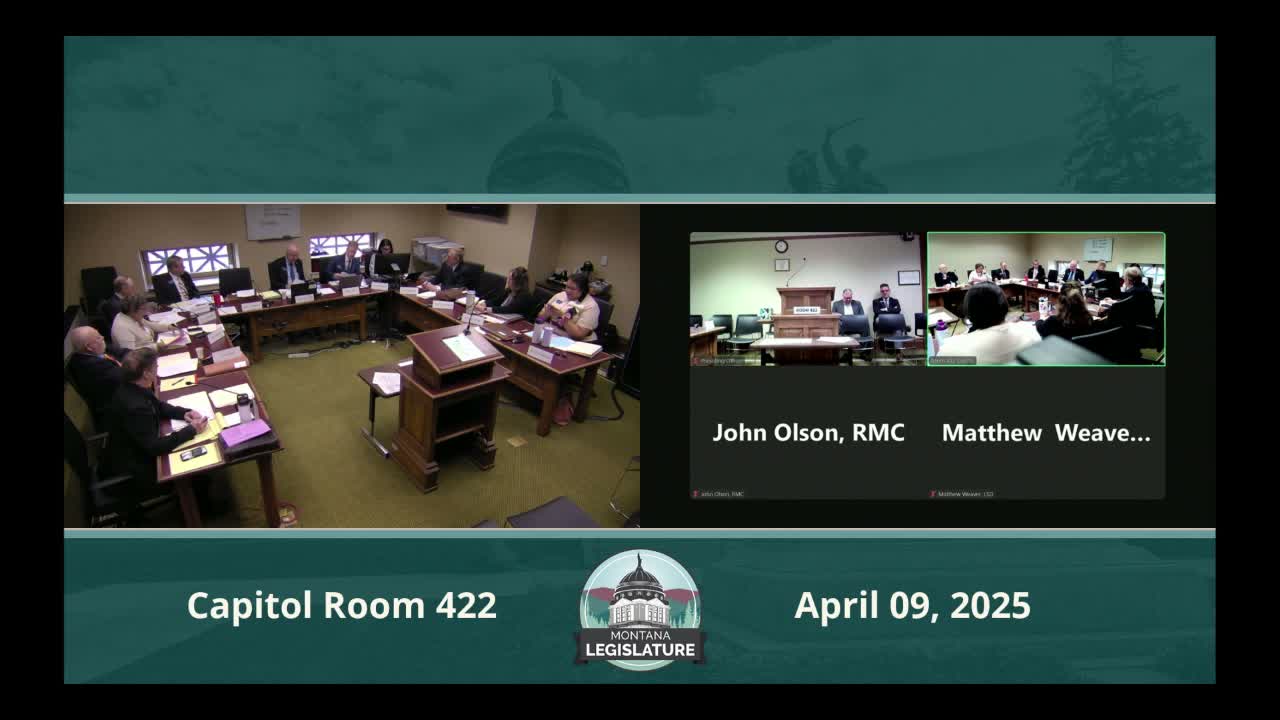
The Senate Business and Labor Committee on March 2 considered House Bill 758, legislation addressing balance-billing and insurer reimbursement for ambulance services, and ultimately tabled it after a recorded 5–6 defeat in committee.
Committee members first adopted an amendment (HB0758.002.001) intended to clarify that, where application of the bill would render a health plan ineligible for health savings account (HSA) treatment under Internal Revenue Code section 223, the bill’s requirement would apply only to HSA‑qualified high‑deductible health plans and only after the individual had satisfied the plan deductible. The amendment was presented as addressing a key opponent concern about HSA ineligibility.
The policy debate focused on whether the bill (which references an enhanced reimbursement benchmark discussed in committee) would help rural ambulance services remain solvent or would create an unwanted insurer mandate that would raise costs. Senators with EMS experience argued that rural ambulance providers face acute financial pressures — citing mileage, volunteer shortages and lack of reimbursement from hospitals — and said higher reimbursements were needed to preserve services. Opponents argued the bill’s 400% reference (as debated in committee) may be excessive, would shift costs to insured consumers and should instead be examined in a study or addressed with grants.
After discussion the committee moved to a roll-call vote on the underlying motion to pass HB 758 (as amended). The recorded committee vote was: Vice Chair Curti — yes; Senator Morgeau — yes; Senator Hunter — yes; Senator Gillespie — yes; Senator Weber — yes (by proxy); Vice Chair Trevis — no; Senator Zolnikov — no (by proxy); Senator Novak — no; Senator Logie — no; Senator Phelan — no; Chair Noland — no. The tally — 5 in favor and 6 opposed — meant the motion to pass failed. A subsequent motion to table the bill carried by voice vote, and the bill was marked as tabled in committee.
Committee members and witnesses agreed that ambulance services in rural Montana face real operational challenges but differed on the appropriate policy tool; several senators urged further study or targeted grants rather than immediate mandates. The chair said the committee will consider scheduling and follow-up options, including moving some related bills to next week and holding a longer, early-morning session to accommodate public testimony.
The bill’s sponsors and opponents may return with revisions or ask for a study before the legislature’s next opportunity to act.