Get Full Government Meeting Transcripts, Videos, & Alerts Forever!
Get email alerts on the Community Health Workers topic
No spam. Unsubscribe anytime.
Montana committee advances bill to license community health workers after supporters stress training and safety
Summary
The Senate Business, Labor and Economic Affairs Committee moved HB 850 forward after supporters — community health workers, hospitals and universities — said licensure would standardize training, improve patient safety and create clearer career pathways; sponsor removed a Medicaid reimbursement provision to avoid fiscal impact.
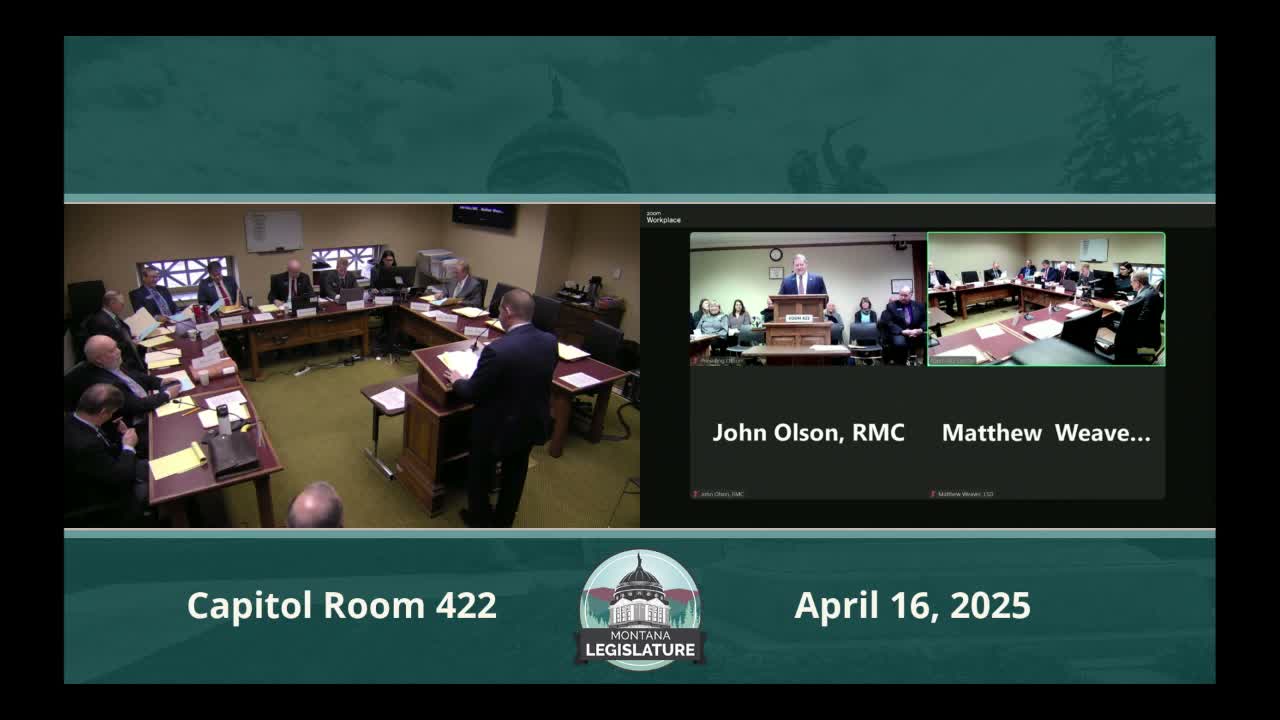
Representative Ed Buttry opened testimony on House Bill 850, saying the measure would create a professional licensure for Community Health Workers (CHWs) to standardize training, competencies and recognition across Montana. He told the committee the bill aims to let CHWs stay in patients’ homes and help them avoid hospital stays while ensuring consistent training and oversight. “House Bill 850 provides for licensure and regulation of what are called Community Health Workers or CHWs,” Buttry said.
Supporters from hospitals, federally qualified health centers and university training programs told lawmakers CHWs already help reduce emergency and inpatient use and that licensure would formalize the role. Kayla Morris of Saint Peter’s Health described early leadership concerns about unlicensed workers visiting patients’ homes and said a licensure pathway provided needed oversight: “Licensure helps strengthen workforces through recognized credentials,” she said. Community health workers who testified said the role bridges people to transportation, housing, food and medical care and urged lawmakers to professionalize the job.
University and tribal training programs appear to be in place. Mackenzie Peterson of the University of Montana described a 10‑week online certificate program that includes quizzes, reflections and telecoaching, currently funded by a federal grant through September 2025; Peterson said the universities and area health education centers seek sustainable funding so the training can remain free or low cost. Stacey Anderson of the Montana Primary Care Association explained workforce and portability issues: tribal CHR or Community Health Aide Program training is not currently portable across employers without state recognition, and certification would create a portable credential.
Committee members pressed agency witnesses about reciprocity with tribal training and about the fiscal and administrative implications. Quinlan O’Connor, chief legal counsel for the Department of Labor and Industry (where the license would be housed), said the department can add new license types and conduct rulemaking during the period between passage and an effective date. Mary Lemieux, Medicaid’s health resources administrator, warned that if Medicaid were to reimburse CHW services the department would need to define service scope and ensure no duplication of federally supported services.
Buttry asked that an amendment be drafted to strike section 7 — language changing Medicaid reimbursement — to avoid a fiscal note that the budget office disputed. In executive action the committee approved that amendment and forwarded HB 850, as amended, to the floor.
What’s next: HB 850 was passed by the committee as amended and will be carried to the Senate floor; sponsor and agencies will continue coordination on rulemaking and implementation.