Get Full Government Meeting Transcripts, Videos, & Alerts Forever!
Get email alerts on the Charter Amendment topic
No spam. Unsubscribe anytime.
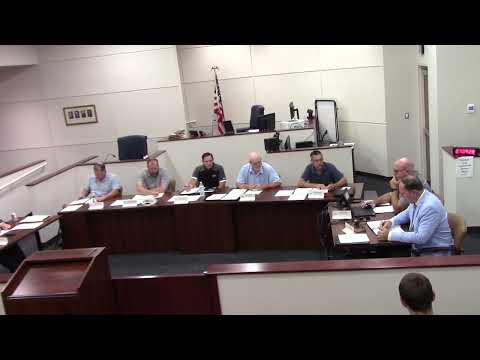
Council approves charter amendment ordinance after dividing the question
Summary
The Shelby City Council passed Ordinance No. 18-2024 to repeal and replace a prior charter amendment (Ordinance 9-2024) and submit the revised language to voters after voting to divide the question and repeal Section 7 separately.
The Shelby City Council voted to pass Ordinance No. 18-2024, which repeals a prior charter amendment ordinance and submits revised language on section 7 of the city charter to the electorate. Council members moved to suspend the rule requiring three separate readings so the ordinance could be considered at the same meeting.
A staff member said the ordinance is intended to "repeal and replace ordinance 9-2024" after a typo was found by the board of elections and that the corrected text needed to be sent so the measure appears on the ballot as intended. Several council members raised concerns that combining repeal and enactment in a single ordinance could invite single-issue challenges. One council member urged caution, saying the council had previously handled similar matters as two separate items and suggested a division of the question to avoid legal challenges.
To address that concern the council moved for and carried a division of the question, voting first to repeal Section 7 of Ordinance 9-2024 as a separate action and then to proceed with the enactment of the replacement language. After those procedural steps, the council held a roll-call vote and Ordinance No. 18-2024 passed according to the meeting record.
The ordinance will be submitted to the county elections office for placement on the ballot; the meeting record indicates the city clerk/staff will deliver the corrected text to the board of elections. No implementation timeline or effective date for the charter change was specified in the discussion recorded at the meeting.
The council’s discussion focused on avoiding procedural or single-issue challenges rather than the substance of the charter language itself; no substantive textual debate about the policy change appears in the meeting record.