Get Full Government Meeting Transcripts, Videos, & Alerts Forever!
Get email alerts on the Intervention Rights topic
No spam. Unsubscribe anytime.
Washington Supreme Court weighs whether sibling could intervene in termination trial
Summary
On June 13, 2024, the Washington Supreme Court heard arguments over whether a nonparty sibling (identified in the record as MW) should have been allowed to intervene in his sister's termination proceeding and whether the trial court erred in finding the mother received services sufficient to remedy a substance-use deficiency.
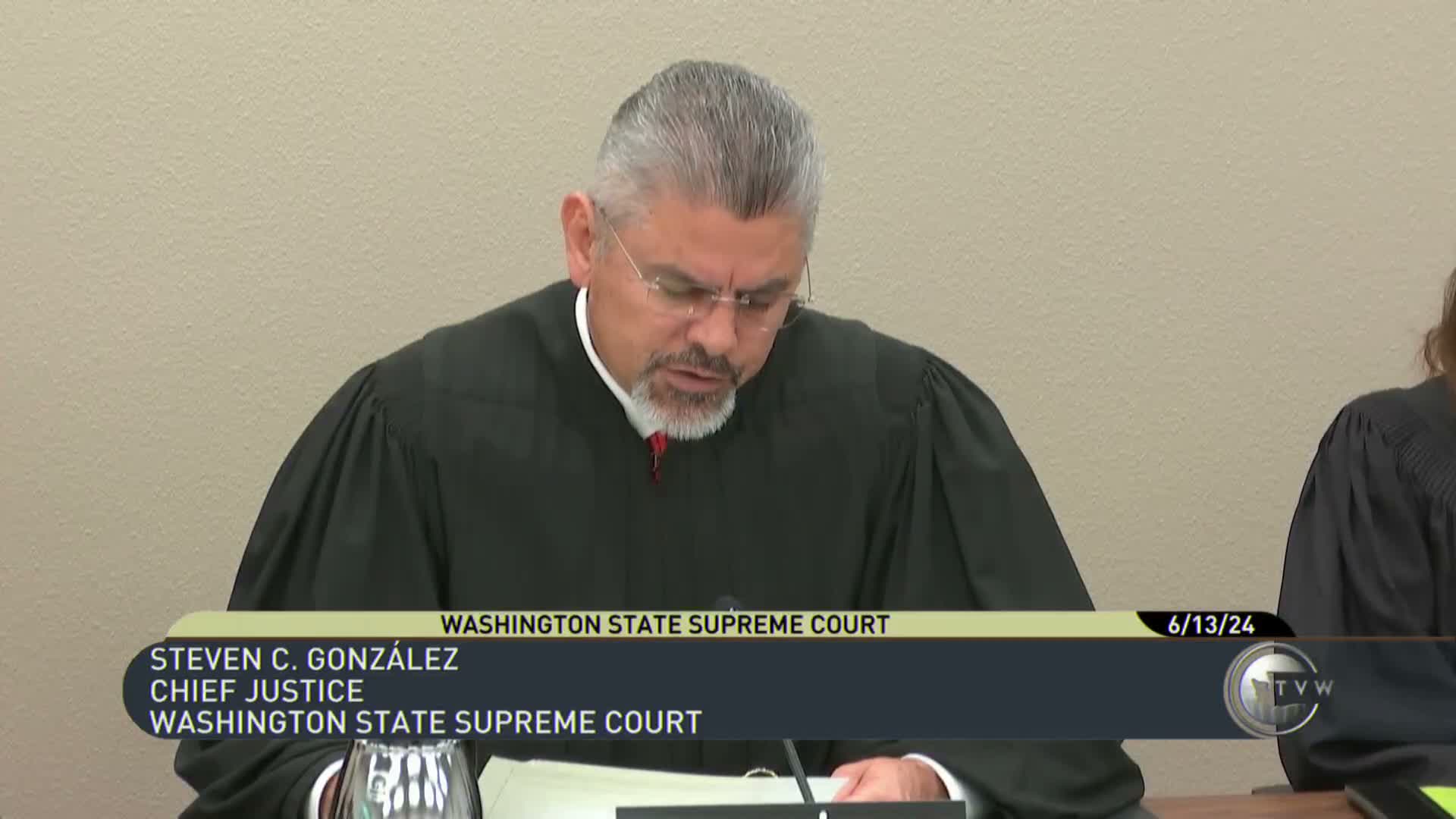
TUMWATER, Wash. — The Washington Supreme Court on June 13 heard oral argument over whether a sibling who sought party status in his sister's termination proceeding should have been allowed to intervene and whether the trial court erred in its findings about services offered to the mother.
At the outset, counsel for the mother, Kate Benward of the Washington Appellate Project, told the justices the American Bar Association has identified “the over veil and underinvestment in black families that continues to produce racially disproportionate outcomes in the child welfare system,” and said excluding MW from the termination trial deprived the family of a crucial advocate. “He was excluded and not able to do that,” Benward said, arguing that exclusion “undermines the family's connection and their value.”
Lauren Danskin, representing the Department of Children, Youth, and Families, answered that termination proceedings are narrowly focused on the legal relationship between a parent and child and that siblings' interests are protected in other proceedings. “Central to a termination proceeding is the special relationship between a child and their parent,” Danskin said, urging the court to affirm because MW’s liberty interests were protected in his own dependency and because, she said, the mother received the services capable of correcting the substance-use deficiency that prevented reunification.
The justices pressed both sides on procedural posture and the record. Several asked why the youth, who had been listed as a potential witness, was not called and whether discretionary review or appeal procedures limited his options after a trial-court exclusion. Benward responded that interlocutory remedies would be an “empty” remedy if the trial continued and that constitutional claims warrant de novo review. She argued the exclusion meant MW “didn't get the meaningful right to counsel,” and that his counsel was prevented from participating at the table and cross-examining witnesses on his behalf.
Danskin said the record showed family therapy had been recommended but that the mother’s principal barrier to reunification was an “unaddressed substance abuse” deficiency that family therapy alone would not have remedied. She noted testimony from two treatment providers and from the guardian ad litem that, in her view, supported the trial court's findings that the necessary services had been provided or offered.
The court also discussed whether a bright-line rule allowing siblings to intervene would produce unintended consequences. Danskin warned that automatically granting intervention broadly could place persons with little interest or adverse positions on the same footing as parties whose constitutional rights are at stake; she urged continued application of CR 24 on a case-by-case basis. Benward countered that where a child and parent face the threat of termination, the interest in family integrity is so significant that intervention may be required to protect the child’s voice.
In rebuttal Benward asked the court to reverse the termination order and to “respect the child's right to family integrity,” saying the exclusion and the lack of meaningful participation through counsel denied MW an important procedural safeguard. The case was submitted and the court recessed for 10 minutes.
What happens next: The court took the case under submission; no opinion was issued from the bench at the argument session.
Quotes used in this article come directly from the oral argument transcript and are attributed to the attorneys who spoke.