Get Full Government Meeting Transcripts, Videos, & Alerts Forever!
Get email alerts on the Cema Subjectline Scope topic
No spam. Unsubscribe anytime.
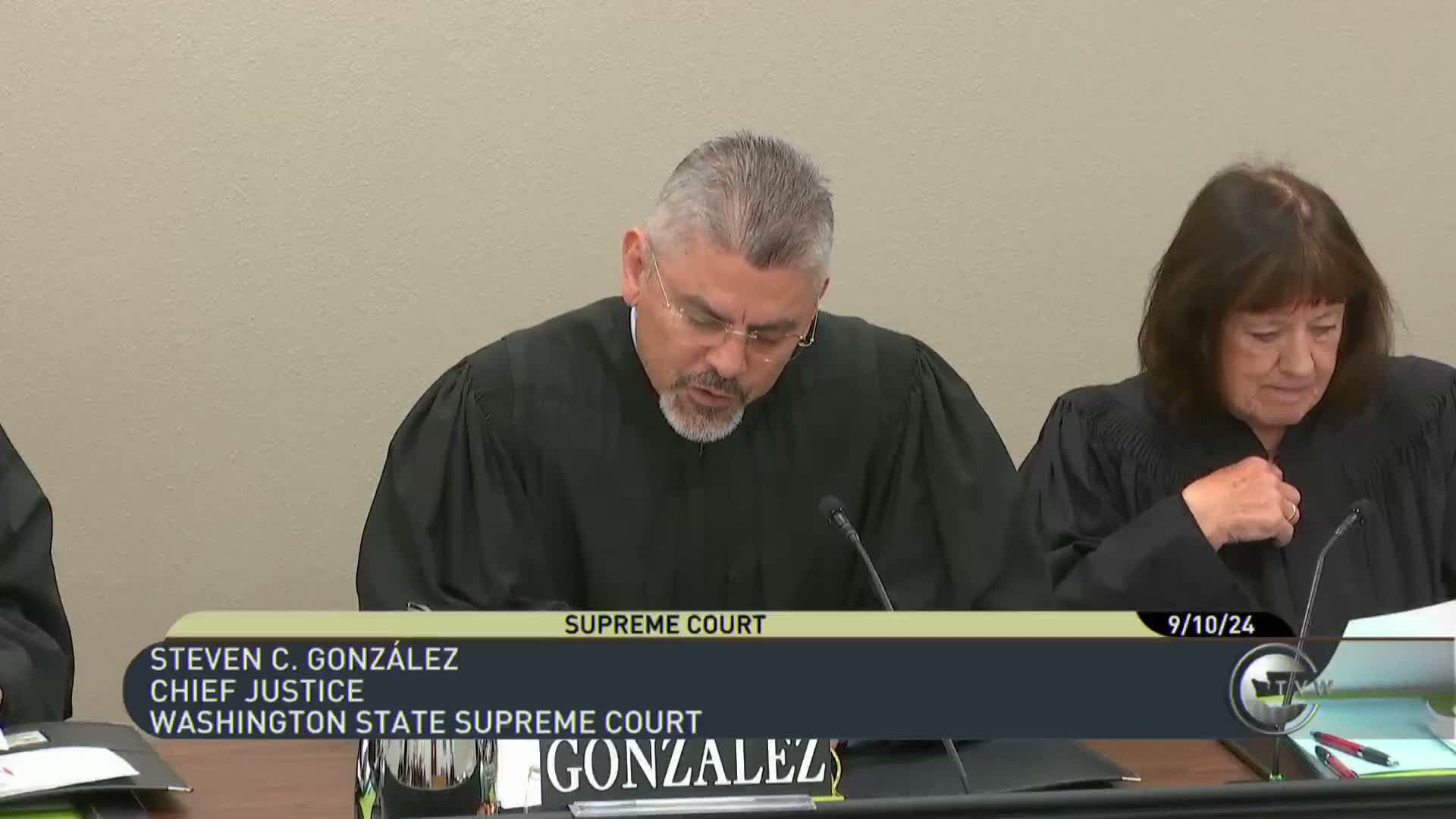
Washington Supreme Court hears dispute over scope of anti-spam law in Old Navy case
Summary
On Sept. 10, 2024, the Washington Supreme Court heard argument over whether the Commercial Electronic Mail Act makes any false or misleading information in an email subject line a per se violation, or whether the subject line must be read in context with the email body; counsel for Old Navy and the consumers disputed statutory text, history and practical effects.
SEPTEMBER 10, 2024 — The Washington Supreme Court on Tuesday heard competing views over how to read a state anti-spam statute after counsel for Old Navy and a pair of consumers argued a certified question about the Commercial Electronic Mail Act (CEMA).
In opening argument, Stephanie Shuster, counsel for Old Navy, told the court the dispute turns on statutory interpretation and context. "The Consumer Protection Act has prohibited false advertising in any and every form since long before the Commercial Electronic Mail Act," Shuster said, and argued that the phrase "subject line" in the 1998 law should be read in light of surrounding text and contemporaneous meaning rather than as a device to create different remedies for identical statements in different parts of an email.
Blythe Chandler, counsel for the consumers Roxanne Brown and Michelle Smith, urged a different reading. "You cannot send an advertising email with any false or misleading information in the subject line," Chandler told the justices, arguing the statute's plain language is unambiguous and applies to subject lines generally.
The dispute centers on whether subsection (b) of CEMA — which prohibits commercial email that contains false or misleading information in the subject line — should be interpreted to reach any such false subject-line statement on its face, or whether the subject line must be considered in relation to the email's contents and external facts (for example, whether a "last hours" header is deceptive only if discovery shows the advertised deadline was not real).
Justices repeatedly probed both sides on practical implications. One justice asked whether the law's original purpose — protecting consumers and service providers from costs associated with opening deceptive messages in an era of limited-minute and early Internet plans — alters how the court should read the text now that data plans and filtering have changed. Shuster replied that contemporaneous meaning and the statutory scheme support interpreting subsection (b) to bar subject-line deception that tricks recipients into opening commercial messages.
Chandler responded with concrete examples from the complaint, describing subject-line phrases such as "last hours" that the plaintiffs say create a false urgency when the retailer repeatedly promotes similar sales. Counsel for the plaintiffs said discovery would reveal whether repeated use of such headers was part of a marketing cadence that made the urgency false.
The justices also asked about overlap with the Washington Consumer Protection Act and guidance from the attorney general's office. Counsel for the consumers pointed to the attorney general's interpretation and said the office had signaled it may await the court's guidance before pursuing further enforcement. Counsel for Old Navy cautioned that treating subject-line statements as per se violations could produce inconsistent remedies for identical language appearing in different parts of an email.
No decision was announced. The court recessed for 10 minutes after both sides argued and the matter was "submitted," with Shuster reserving time for rebuttal during the initial argument.
What happens next: The court will take the certified question under advisement and issue a written answer. That answer will determine whether CEMA's subject-line provision operates as a stand-alone, per se prohibition or requires analysis tied to the email's content and surrounding facts.