Get Full Government Meeting Transcripts, Videos, & Alerts Forever!
Get email alerts on the Technology Access Remote Proceedings topic
No spam. Unsubscribe anytime.
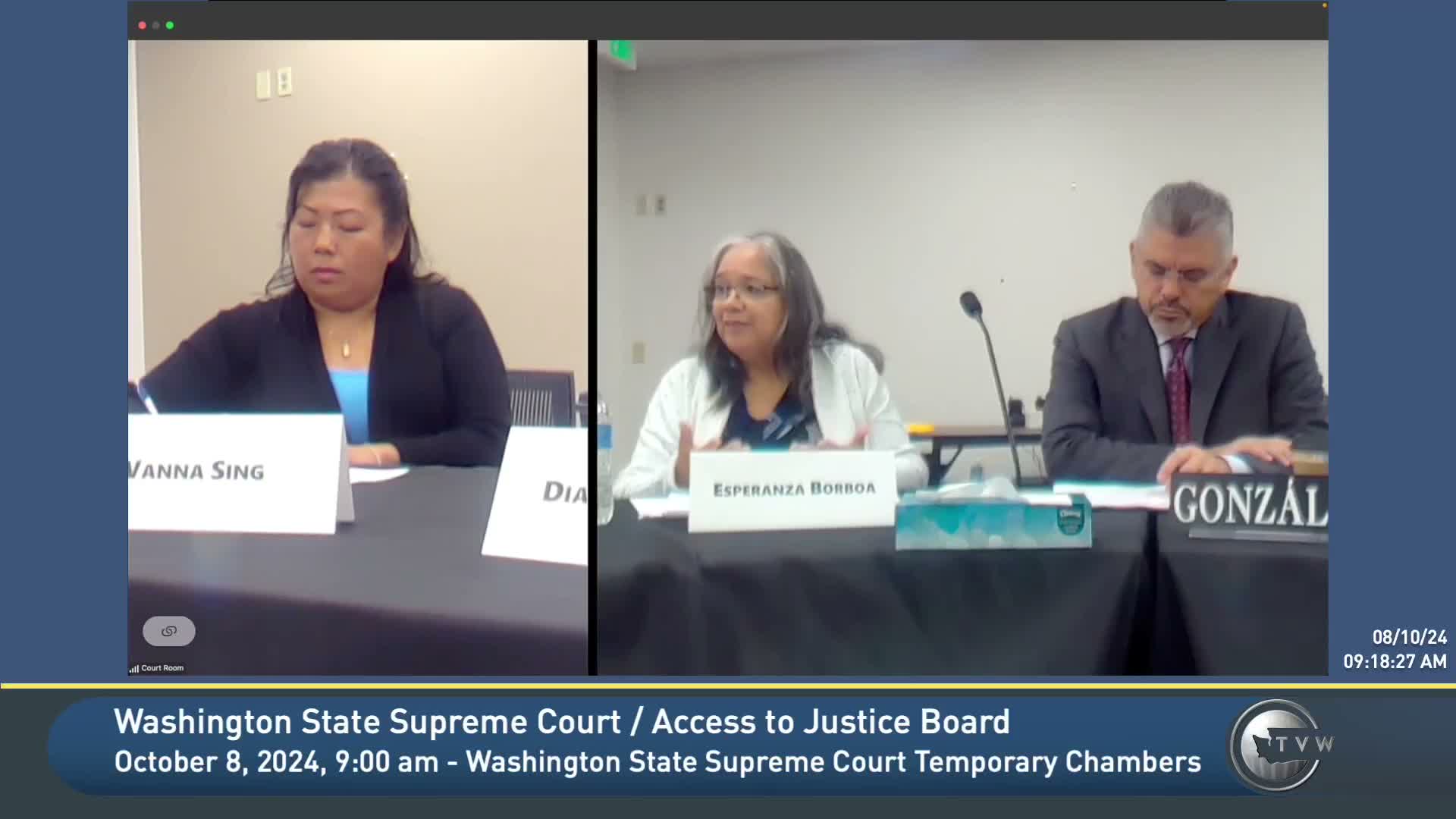
ATJ tech committee urges updates to technology principles as courts weigh remote proceedings
Summary
ATJ members and a technology committee co‑chair discussed updating technology principles to reflect AI and remote‑proceeding impacts, and urged coordination with the rules committee to address access gaps for people without internet or devices.
ATJ members and committee leaders told the court that technology principles guiding courts and providers need regular review to address rapidly evolving tools and access gaps.
The ATJ chair said the existing technology principles were last reviewed years ago and that developments such as AI and other new platforms are prompting renewed attention. "That issue when the technology principles were being created... was coming up, but not as much as it is now," the chair said, describing committee work to track changes and raise issues to other ATJ committees when tools could mislead consumers or create barriers.
Bryn (co‑chair of the ATJ Technology Committee) explained that the committee meets regularly to consider new technologies that affect pro se litigants and to assess whether the principles need updating. The committee also discusses whether to produce practical checklists or guidance courts can use when adopting remote procedures.
Several participants urged stronger coordination between the rules committee and the technology committee so rule changes (for example, permitting remote jury selection or hearings) account for inequities in internet access and device availability. One board member suggested simple remedies such as adding more advance notice or extra time in certain processes for people who lack internet access.
Why it matters: As courts adopt remote options and as technology evolves, the board says the principles and any practical guidance must consider broadband access, device availability, language access and disability accommodations so remote proceedings do not unintentionally exclude people.
No formal rule change was adopted at the meeting; participants said the committees will continue to coordinate and explore whether to recommend advisory guidance, checklists, or rule language.