Get Full Government Meeting Transcripts, Videos, & Alerts Forever!
Get email alerts on the Public Health topic
No spam. Unsubscribe anytime.
Advocates ask Forest Park to support declaring childhood trauma an emergency to unlock services
Summary
A local advocacy group asked Forest Park to partner on a declaration of emergency for childhood trauma, arguing it would unlock resources for prevention and treatment; council thanked the speakers and said it would consider the request for future action.
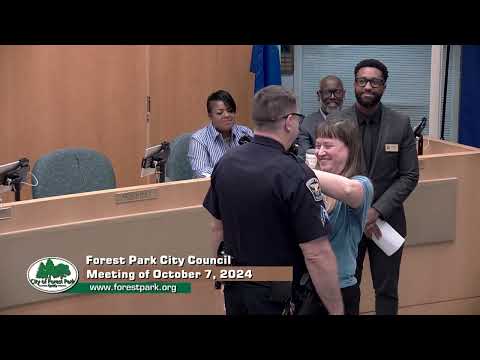
At the Oct. 7 Forest Park council meeting, Ronald Hummons, executive director of the Childhood Trauma Emergency Group, asked the city to partner in a proposal to declare childhood trauma a state of emergency in order to access additional resources for prevention, treatment and upstream interventions.
Hummons said an emergency declaration would activate authorities and resources "unavailable in non-emergencies," and asked the mayor and council to support advancing the initiative to a vote. He and colleagues described childhood trauma as a pervasive public-health issue with long-term impacts on development, mental health and community safety.
Lashonda Sugg (speaker 19), a former Forest Park resident, appealed to the council for empathy and described how trauma responses can be misread as disciplinary problems in schools. Another presenter (speaker 20) outlined policy levers, such as changes to school discipline practices and social-service responses, and said trauma training and resources are scarce.
Council members thanked the group for bringing the issue forward. The mayor acknowledged the presentation and said the city would take the information under advisement; no formal motion or vote to declare an emergency was taken at the meeting.
Claim noted at the meeting: Hummons said that historically emergency declarations have not been used for racialized issues and asserted that the white community has had thousands of emergency declarations while communities of color have not; no independent evidence was presented at the meeting and the claim was not adjudicated during the session.
The advocates asked the council to consider partnership and to refer the item for possible future discussion or a vote; council members offered to add related items to a work session for further review.