Lifetime Citizen Portal Access — AI Briefings, Alerts & Unlimited Follows
Plaintiff's lawyer tells appeals panel WPHP served as intermediary and impeded accommodation requests in Alley v. University of Washington
Loading...
Summary
At oral argument in Alley v. University of Washington, plaintiff counsel said the Washington Physicians Health Program (WPHP) became the intermediary for Dr. Michael Alley's accommodations and blocked his use of the Disability Services Office, while university counsel said the record shows Alley was cleared to return and that UW met its obligations.
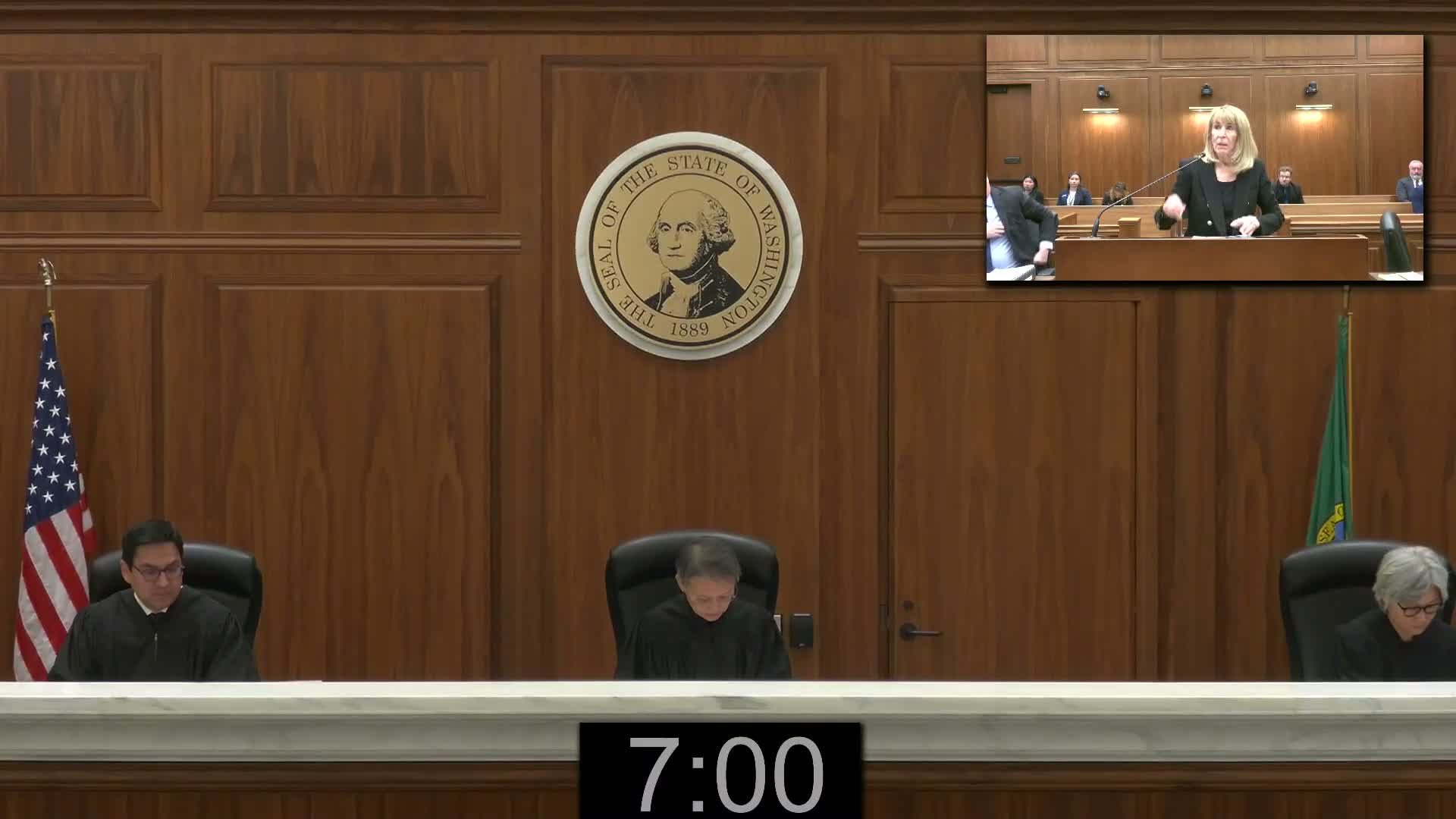
An appeals panel heard argument in Alley v. University of Washington over the dismissal of Dr. Michael Alley’s Washington Law Against Discrimination claims, with plaintiff counsel saying the Washington Physicians Health Program (WPHP) intervened in and effectively derailed Alley’s effort to seek accommodations.
“WPHP told him specifically, we are going to be the intermediate for the coordination of your accommodations,” plaintiff counsel Susan Mindenbergs told the panel, arguing that Alley then followed WPHP’s process instead of completing forms with the university’s Disability Services Office (DSO).
The case centers on whether Alley gave his employer sufficient notice of a substantially limiting medical condition and whether UW engaged in the required interactive process to consider accommodations. Mindenbergs told the judges that Alley disclosed recurrent major depressive disorder to his program director in September 2020, contacted the DSO in January 2021, was evaluated by WPHP in February 2021, and submitted his own proposed accommodations in April 2021.
University counsel Jake Hubert urged the panel to affirm summary judgment for the university, saying the record shows UW followed policy by referring Alley to WPHP and that WPHP performed a comprehensive evaluation. “The record is very, very clear... he did not [have a substantially limiting impairment],” Hubert said, arguing that Alley’s own doctor also evaluated him and found him fit for duty.
The panel questioned counsel about legal standards for notice and the degree of specificity required to trigger an employer’s duty to engage in the interactive process. One panel member noted that simply stating a diagnosis differs from stating that a condition substantially limits job performance; the bench pressed whether Alley had put UW on sufficient notice before WPHP intervened.
Defense counsel also disputed the plaintiff’s comparator evidence, saying the comparator resident who was also sent to WPHP ‘‘was not treated any better’’ and had different performance issues that undercut a pretext claim.
The argument largely turned on competing characterizations of the record: Mindenbergs said the WPHP told both program leadership and the dean that Alley needed accommodations and that the university “did nothing”; Hubert said UW investigated, relied on WPHP’s clearance for fitness, and encountered ongoing performance problems that supported nonrenewal.
No ruling is included in the transcript. The panel controlled rebuttal time and questioned both sides about when and how Alley informed the university of limitations and about what evidence in the record—such as physician declarations and WPHP reports—supports each party’s legal theory.
The court heard further exchanges about whether confidential WPHP records limited access to evidence and whether Alley could have submitted a doctor’s declaration independently; counsel disputed how those facts affect the notice and interactive-process analysis. The argument concluded without a decision recorded in the provided transcript.
If the panel issues a decision, it will address whether summary judgment was appropriate given the record and whether Alley’s disclosures and the university’s reliance on WPHP satisfy legal standards for accommodation, retaliation and disparate-treatment claims under state law.