Lifetime Citizen Portal Access — AI Briefings, Alerts & Unlimited Follows
Court hears arguments over pre-suit notice and mootness in South Tacoma Way v. Compass Group USA
Loading...
Summary
Counsel for Compass Group USA argued the trial court erred by failing to rule on a contractual notice defense and by treating the dispute as live despite a declaration about the fence removal; counsel for 1311 said declaratory relief under the UDJA is appropriate even when a contract provides a remedy.
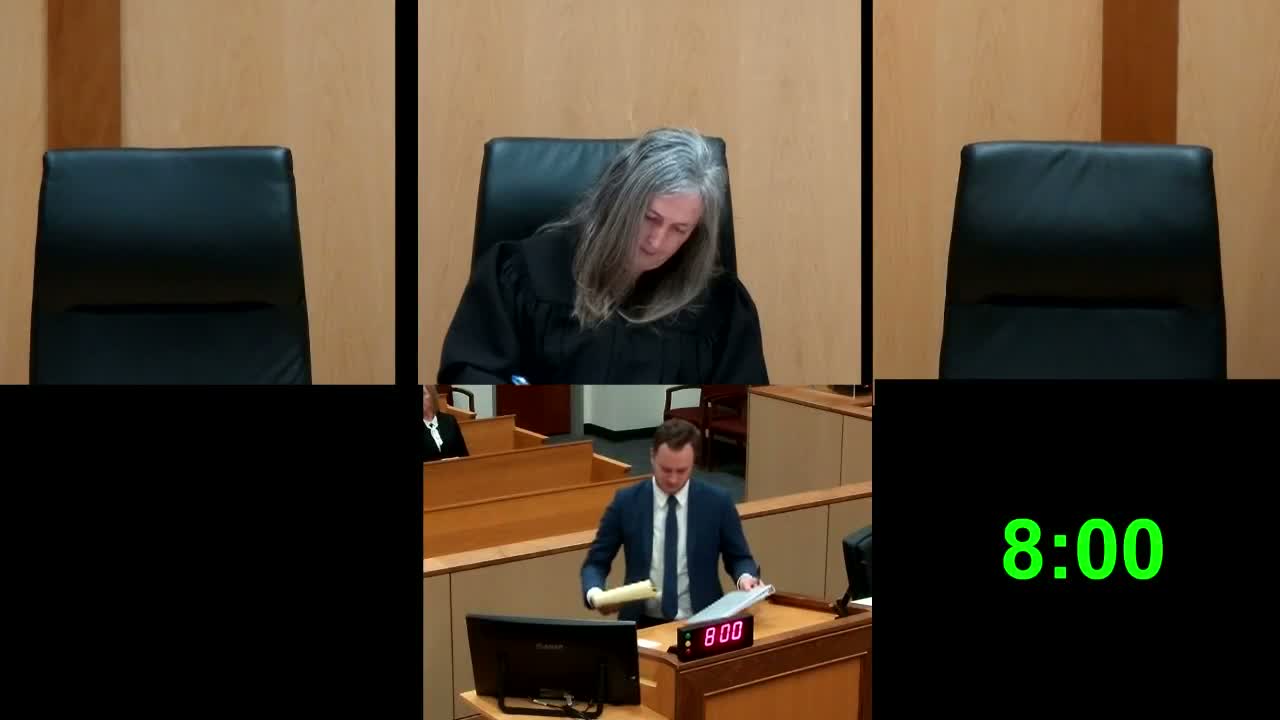
The court heard oral argument on a motion for discretionary review in South Tacoma Way v. Compass Group USA, No. 61489-8. Joseph Toups, counsel for Compass Group USA, told the court the trial judge committed "obvious error" by ignoring uncontroverted evidence and by relying on personal experience when declining to resolve a notice defense and the question of mootness.
Toups said the appeal turns on two affirmative defenses: a front-end notice requirement in the lease and a back-end mootness argument. He told the judge that the record shows the notice issue was not resolved by the Court of Appeals and that Compass was denied the lease-based opportunity to receive notice and cure alleged breaches. "The trial court committed obvious error by ignoring the uncontroverted evidence," Toups said.
Paul Brane, counsel for 1311, urged the court to focus on whether a Uniform Declaratory Judgment Act (UDJA) action is barred when a contract provides a pre-suit notice remedy. Brane read from the earlier appellate opinion and cited the UDJA and court rule CR 57, saying the statute permits courts to declare contractual rights even where another remedy exists. "The UDJA allows persons whose rights are affected by a contract to have determined any question of construction or validity arising under the contract," Brane said.
Brane told the court that the notice issue and related facts were part of the record before the Court of Appeals and that a declaratory judgment can be the efficient way to resolve whether a contract was breached. He also alleged that Compass obtained building permits and completed roughly $500,000 in improvements and later about $485,000 more, and that the company had misrepresented its intentions about installing an electrified fence to the landlord.
Counsel debated whether remaining concrete footings in the parking lot are a material fact or merely de minimis; Toups argued the fence itself was removed and what remains would not prevent relief, citing a declaration by "Mr. Smith" that Compass did not intend to reinstall an electrified fence and would follow lease procedures if it did.
The judge questioned both sides about whether the notice point was presented to the Court of Appeals and whether the alleged post-removal facts left live relief for the tenant. At the end of argument the judge asked about the status of the Superior Court proceedings and was told they are unstayed; the judge said a written ruling would be issued as quickly as possible.
The court has yet to rule on whether it will grant review or on the merits; the Superior Court action continues in the meantime.