Lifetime Citizen Portal Access — AI Briefings, Alerts & Unlimited Follows
Appeals court hears dispute over patient lists, alleged solicitation in Mill Creek Foot and Ankle case
Loading...
Summary
An appellate panel heard argument over whether patient lists copied and solicitations after a podiatrist left Mill Creek Foot and Ankle are protected trade secrets and whether tortious‑interference claims are preempted by the Uniform Trade Secrets Act; counsel disputed whether the record identifies which patients fall in each category.
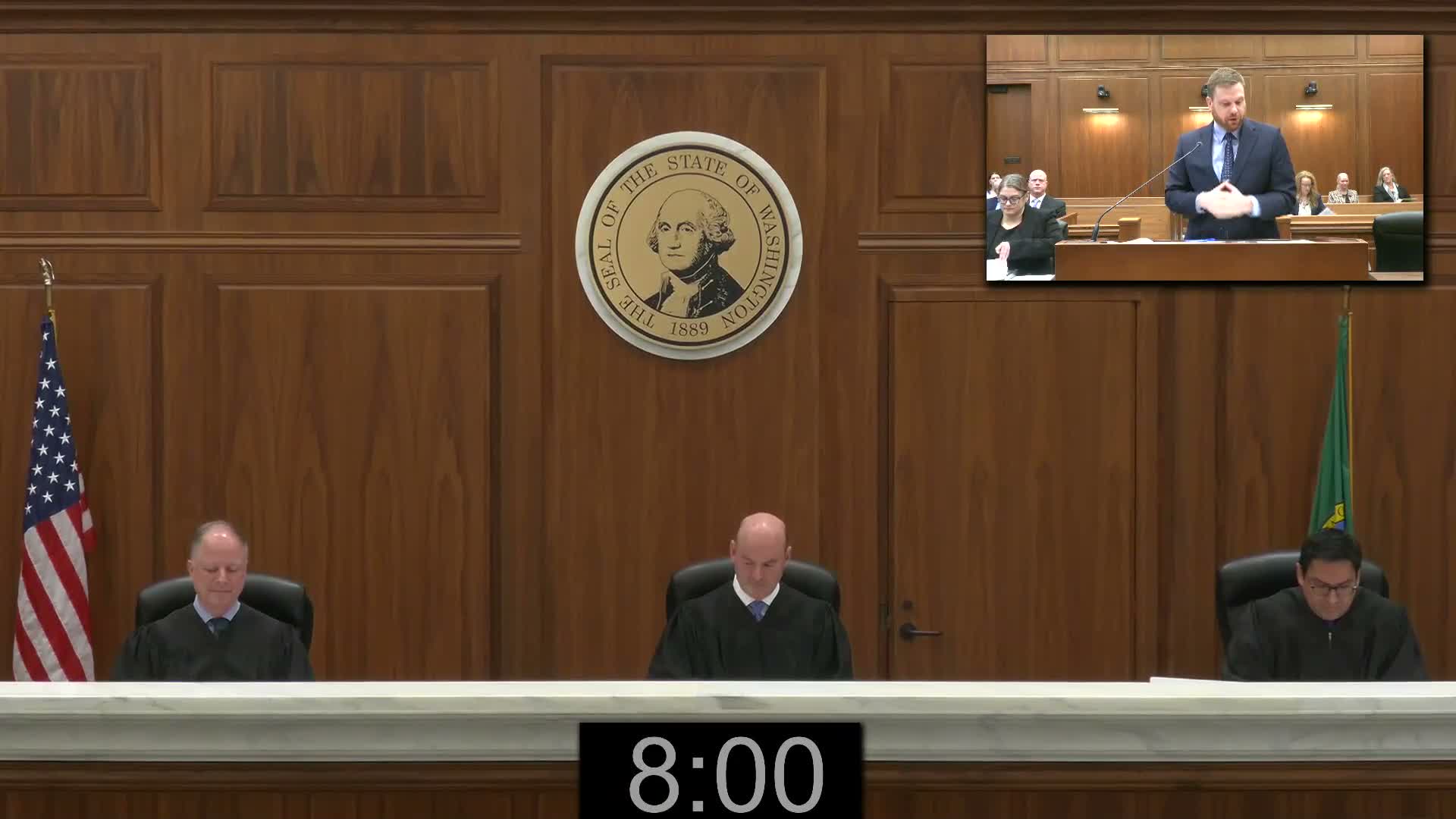
An appellate panel heard oral argument in Mill Creek Foot and Ankle Clinic v. Hansen over whether the trial court erred in granting summary judgment that dismissed Dr. Hall's claims alleging misappropriation of patient records and related tortious‑interference claims.
Plaintiff's attorney Aaron Orheim told the court the trial court “erred in dismissing doctor Hall's claims on summary judgment,” and urged reversal and an award of fees on cross appeal. Orheim argued the patient list at issue—assembled over 25 years—“is commercially valuable” and qualifies as a trade secret, and said declarations and a cease‑and‑desist letter, plus a witness (identified in the record as Ms. Binks), support triable questions about solicitation after the relationship ended.
The panel focused repeatedly on where the record identifies which patients fall into competing categories: those seen exclusively by Dr. Hall, those seen by Dr. Hansen during a short employment/lease period, and patients in dispute. One judge pressed counsel that the record shows “nearly 99% of the files copied were after employment,” asking how the parties tie specific patients to the relevant timeframes. Orheim pointed to plaintiff declarations and said, for example, 16 patients requested transfers of records after Hansen left—a fact he said raises reasonable inferences of solicitation.
Respondent counsel Christine Martin Lord, representing Dr. Nathan Hansen and Hansen’s Foot and Ankle, asked the court to uphold the trial court’s summary‑judgment dismissal of claims against Dr. Hansen and to remand attorney‑fee questions to the trial court. She argued the record lacks evidence that any of the downloaded files were solely Dr. Hall’s patients and emphasized that, under the lease and employment agreement, Hansen had rights to records for patients he treated during the tenancy or employment period.
A central legal dispute before the panel was whether common‑law tortious‑interference claims based on the same facts as trade‑secrets allegations are preempted by the Uniform Trade Secrets Act. Defense counsel cited RCW 19.108 and argued the statute preempts such overlapping claims; the court and counsel debated case law cited by both sides, including Boeing and other decisions the participants referenced.
The panel also debated factual points the parties presented about solicitations: defense counsel maintained postcards were mailed only to a list of 390 patients identified by plaintiff; plaintiff’s counsel and at least one witness account in the record suggested others were solicited. The judges observed there is no verified, patient‑by‑patient list in the record that shows who was exclusively seen by one doctor during specified dates, and they repeatedly described that absence as central to whether summary judgment was proper.
The arguments closed with the parties disagreeing about contract interpretation—whether a clause granting “all rights to patient records” during the lease gives Hansen an unfettered right to solicit patients, or whether that contractual language is limited by non‑solicitation obligations and the UTSA duty not to misappropriate. Orheim said the lease language does not give perpetual solicitation rights and asked that jurors, not a court on a cold record, resolve factual disputes; Martin Lord reiterated her clients’ position that the record lacks evidence of misappropriation.
The court thanked counsel and submitted the case for decision. No final ruling was announced from the bench.