Get Full Government Meeting Transcripts, Videos, & Alerts Forever!
Get email alerts on the District Leadership And Budget topic
No spam. Unsubscribe anytime.
Calvert County board names Marcus Newsome superintendent and appoints new CFO as consultants lay out efficiency plan tied to FY27 budget
Summary
The Calvert County Board of Education voted unanimously to confirm Marcus Newsome as permanent superintendent and approved Christine Jewett as chief financial officer. Consultants presented an efficiency study with 68 recommendations and projected five‑year savings of about $29 million, framing several changes into the proposed FY2027 budget.
The Calvert County Board of Education unanimously confirmed Marcus Newsome as the district’s permanent superintendent and approved Christine Jewett as chief financial officer during its February meeting.
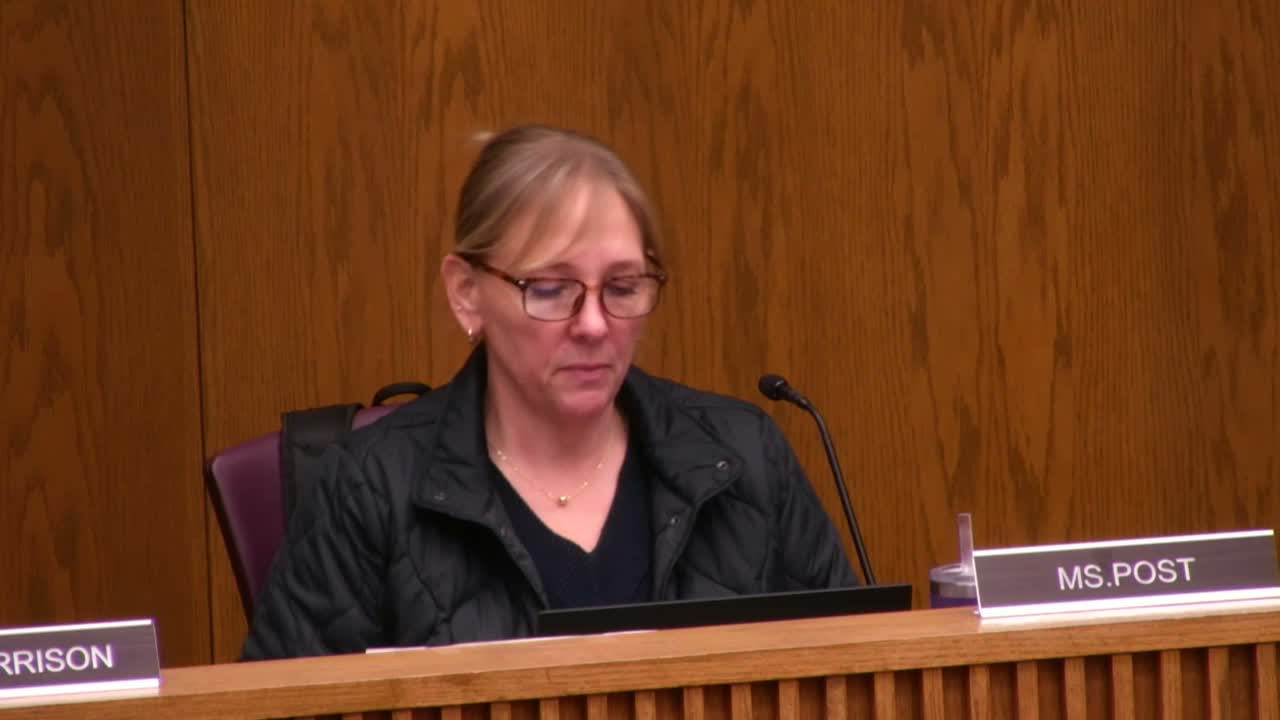
President Post read the board’s appointments before the vote, citing Newsome’s prior interim role and two decades in public education. The board moved to approve the superintendent appointment; the motion carried 4–0. After the vote, Newsome thanked the board, said he was "ready to roll my sleeves up," and praised staff and students for their commitment.
Newsome then introduced Christine Jewett as the district’s new CFO, noting her experience in Saint Mary’s County Public Schools and earlier roles in Calvert County. Jewett addressed the board and said she was honored to return to Calvert County Public Schools and eager to begin work.
Why it matters: The appointments finalize leadership changes that district officials said will guide implementation of operational changes and the FY2027 budget. The new CFO will play a central role in budget negotiations with county officials and in responding to consultant recommendations.
Consultants present efficiency review and fiscal outlook
Following leadership items, Public Works consultants led by Joanne Cox and John Gaddis summarized a 450‑page efficiency assessment produced after reviewing more than 1,200 documents and interviewing roughly 388 staff and stakeholders. The report lists 29 commendations and 68 recommendations across seven departmental chapters and proposes about $29 million in gross savings over five years if recommendations are implemented.
Key consultant recommendations include adding two executive‑level roles (executive directors for elementary and secondary education), elevating the chief academic officer and chief operating officer to deputy‑superintendent status, hiring a full‑time communications director and in‑house legal counsel, standardizing key performance indicators across departments, reorganizing HR into three divisions, and pursuing cooperative procurement and regional partnerships to reduce costs.
Consultants said many recommendations are organizational and operational rather than program cuts, and that early priorities should focus on instructional leadership staffing, human resources improvements, and transportation efficiency.
Budget implications
Acting finance director Barb Sikora presented the proposed FY2027 budget overview. The presentation showed a total roughly in the low‑hundreds of millions (transcript language: "for FY27 is going to be $303,000,000 325,000"). Sikora said the district is requesting $6.7 million more in county appropriation and expects approximately $5.9 million more in state funding, while projecting a $1.7 million reduction in certain local receipts (including a one‑time MAEVE credit that is not expected next year). The proposed budget also assumes an increased use of fund balance compared with the prior year.
Board members pressed for clarity on the timing and on how much of the $29 million in proposed savings could be realized in the short term. Several members emphasized the board’s intent to honor negotiated bargaining agreements and asked staff to show precisely how much funding would be needed to cover step increases, COLAs and benefit costs; staff provided line items for bargaining units totaling several millions in projected labor and fixed charges.
What happens next: Consultants recommended incorporating year‑one implementation actions into the FY27 budget and showing quarterly progress to the board. The board must finalize and send its FY27 request to the county commissioners by March 1, and members discussed packaging the request to explain what each additional dollar would buy.
Vote and procedural notes
The appointments and the consent agenda passed by recorded voice vote as "motion/second" with outcomes recorded in the meeting (motions carried 4–0). No board member dissented on the leadership appointments during the meeting.
The board adjourned after brief comments and thanked students and staff for participating in the meeting.