Get Full Government Meeting Transcripts, Videos, & Alerts Forever!
Get email alerts on the Public Health topic
No spam. Unsubscribe anytime.
Health director presents annual report, highlights new air monitor and county programs
Summary
The Wasatch County Health Department presented its annual report to the Wasatch County School Board, highlighting a new air-quality monitor that includes ozone readings, WIC nutrition services, diabetes-prevention programming, and county health statistics; board members thanked the department for pandemic-era partnership.
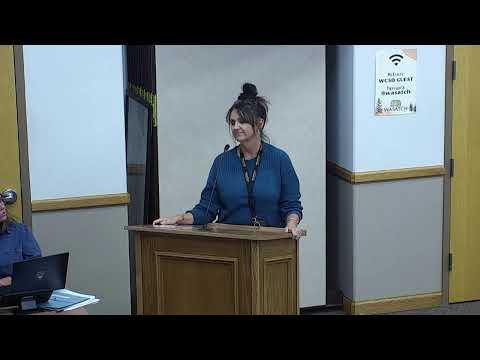
The Wasatch County Health Department presented its annual report to the Wasatch County School District Board on the department’s countywide role, new monitoring equipment and several public-health programs.
The department’s health director told the board the department serves municipalities and unincorporated areas across the county and is a resource for schools and families. “We are the Health Department for the entire County,” the director said, adding that the department seeks to increase community awareness of available services.
The director highlighted a new district website and a newly installed valley air-quality monitor that will report ozone in addition to PM2.5. The monitor allows officials and the public to check current conditions and was presented as a tool for coordinated decisions with schools during smoke or wildfire events — for example, whether to hold outdoor recess or cancel athletic contests.
The director also described services that include WIC nutrition assistance and counseling by departmental dietitians, and programs such as a nationally accredited Diabetes Prevention program delivered in partnership with the local hospital. The department said more than half its revenue comes from grants, with roughly 15–17% from fees and about 26% from local taxes.
On county health indicators, the presentation cited a county life expectancy of about 82 years and a low share of residents reporting fair-or-poor general health (about 5–6%). The director flagged two concerns for follow-up: a higher proportion of residents reporting no health insurance and an elevated rate of prediabetes compared with state and national figures.
Board members responded with thanks for the department’s collaboration, particularly during the COVID-19 pandemic. A district representative described the interagency relationship as a factor that helped keep students in school during the pandemic and credited the close working relationship for supporting student outcomes.
The health director introduced members of the county Board of Health, including Dr. Veil Burton (chair), Kendall Crittendon (county council representative), Colleen Nelson, Bridal Manning, Sarah Simonson, Jay Eckersley and Michelle Ludlow; board members and health staff emphasized that the departmental work with schools is ongoing.
The visit concluded with mutual appreciation and a commitment to continued coordination on air-quality responses, nutrition outreach and preventive-health programs.