Get Full Government Meeting Transcripts, Videos, & Alerts Forever!
Get email alerts on the HB549 Airway Devices topic
No spam. Unsubscribe anytime.
District moves to place airway-clearance devices on campuses after new state law
Summary
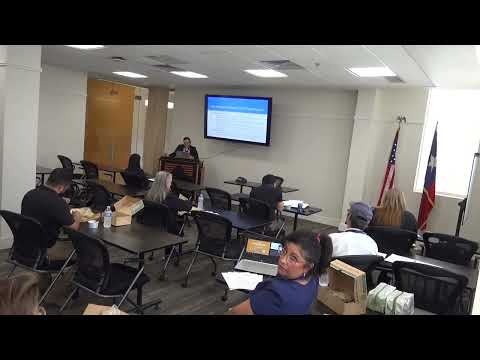
The district's health services coordinator described House Bill 549's requirement to have airway-clearance devices at locations where students eat, said the district has already ordered and received devices, and recommended training for nurses and cafeteria staff.
The district's health services coordinator told the School Health Advisory Council that House Bill 549 requires all school districts to make a noninvasive airway-clearance device available at every campus in a place where students consume food and to ensure at least one employee is trained in its use.
"The bill...requires all school districts to have an airway clearance device or a noninvasive device capable of removing or assisting with removing a person's foreign body airway obstruction available at every campus in a location where a student consumes food," the coordinator said during the meeting.
Staff described the Air XMed suction-based anti-choking rescue device as the model the district selected after comparing several options. The presenter said the device uses a double one-way valve and a suction/pressure mechanism designed to create negative pressure and help clear obstructions; replacement kits are available and the district registered the devices with the manufacturer to secure replacement units if a device is used.
District staff told the committee they had already ordered devices and received recent deliveries. "We ordered—we got a jump start on it, and they got delivered yesterday and today," a staff member said, noting final placement decisions (cafeterias and other visible locations where food is consumed) remain to be made at each campus.
On training and liability, staff recommended nurses, cafeteria staff and other adults who regularly work near dining areas receive instruction. The presenter said the law "maintains existing liability" and does not impose new liability protections or obligations beyond current statutes, and advised broad, low-barrier training to increase preparedness.
Next steps discussed include finalizing campus placement plans, circulating demonstration videos and making training available at faculty meetings and via nurse-led sessions.