Get Full Government Meeting Transcripts, Videos, & Alerts Forever!
Get email alerts on the Professional Development topic
No spam. Unsubscribe anytime.
Board members report WASDA conference takeaways: student voice, community ties and governance
Summary
Trustees who attended the WASDA conference highlighted student-led programming, using perception data and student advisory councils, strategies for passing bonds, and the importance of transparency and community engagement in district governance.
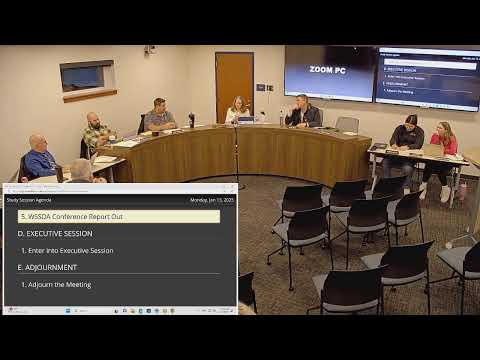
Board members who attended the Washington State School Directors' Association (WASDA) conference summarized sessions they said the district can use to improve engagement and governance.
Cameron, a student who attended several sessions, described presentations where students ran panels and emphasized that giving students a voice increases their sense of ownership and belonging. "When you give them a voice, they feel like they own it," Cameron said, urging the board to incorporate student perspective into decision making.
Trustees who attended sessions on bond campaigns and construction planning emphasized the need for multi‑year outreach, community ambassadors and clear, transparent communications about costs. One trustee described a district that failed bond votes multiple times before building a new high school after years of strategic community engagement.
Kayla reported sessions on board responsibilities, public records best practices, and gender‑inclusive school policies. She said the sessions underscored the value of regular school visits, clarity around board vs. superintendent roles, and establishing a student advisory council and perception surveys to guide district policy.
Several trustees also flagged operational issues raised at the conference, including public‑records management and the need to document how decisions are made to rebuild trust. A trustee warned that missed deadlines on records requests can expose districts to civil suits and urged attention to records processes.
The board agreed to consider adding more student advisory structures and to explore community outreach tools showcased at WASDA as part of ongoing efforts to increase engagement and inform future policy work.