Get Full Government Meeting Transcripts, Videos, & Alerts Forever!
Get email alerts on the District Budget topic
No spam. Unsubscribe anytime.
Interim Superintendent Carol Lewis Details $20 Million Shortfall at Moses Lake School District
Summary
Interim Superintendent Carol Lewis said levy failures and a series of accounting and enrollment reporting errors produced roughly $20 million in reduced operating resources for 2024–25, and described spending freezes, staffing cuts and new controls the district has put in place to stabilize finances.
Interim Superintendent Carol Lewis told community audiences in October that Moses Lake School District’s operating budget for 2024–25 is roughly $20 million smaller than the previous year because two failed levies and a set of accounting and enrollment reporting errors reduced available revenue and required immediate corrections.
Lewis said the district lost about $4,000,000 in expected levy revenue after voters rejected measures run in February and April 2024, and because no levy passed the district will not receive about $4,200,000 in state local-effort-assistance for calendar year 2025. She summarized the remainder of the shortfall as $2,100,000 tied to an enrollment reporting correction and roughly $9,900,000 from accrual-accounting errors, for a total of about $20.3 million.
Why it matters: State funding is tied to student counts and makes up the majority of a district’s general fund; Lewis said an overcount of 207 students and unreversed accruals created large retrospective funding corrections that forced immediate spending reductions and program impacts. "You'll have the opportunity throughout this presentation to learn about school district finance and also learn what happened in Moses Lake to cause a $20,000,000 budget shortfall," Lewis said.
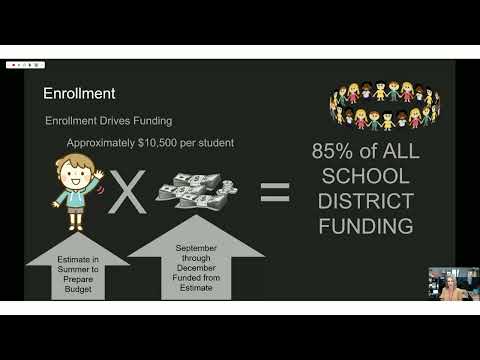
Lewis described the funding mechanics: districts rely on local levies and state apportionment (she said roughly $10,500 per full‑time student and that state funds account for about 85% of district funding), while bonds fund construction and levies fund ongoing services such as athletics, utilities and supplies. Using a $1.50 per $1,000 assessed‑value example, she said a $50,000 assessed property would pay about $6.25 per month ($75 per year) at that rate; the levies on the ballot were run near $2 per $1,000.
On the enrollment error, Lewis said the finance office provided incorrect information that resulted in reported counts being 207 students too high and that the Educational Service District (ESD 171) had raised concerns in the fall, which district finance staff rejected at the time. The enrollment correction required the state apportionment to be reduced by about $2,100,000 beginning in January, Lewis said, and the error was not discovered until May, prompting a spending freeze.
Lewis said a separate set of problems arose from unconventional accrual accounting started in January 2023 by a single person in the finance office; some accruals were not reversed and that double‑counting accumulated to about $9,900,000 in errors. She said the district overdrew its account in March 2023 and that county treasurer officials attempted to contact the district’s finance office without success.
Steps taken: Lewis said the district imposed a spending freeze in May 2024 that reduced summer expenditures by roughly $3,000,000, implemented significant staffing reductions, and increased transparency by reconciling monthly reports to the county treasurer’s cash report, posting accounts‑payable and budget status reports on the district website, and having board members review accounts‑payable twice monthly.
Lewis cited board policy and procedure 62.10, which requires board approval for single purchases over $25,000, and said that policy will be enforced going forward. The district has also added automated alerts in its accounting tools to prevent unreversed accruals and has adopted a 0‑based budgeting approach to match spending to expected receipts.
Lewis noted progress in cash position reporting — citing a county‑treasury cash figure of $11.6 million in September — but said the district will continue close monitoring and controls to avoid recurrence. She closed the presentation by reiterating the district’s central purpose: serving about 8,300 students in Moses Lake and restoring stable financial practices to protect educational services.
The district has presented these findings publicly and posted budget and payable reports on its website; Lewis said the board’s increased oversight and the accounting controls are intended to prevent similar errors in future years.