Get Full Government Meeting Transcripts, Videos, & Alerts Forever!
Get email alerts on the Facility Study topic
No spam. Unsubscribe anytime.
Boards consider facility study bids and urgent asbestos, mold and air‑quality testing
Summary
Supervisors and the school board discussed two facility‑study bids (about $79,000 and $105,000) and debated targeted asbestos and air‑quality testing estimated at $25,000–$35,000; facilities staff said some sampling can be done locally at lower cost and emphasized AHERA reporting procedures.
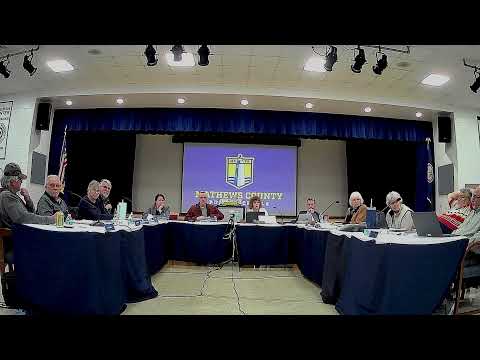
At the Feb. 4 joint work session, members of the Matthews County Board of Supervisors and the school board focused on facility planning and health‑safety testing after the division’s presentation of the FY26 operating budget.
Dr. Daniels said the division issued a solicitation for a facility study to evaluate enrollment projections, facility capacity and energy needs and reported two bids: about $79,000 (with potential add‑ons) and about $105,000. The study would take approximately four to five months to complete and is intended to inform long‑range options such as renovation, consolidation or new construction.
Health and safety concerns were a central thread. Several supervisors and board members urged immediate asbestos and air‑quality testing at the middle and elementary schools to determine whether renovation or replacement is the prudent course. One board member noted that a news report suggested modern consolidated schools have run much higher than earlier estimates and said the division must guard against spending on renovations that would be wasted if new construction proves necessary.
The facilities manager (speaker 12) confirmed asbestos exists in school buildings and noted that under the federal Asbestos Hazard Emergency Response Act (AHERA) schools are required to manage, monitor and report—not automatically abate—some asbestos that is not disturbed. He offered to collect samples and transport them to a lab to lower cost, and said earlier contractor estimates to test selected areas were in the $25,000–$35,000 range. Dr. Daniels said the same company could expand testing to include mold or other air‑quality analyses if the boards wished.
Why it matters: The outcome of the facility study and targeted testing will shape whether the division pursues staged renovations (and associated multi‑million dollar energy projects or HVAC replacements) or recommends larger capital solutions. Board members warned that partial renovations could risk spending millions on systems that a later recommendation might render redundant.
Next steps: Members asked staff to gather asbestos reports, vendor estimates, and any existing air‑quality data; the boards agreed to consider funding targeted testing as soon as feasible and to review facility‑study bids and recommendations at upcoming sessions.
No formal procurement decisions were made at the Feb. 4 meeting; staff were asked to return cost documentation and evaluation criteria for the facility study and testing.