Get Full Government Meeting Transcripts, Videos, & Alerts Forever!
Get email alerts on the School Referendum topic
No spam. Unsubscribe anytime.
Milton officials outline $5 million referendum, warn layoffs and larger classes if it fails
Summary
At a community meeting, Superintendent Donnan and district staff explained a proposed $5 million recurring referendum to close a budget gap, provided tax-impact examples (about $42 per $100,000 first year), and warned that failure could force teacher layoffs, larger class sizes and cuts to programs.
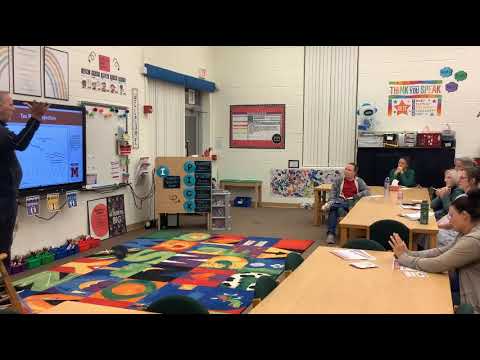
Superintendent Donnan told residents at a Milton School District information session that the district is asking voters this fall to approve a recurring referendum to address an estimated multi‑million dollar funding gap.
"When you have a deficit looming...you can either find additional revenue," Donnan said, "or you can make budget and spending reductions." She warned that a roughly $5,000,000 reduction would “require us to...let go some teachers,” increasing class sizes and reducing curricular and extracurricular offerings.
The district’s presentation traced the shortfall to state funding that, the presentation said, has not kept pace with inflation since 2009. The video shown at the session said the district’s per‑pupil funding is about $3,300 below what it would be if state support had matched inflation — a gap the district estimated at roughly $11 million in total.
Session materials and staff also explained the referendum’s tax impact in concrete terms. "If the referendum passes, the average tax impact on every $100,000 in property value would be $3.50 a month for the first year," the presentation said, equivalent to about $42 per $100,000 of assessed value (about $105 for a $250,000 home) as a first‑year example.
District staff member Sarah described how prior staffing adjustments have already increased class sizes in early grades and said additional cuts would exacerbate those pressures. "Those class sizes would just continue to increase," she said, noting kindergarten and second‑grade rooms with 23–25 students and some Northside middle‑grade sections with 26–29 students.
Officials gave specific examples of program risk if funding is not secured: reduced AP and specialized high‑school courses, fewer music and athletics options, and losing experienced teachers to higher pay elsewhere. Donnan recounted a recent case in which a neighboring district offered a $7,000 signing bonus and $7,000 higher annual pay for a French teacher who then left Milton.
Several attendees raised concerns about tax burdens on fixed‑income residents and asked how the district will educate voters. Donnan said the district is distributing mailers, posting slides and a video and publishing FAQs on its website; she encouraged residents to request staff presentations for local groups. She also reminded residents that district employees may provide information but cannot, while on duty, advocate for a vote.
Public commenters described the potential effects on classroom experience. A parent, Becky, said the prospect of larger classes “makes me want to homeschool my daughter,” reflecting the anxiety some attendees expressed about possible reductions.
Donnan closed the session by noting the district’s current levy decreased by 2.5% from last year as a result of prior belt‑tightening and reminding residents of the Nov. 5 referendum and additional outreach plans.
The district’s materials and presenters encouraged voters to review the handout and the website for details, and offered to meet with groups or individuals to answer questions ahead of the ballot.