Lifetime Citizen Portal Access — AI Briefings, Alerts & Unlimited Follows
Nick Gaetan on Houston roots, Tejano traditions and building Sunidos de Houston
Loading...
Summary
In a Library of Congress interview, Houston-born musician and folklife interviewer Nick Gaetan traces his musical roots, explains Tejano and conjunto traditions, and recounts how a neighborhood DJ project evolved into the Sunidos de Houston community-collection project (an AFC Community Collections Grant awardee).
Nick Gaetan, a Houston-born singer, songwriter and multi-instrumentalist, told an audience at the Library of Congress on Sept. 24 that his music and scholarship grow from the city’s East End neighborhoods and the Gulf Coast networks that connect New Orleans, Houston and San Antonio.
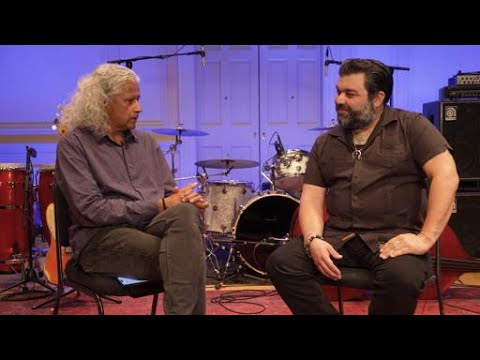
“Houston is so important, and I don’t know how I got so lucky to be from there,” Gaetan said during a conversation with Guha Shankar, senior folklife specialist at the American Folklife Center. The interview, held in the Jefferson Building, combined biography, musical history and a plainspoken explanation of the Sunidos de Houston documentation effort.
Gaetan described a childhood in a working-class, multicultural part of Houston where family listening habits mixed Motown, soul, rancheras and country. He said those home sounds, neighborhood dances and local venues shaped the mixture of conjunto, Tejano and soul that appears across his repertoire.
He framed Tejano as an evolving label rather than a fixed sound: older conjunto and orquesta bands shifted instrumentation across eras—horns to organs to accordions and, later, synthesizers—and those changes, he said, produced what listeners eventually called Tejano.
“The horn section turned into an organ…then the accordion,” Gaetan said, describing how practical and stylistic shifts in instrumentation helped define successive regional sounds.
Gaetan also emphasized how African American soul and regional exchange influenced Chicano bands in Houston. He said many local records flipped between soul and Mexican dance forms, reflecting a longstanding cultural intermixing rather than separate musical spheres.
He traced Sunidos de Houston’s origins to a two-person DJ crew, Tejas Got Soul, whose neighborhood nights in Houston grew into collaborative oral-history work. Gaetan recounted recruiting collaborators, recording veteran performers and documenting regional figures beyond the stage—DJs, studio workers and promoters—so those contributions would not be lost as elder participants age.
“We started as a little DJ thing in the neighborhood…then the team grew,” Gaetan said, describing how the project expanded into a Library of Congress–hosted Community Collections effort that sought to “retain that power, retain that voice.” The interview notes the project was selected as a 2022 awardee of the AFC Community Collections Grant.
Gaetan described his own early career milestones—playing upright bass with Los Carnales, touring to Mexico and later working with country artists such as Billie Joe Shaver—while stressing that many regional musicians balanced music with other jobs and did not always earn a living solely from performance.
He recounted specific oral-history moments—interviews with Joyce Day and other Houston figures—that revealed how port cities and highway networks circulated musical styles, and he named local institutions and studios (Pan American Ballroom, Sugar Hill Studios) to illustrate those connections.
Gaetan said the project’s reception in Houston has been warm: older performers re-engaged, audiences contributed memories and the community welcomed documentation of musical histories that often exist “in plain sight.” He urged continued grassroots collection work, recommending interviews with bartenders, record-shop owners and others who sustain local musical ecosystems.
Gaetan closed by previewing a program of original songs and curated medleys that will illustrate the Gulf Coast connections discussed in the interview. He said the evening’s performance at Cooley’s Auditorium would present those threads live, with collaborators including Nicolas Valdez.
The interview and performance are part of a broader effort to preserve Houston’s Chicano and Tejano musical traditions through recorded interviews, archival materials and public programs. Gaetan and project collaborators framed Sunidos de Houston as a community-driven endeavor to document musicians and cultural workers before those voices are lost to time.