Get Full Government Meeting Transcripts, Videos, & Alerts Forever!
Get email alerts on the Genius Act topic
No spam. Unsubscribe anytime.
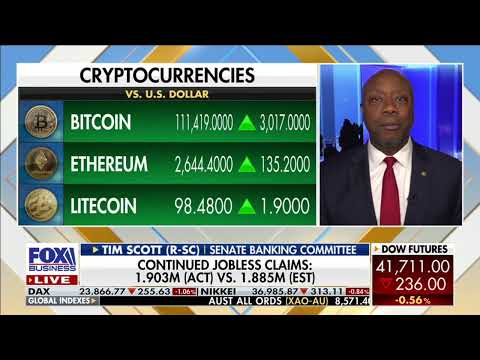
Senate Banking chairman calls Genius Act a 'historic' step to expand crypto access for low-income Americans
Summary
The chairman of the Senate Committee on Banking, Housing, and Urban Affairs described the Genius Act as a first step to expand access to digital assets, saying its stablecoin provisions could lower costs for struggling households while including concessions to banks that limit yield and interest.
The chairman of the Senate Committee on Banking, Housing, and Urban Affairs on a brief exchange described the Genius Act as a “first step” toward expanding access to digital assets for low-income Americans, saying the bill’s stablecoin provisions would “reduce the price and democratize our economy.”
The chairman said the measure could particularly help “single moms like the one that raised me,” arguing it would make financial services more affordable for people living paycheck to paycheck. He invoked President Trump’s campaign line that “America will be the crypto capital of the world” as part of the political momentum behind the proposal.
Addressing industry concerns, the chairman said banks “came to the table” during negotiations. He described a provision in the bill that removes “the possibility of yield and interest” on certain instruments as a key concession that helped secure banks’ neutrality on the legislation. “There are some parts of the bill that eliminates the possibility of yield and interest. That was a key component of getting the banks to be neutral on the bill,” he said.
The chairman framed the proposal as part of an effort to broaden economic participation: “We’re talking about reducing the price and democratizing our economy. … This may be a major part of [the president’s] legacy when we make it easier for the struggling Americans … to have more access at a lower price point.”
The brief on-record exchange in the transcript did not include a formal reading of bill text, a legislative vote, or further procedural steps. No amendments or formal motions were recorded there.
The interview concluded with a short exchange of thanks; the transcript contains no record of committee action or a vote on the Genius Act.