Get Full Government Meeting Transcripts, Videos, & Alerts Forever!
Get email alerts on the Attorney Fees topic
No spam. Unsubscribe anytime.
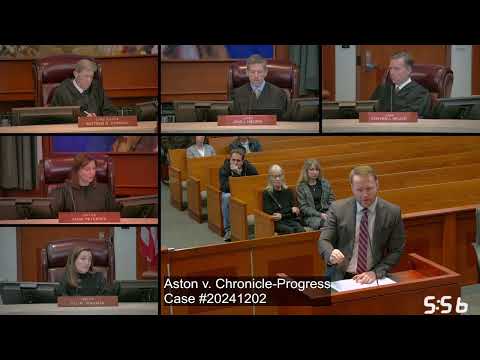
Utah Supreme Court hears appeal over roughly $350,000 UPEPA attorney-fee award
Summary
The Utah Supreme Court heard arguments in an appeal challenging a district court's award of roughly $350,000 in attorney fees under Utah's anti‑SLAPP law (UPEPA). Counsel disputed whether the fees were "related to" the special-motion and whether the district court adequately reviewed time entries, redactions and preservation of objections.
The Utah Supreme Court heard arguments in an appeal challenging a district court's award of roughly $350,000 in attorney fees under Utah's anti‑SLAPP statute, UPEPA. Appellant counsel told the court the newspaper defendant's billing records showed approximately 760 hours on a motion to dismiss and a fee petition and asked the justices to reverse the award as an abuse of discretion.
The dispute centers on how to interpret UPEPA's requirement that recoverable fees be "related to" the special motion. Christopher Bates, appearing for the appellant, told the court, "The Chronicle Progress spent 760 hours on a motion to dismiss a defamation claim and on a straightforward fee motion," and argued many entries were not reasonably necessary to prosecute the special motion and thus should not have been allowed. Bates highlighted category breakdowns disclosed only on appeal, heavy redactions that obscure some entries, and a supplemental fee award entered the day after counsel filed a supporting declaration.
Counsel for the Miller County Chronicle Progress pushed back, urging deference to the district court and arguing many of the challenges to specific hours were waived because they were raised first on appeal. Jeff Hunt, arguing for the newspaper, said the UPEPA process compresses much of what would be months of litigation into a short period and required extensive factual investigation across multiple articles. "It basically compresses 9 months, 6 months worth of litigation into 3 months," Hunt told the court, adding the defense had to track down recordings and litigation history tied to 15 statements across five articles to prepare a UPEPA motion.
Justices pressed both sides on several recurring themes: whether the "related to" question is a legal question subject to de novo review or a factual determination warranting appellate deference; how to treat discovery and front‑loaded investigation done before a special-motion filing; whether redacted billing entries prevent meaningful review of compensability; and whether certain routine items (for example, a jury demand or notice of appearance) are compensable when a special motion is the anticipated dispositive event. One justice asked whether the district court had done the line‑by‑line scrutiny necessary to exercise its discretion; another noted that counsel had not always unpacked claimed unrelated hours below, which could preserve or waive appellate challenges.
Appellant counsel emphasized particular entries he called excessive, including hundreds of hours allocated to drafting and revising briefs and over 100 hours listed for oral-argument preparation, and questioned a supplemental $50,000 award tied to fee‑motion preparation that the district court entered after a one‑day interval. The newspaper's counsel said redactions were narrow, much of the work was plainly connected to preparing the UPEPA motion, and the district judge's comprehensive memorandum decision supported his exercise of discretion.
The justices also discussed the appropriate standard to guide lower courts when drawing the line between work "related to" a special motion and work that is not. Appellant counsel proposed assessing whether work was "reasonably necessary to prosecute the motion," while defense counsel emphasized practical litigation realities and the need for the district court, as the factfinder, to make granular judgments about billing entries.
After roughly 90 minutes of argument and questioning, the court took the matter under advisement. The justices did not announce a decision at the hearing; the appeal will be resolved in a written opinion. The case raises questions about how Utah courts should apply UPEPA when fee awards include substantial pre‑motion investigation, redacted time entries and supplemental awards entered close in time to final judgment.