
Planning commission continues short‑term rental code review as residents, operators spar over fees and enforcement
Get AI-powered insights, summaries, and transcripts
Subscribe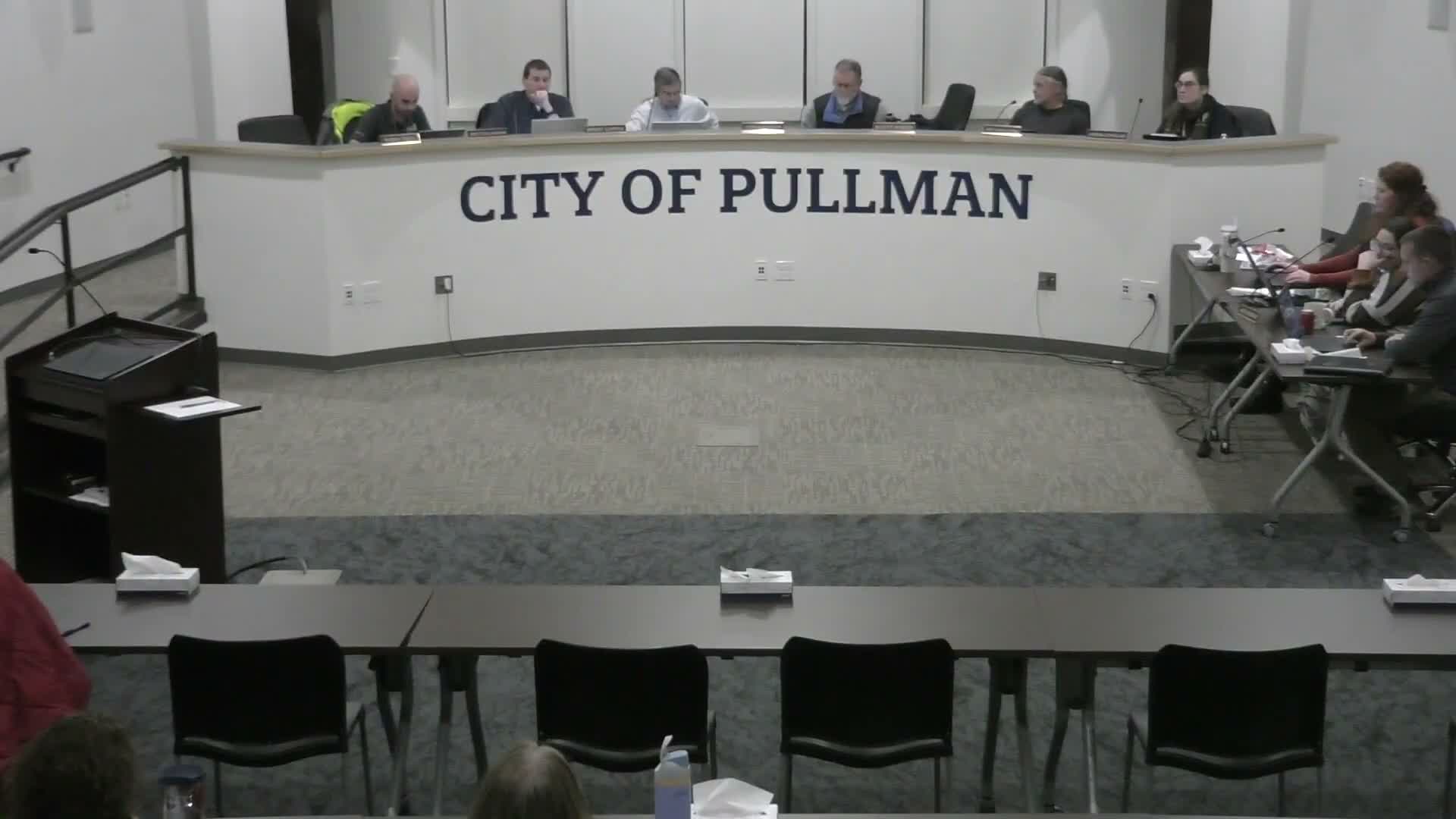
Summary
At a Feb. 19 special meeting (recorded as the City of Poland Planning Commission), residents and STR operators offered competing views on proposed short‑term rental rules for Pullman — from one speaker’s call to audit the housing master plan to operators’ cost estimates — while commissioners debated a $200 lifetime application fee and whether the code should include a mechanism to revoke permits after repeated complaints. Staff will return revised language next week.
The planning commission continued its review of proposed short‑term rental rules on Feb. 19, hearing more than a dozen public comments and an extended discussion among commissioners and staff about fees, safety requirements and enforcement. No final code change was adopted; staff was asked to revise the draft and return the amendments for further consideration at the next meeting.
Commissioners opened the meeting by calling roll and approving minutes from Jan. 28 on a motion from Lorena, seconded by Joe. The commission then resumed a multiweek discussion of proposed amendments to the city’s short‑term rental chapter; staff said tonight’s input would be folded into a revised draft for the commission’s next meeting.
Residents and operators filled the public‑comment period. Cindy Kotanda Raman, who said she has been a Pullman resident for 10 years, urged the commission to “trigger a draft comprehensive master plan audit” before easing rules, arguing that housing is a public‑health capacity issue and that loosening rules for two‑bedroom STRs would worsen competition for one‑bedroom units used by seniors. “Housing is a public health capacity issue,” she told commissioners.
Others urged the opposite approach. Dave Bakken, who identified himself as a professor emeritus speaking for alumni on cougfan.com, pressed the commission to incentivize more short‑term rentals and related visitor infrastructure, saying the town could accommodate “at least 500 more” arrivals for event weekends with appropriate incentives. Carl Olsen and Ginger Flynn, the latter a newly appointed Lodging Tax Advisory Committee member, echoed economic benefits tied to visitors and warned that onerous rules could reduce lodging‑tax revenue.
Emma White, who said she owns and manages multiple short‑term rentals, walked the commission through the application and inspection process and offered concrete cost figures. She estimated upfront compliance costs in the mid‑hundreds of dollars — citing inspection fees (which she said took roughly 5–10 minutes), interconnected smoke and carbon‑monoxide alarms, a fire extinguisher and the drawing requirements for a posted exit plan — and suggested clearer, pictorial guidance from staff to reduce the burden on small operators.
Much of the commission’s internal debate turned on the proposed $200 lifetime application fee. Some commissioners and commenters argued it can feel disproportionate when an on‑site inspection is brief; staff said the fee covers cumulative costs — review, inspections, recordkeeping and renewals — and noted it is a one‑time fee rather than an annual charge. Commissioners weighed trade‑offs: lower or waived fees might encourage hosts, but fees also fund staff work and the inspection program. Several commissioners warned that excessive fees or regulatory complexity could push hosts to a gray‑market, unregulated rental market that would reduce lodging tax receipts and visibility for compliance.
A second major flash point was enforcement language in the draft (referred to in the discussion as sections .080/.090). The proposed clauses would give the city an explicit mechanism to revoke an STR permit after a set number of verified complaints. Some commissioners said the revocation language was the only reliable municipal tool to stop a repeat bad actor who ignored platform enforcement, while others called that approach punitive and suggested moving enforcement mechanics into the city’s general enforcement chapter (Title 17.10) so revocation would apply consistently across permit types.
Commissioners also discussed parking and solid‑waste language (whether the STR chapter should duplicate existing code), administrative variances for off‑street parking on older lots, and how to organize the chapter so state requirements (RCW/WAC) are presented clearly alongside Pullman‑specific rules. Staff and commissioners favored clearer applicant guidance — an online checklist or a single document summarizing state and city requirements — while keeping the legal requirements codified so staff can justify approvals or denials.
No final vote was taken on the STR amendments. Staff was asked to revise the draft (including considering moving enforcement provisions into the enforcement chapter), post the updated language to the commission’s board‑docs site by end of day Monday, and return the item for further discussion at next Wednesday’s meeting; a legislative public hearing is anticipated in March. The meeting adjourned by consensus after a motion to adjourn from Joe, seconded by Lorena.
What’s next: staff will provide an edited draft and an organized checklist of state and city requirements; the commission plans to continue the item at its next meeting and to schedule a public hearing in March.