Niagara Falls board hears 90‑page technology plan; district proposes $2.8M Smart Schools Bond spending to refresh devices
Loading...
Summary
District leaders presented a 90‑page comprehensive technology plan centered on five domains (equity, AI, data, professional learning, cybersecurity). Superintendent Mark Laurrie proposed using about $2.8 million in remaining Smart Schools Bond Act funds to replace devices for grades 7–8 and staff to avoid burdening the general fund.
The Niagara Falls City School District on March 2 presented a 90‑page comprehensive technology learning plan and outlined a plan to use remaining Smart Schools Bond Act funds to refresh student and teacher devices.
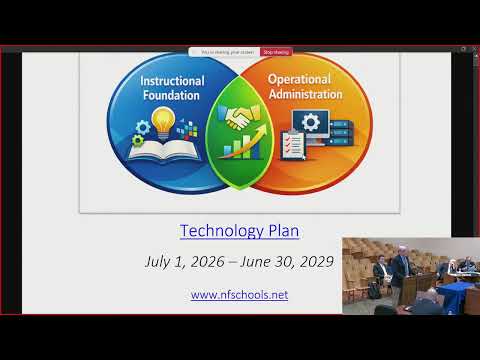
Superintendent Mark Laurrie introduced the plan as a “living document” and said the district will not let it sit unused; he then turned the presentation over to Ray Lohrey, the district’s technology lead. Lohrey thanked tech partners and walked the board through a three‑part structure: an executive introduction, an instructional foundation and operational administration.
The instructional foundation — presented by Ed Maynard — centers on five domains: equitable access to devices, safe and ethical use of artificial intelligence (AI), data‑driven instruction, professional leadership and cross‑cutting alignment (cybersecurity and privacy). Maynard said the district had chosen age‑appropriate devices (iPads for early grades, laptops as students age) and aligned the plan to New York State K‑12 computer science and digital fluency standards.
“AI worries people, but we want teachers to use these tools first, then train students,” Maynard said, noting the district has purchased a product called Magic School AI and rolled it out first to high‑school teachers, with elementary teacher training scheduled for March 19.
On operational matters, Lohrey outlined SMART goals focused on cybersecurity compliance and a three‑year replacement timeline tied to district inventories and procurement practices. He emphasized disaster recovery, app‑blocking and an asset inventory to coordinate funding across capital buckets.
Laurrie told the board the district has about $2.83 million remaining from the original Smart Schools Bond allocation and proposed using those restricted funds — allowable only for security and technology — to refresh teacher and student devices on a five‑year lease cycle. “If we don’t keep the cycle going, we’ll fall behind,” he said, while acknowledging the choice affects reserves and borrowing considerations.
Board members asked about daily classroom use and purchasing procedures. Maynard said teachers are using iPads “every day” and that Apple has visited classrooms; he described professional learning models including embedded coaching, a teacher resource center and district‑run training.
Budget constraints and procurement trade‑offs were part of the discussion: using bond money avoids an immediate general‑fund hit, but several members warned tapping reserves or borrowing could affect the district’s bond rating. Laurrie and staff said they’d examine partial approaches and BOCES procurement options while keeping the replacement cycle intact.
What’s next: Staff will bring budget details and page references for review; the technology committee will revisit plan pages regularly and the board will be asked to approve device purchases in line with bond restrictions.