Get Full Government Meeting Transcripts, Videos, & Alerts Forever!
Get email alerts on the Youth Substance Prevention topic
No spam. Unsubscribe anytime.
Chesterfield Safe presents Stay Safe results to Colonial Heights board, finds knowledge gains on cannabis and prescription risks
Summary
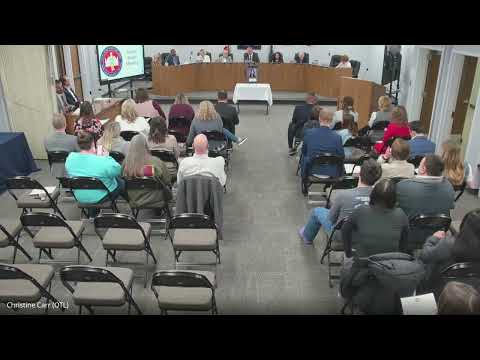
At a Colonial Heights City Public Schools board meeting, Lindsay Cunningham of Chesterfield Safe presented evaluation results from the Stay Safe prevention program showing measurable knowledge gains among middle‑school students—largest increases on cannabis and prescription drug risks—and urged parent education and resource coordination.
At the Colonial Heights City Public Schools board meeting, Lindsay Cunningham, outreach coordinator with Chesterfield Safe, summarized evaluation results from the Stay Safe substance‑use prevention program delivered to Colonial Heights middle‑school students and recommended outreach to parents and coordination with local youth services.
"Knowledge increases across the board here," Cunningham said, adding that "the biggest increases here were around cannabis use and prescription drug use." Cunningham said pre‑assessment scores were already high but the program produced gains in understanding that certain substances can lead to a substance‑use disorder and in practical refusal and coping skills.
Cunningham described the Stay Safe curriculum as evidence‑based and intended to complement classroom prevention curricula. The program includes pre‑ and post‑assessments and an educator assessment. She said more than 90% of students could identify at least one trusted adult after the program and that the skill‑building component (refusal skills, identifying trusted adults, coping strategies) showed measurable improvement.
Cunningham flagged a notable increase this year in short‑answer responses referencing loved ones' experiences with addiction: "My family went to jail for it," and "I don't want to end up like my aunt," were examples she read from student responses. She said the program team has shared results with the middle school and the Office on Youth and is coordinating next steps to support students and parents.
To address those trends, Cunningham recommended parent education sessions, stronger connections between schools and local youth resources, and resources for counselors and teachers. "We're here as an organization to support you guys and, if we can do any trainings or give any materials or anything, we're just here as a resource," she said.
Cunningham also previewed a student PSA competition run by the program; she said winners will be promoted on social media. Board members thanked Cunningham and noted they would follow up with staff if they had questions about implementation or material needs.
The presentation did not require a board vote. Cunningham provided contact information for further questions and offered to coordinate any additional training or materials the district requests.