Get Full Government Meeting Transcripts, Videos, & Alerts Forever!
Get email alerts on the Payments topic
No spam. Unsubscribe anytime.
Federal Reserve chair opens payments conference and proposes a 'payment account' for innovators
Summary
At the Federal Reserve Board's Payments Innovation Conference, the Chair said the Fed will 'embrace the disruption' from DeFi, crypto and AI and asked staff to explore a prototype 'payment account' to give legally eligible payment innovators limited access to Fed payment rails under strict risk controls.
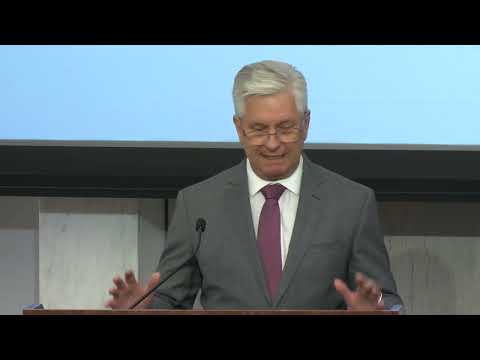
The Chair opened the Federal Reserve Board’s first Payments Innovation Conference and urged engagement with DeFi and other digital-asset innovators, saying the Fed will "embrace the disruption" shaping the future of payments.
The remarks introduced a concrete policy idea: the Fed will ask staff to explore what the Chair described as a "payment account," a prototype or "skinny master account" that would give legally eligible payment innovators access to Federal Reserve payment rails with tailored restrictions and a streamlined review process.
The Chair framed the conference as having two central goals: to focus on new technologies coming from DeFi and crypto and to signal that the Federal Reserve is open to participating in the payments revolution rather than standing apart from it. "Second, I wanted to send a message that this is a new era for the Federal Reserve in payments," the Chair said, adding that the Fed intends to be "an active part of that revolution."
Explaining the payment-account concept, the Chair said the account "would be available to all institutions that are legally eligible for an account and would be beneficial for those focused primarily on payment innovations." The idea, the Chair said, is to provide basic reserve payment services to firms that now generally operate through a third-party bank with a full master account.
The Chair outlined several prototype constraints intended to limit balance-sheet and liquidity risk: balances in the payment account would not earn interest; the Reserve Banks could impose balance caps; the accounts would have no daylight overdraft privileges; they would not be eligible for discount-window borrowing; and payments submitted when an account's balance hits zero would be rejected.
The Chair described two broad models for payments innovation — private-sector-led change and, less commonly, public institutions building platforms to fill specific market needs — and said public-sector solutions should be used sparingly and where they address a clear market gap. The Fed also emphasized its historical role in improving payment and settlement efficiency, citing services such as Fedwire and other settlement infrastructures.
The Chair said Federal Reserve staff are conducting hands-on research on tokenization, smart contracts and the intersection of artificial intelligence and payments to evaluate whether those technologies could upgrade the Fed’s own payment infrastructures. "To that end, I have asked Federal Reserve staff to explore the idea of what I'm calling a payment account," the Chair said.
The Chair asked staff to engage with interested stakeholders about the benefits and drawbacks of the payment-account approach and indicated attendees would hear more detail during the conference panels. He closed by thanking panelists, attendees and Fed staff for organizing the event.
No formal policy decisions or votes were announced during the opening remarks; the Chair described the payment-account idea as a prototype under study and invited further stakeholder engagement and analysis.