Get Full Government Meeting Transcripts, Videos, & Alerts Forever!
Get email alerts on the Financial Inclusion topic
No spam. Unsubscribe anytime.
Agency official urges expanded access to bank accounts, faster payments and small‑dollar loans
Summary
At a Federal Reserve Banks–hosted forum, an agency official said expanding access to basic bank accounts, modern payment systems and safe, affordable small‑dollar loans can reduce financial volatility for low‑ and moderate‑income households, citing Federal Reserve survey data showing many would struggle with a $400 emergency.
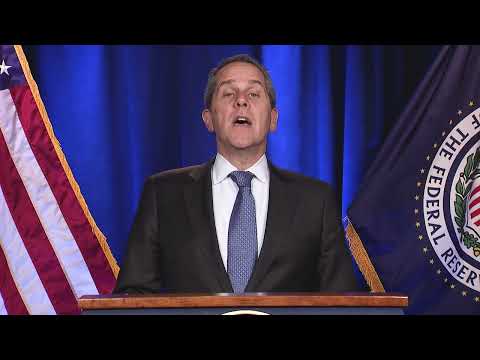
An agency official speaking at a forum hosted by the Federal Reserve Banks of Saint Louis, Boston, Richmond and Philadelphia said expanding access to basic bank accounts, faster payment systems and safe small‑dollar loans is essential to improving the financial stability of low‑ and moderate‑income households.
Why it matters: The official cited findings from the Federal Reserve’s 2024 survey of household economics and decisionmaking to illustrate the stakes, noting that “nearly 20 percent of adults said they would have paid at least in part by selling something, using a payday loan, deposit advance, or overdraft” when faced with an unexpected $400 expense, and that the share rises to 46 percent among households with incomes under $25,000.
The speaker highlighted Bank On — a national initiative supported by the Cities for Financial Empowerment Fund — as a model for expanding account access. According to the official, Bank On‑certified accounts meet standards such as low minimum opening deposits and limits on maintenance fees, overdraft and other unexpected charges.
“The ability to manage personal financial decisions safely and dependably begins with access to a bank account,” the official said, arguing that account access is foundational to household financial health. The speaker also described the Bank On National Data Hub, hosted by the Federal Reserve Bank of St. Louis, as a critical dataset for understanding how institutions expand low‑cost banking and how those services benefit households.
Beyond accounts, the official said innovations in payments and credit underwriting can enlarge access. Faster payment systems, the speaker said, let households better control income and bill timing, reducing the knock‑on effects of income volatility. The official also pointed to small‑dollar loans offered by banks and underwriting that uses alternative financial data — deposits, rent and utility payments, and cash flows — as ways to assess creditworthiness for people with thin or no traditional credit files.
The speaker argued that these approaches can both expand the pool of eligible borrowers and make underwriting faster and less expensive, calling for products that are “safe, reasonably priced and transparent” to help households navigate emergency expenses.
No formal actions or votes were taken during the remarks. The official closed by urging continued collaboration among the Federal Reserve System and other stakeholders to advance financial inclusion.
Sources: remarks delivered at the Federal Reserve Banks–hosted forum (see timeline); Federal Reserve 2024 survey of household economics and decisionmaking, as cited by the speaker.