Get Full Government Meeting Transcripts, Videos, & Alerts Forever!
Get email alerts on the Board Governance topic
No spam. Unsubscribe anytime.
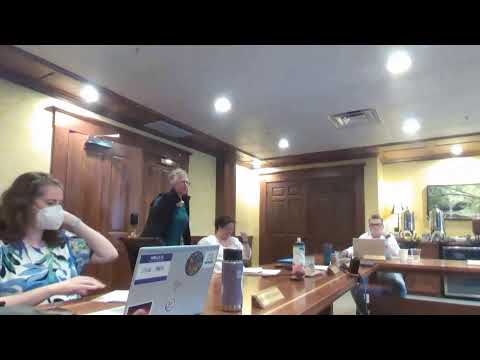
Yellow Springs Exempted Village school board retreat focuses on policy vs. strategy, sunshine law and communications
Summary
At a morning retreat, the Yellow Springs Exempted Village school board worked with facilitators to define what counts as board policy, how the board may communicate with staff within sunshine-law limits and how to rebuild trust amid contested facility planning. No formal votes were taken.
At a morning retreat, members of the Yellow Springs Exempted Village school board spent roughly two hours prioritizing questions and topics to bring to outside facilitators, including how to distinguish codified board policy from strategic direction and how the board should communicate with staff without violating sunshine-law restrictions.
The session — led by a Moderator and attended by board members and staff — was billed as an opportunity to shape afternoon workshops with consultant Jennifer Harden and a leadership session with Steve Bilhau. Jake, a board member, framed the discussion broadly: “My understanding of policy is that is our word policies are on Word docs,” he said, arguing that publicly posted written policies are what outside parties typically seek when they ask for a district’s policy.
Why it matters: members said the issues have practical consequences for district governance and a large capital project. Participants repeatedly raised sunshine-law concerns tied to prior discussions about selling land to the village and asked the facilitators to use scenarios to clarify what communications and preparatory work are permitted outside of public meetings.
Board member Dorothy outlined a set of best-practice topics she wanted covered: clearer agenda preparation, pre-meeting work to surface roadblocks, and separating factual advice from advocacy. “We get our advice from our administrators, and then when we deliberate, it’s the school board that deliberates,” Dorothy said, urging a clearer distinction between roles.
Several members asked for specific legal and policy guidance during the facilitator sessions: Ohio Revised Code references and OSBA (Ohio School Boards Association) guidelines were cited repeatedly, and participants asked staff to pull relevant board-policy sections for review (participants referenced policy notations variously as "0149.1" and other internal policy codes during the discussion).
Communication with staff was a central thread. One board member asked whether the president may legally send informational memos to members between public meetings without crossing into prohibited deliberation. Members described a tension between the need for timely information and the risk that repeated private communications could be construed as an unlawful "round robin" or collective deliberation.
The group also discussed accountability and conduct: participants requested examples and tools for holding the board to standards including protocols, evaluations and clearer behavioral expectations. One participant emphasized the need for respect and accommodations in meetings, saying, “I am an autistic person,” and asking colleagues to consider physical cues and arrangements that make discussion accessible.
Several participants raised a wider pattern of concerns they said had eroded trust: perceived disrespect of administrators’ expertise, a narrative in the community that "three board members don’t care about the kids," and a tendency to spend disproportionate time on facilities and financials rather than educational visioning. A participant noted the district is engaged in a major facilities upgrade and described it during the session as a "$55,000,000 project," underscoring the stakes for public engagement and procedural transparency.
Next steps: organizers asked participants to prioritize the list of topics to present to Harden and to bring examples and scenarios for the afternoon workshop and the next morning’s leadership session. No motions or votes were taken during the retreat; members planned to reconvene after the consultants’ presentations to translate the discussion into specific follow-up actions.
Discussion and attribution notes: quotes and attributions in this report come from participants who spoke during the session; where speakers did not identify a formal title in the record, the article uses the functional role assigned in the transcript (for example, "Moderator" or "Committee member").