Get Full Government Meeting Transcripts, Videos, & Alerts Forever!
Get email alerts on the Demographic Study topic
No spam. Unsubscribe anytime.
Rockwood’s demographic study forecasts gradual enrollment decline; board adopts five-year CSIP
Summary
A consultant presentation showed a modest multi-year enrollment decline driven by lower birth rates and yield rates; the board adopted the district’s 2025–2030 Comprehensive School Improvement Plan 'Forward Together' by voice vote.
Rockwood School District leaders and an external consultant told the school board that demographic trends point to a slow, sustained decline in resident student counts over the next decade, and the board unanimously adopted a new five-year Comprehensive School Improvement Plan (CSIP) to guide programming and facilities decisions.
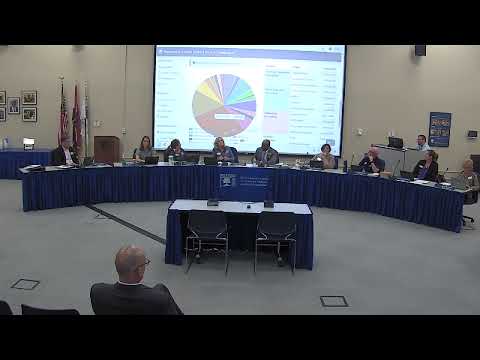
The presentation, led by MGT project staff introduced to the board as Lauren Woods and Cameron Arsenault, explained the firm’s methods: verification of student counts, geocoding addresses to study areas, and applying student-generation (yield) factors to current and planned housing. Presenters said the district’s resident student population is roughly 17,477 today and projected to be about 16,139 in 2029, with longer-term declines close to 15 percent over 10 years. The team used a district-wide student yield factor of approximately 0.44 students per new housing unit and separated resident forecasts from nonresident/enrollment-choice populations for clarity.
Why it matters: District leaders said the change is gradual—not an emergency—but does create opportunities to repurpose space and rethink programming. Presenters highlighted pockets of inward mobility (for example, parts of Chesterfield) and a concentration of new units in the Eureka High School zone; they also noted that apartments tend to generate far fewer students than new single-family homes.
Board members pressed on methodology and operational implications: how the study accounts for neighborhood affluence, how cohort analyses feed staffing decisions, and how open-enrollment or choice programs alter utilization. MGT said cohort tables will guide staffing conversations while geocoded study-area maps support facility and boundary planning.
The CSIP adoption: After district cabinet members summarized the plan’s goal areas—nurturing learning, fiscal responsibility, highly qualified staff, safety and well-being, and continuous improvement—the board moved to adopt the 2025–2030 CSIP, "Forward Together," as presented. The motion passed by voice vote; no roll-call tally was recorded in the transcript.
What’s next: District staff said a detailed report and additional charts are available on the district website and that the CSIP will be operationalized through building-level school-improvement plans and year-by-year monitoring tied to MSIP-6 requirements.