Get Full Government Meeting Transcripts, Videos, & Alerts Forever!
Get email alerts on the Sign Code topic
No spam. Unsubscribe anytime.
Associate Planner Coyle outlines sign‑code changes to allow EV‑charger displays, city wayfinding and stricter commercial‑sign enforcement
Summary
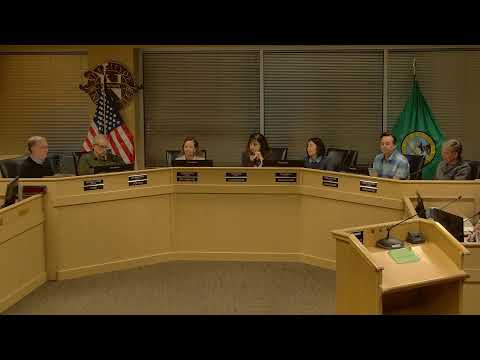
At the Feb. 25 Newcastle Planning Commission meeting, Associate Planner Coyle presented incremental sign‑code amendments to distinguish commercial from noncommercial temporary signs, permit narrowly tailored EV‑charger displays, exempt county transit arrival boards and allow limited city wayfinding monuments; staff will return for a public hearing in March.
Associate Planner Coyle presented a package of targeted updates to Newcastle’s sign code at the Planning Commission meeting on Feb. 25, saying the changes would leverage recent legal developments to give the city more leeway to regulate commercial temporary signage while protecting noncommercial speech.
Coyle framed the effort around Reed v. Town of Gilbert, the 2015 U.S. Supreme Court decision, and more recent precedent that allows limited regulation of commercial speech. “We propose to amend the applicability section, at the front of the code to state that the commercial speech on temporary signs is more restricted than noncommercial speech,” Coyle said, explaining the change would let staff continue removing commercial signs during election periods while leaving political/noncommercial signs broadly protected.
Why it matters: staff said the proposed distinction would let the city resume reasonable, safety‑oriented enforcement of commercial signs during election seasons when it has historically paused enforcement for legal caution, reducing sign clutter and speeding code compliance.
Key proposals and concerns
- EV‑charger displays: Coyle said a private EV‑charging firm previously found Newcastle’s ban on video boards made its project commercially nonviable. Staff proposed a narrow carve‑out in the electronic‑message‑center definition to allow displays when accessory to EV chargers, explicitly tailored to avoid generalizing video signage across the city.
- Transit and county exemptions: because a proposed RapidRide route along Coal Creek Parkway could use county‑standard arrival boards, staff recommended exempting county transit time‑boards (regulated to county specs) so standard transit displays could be installed without conflicting with the city’s sign code.
- Public wayfinding and monument signs: staff proposed an exemption for publicly funded or city‑endorsed monumental wayfinding signs (for beautification and directional use), limited by an official action or resolution so the exemption would not apply to private or campaign signage.
- Master sign plans and permits: small edits would exempt a single new commercial building (two or fewer retail stalls) from triggering a master sign plan, allow master plans to remain effective while underlying building permits are active and modestly increase some temporary sign size or height allowances to reduce routine rejections.
Commissioner questions and staff responses
Vice Chair Trumpman raised a technical point on illumination, noting a reference to “25 watts” in the existing code: “A 25 watt LED will blind you,” he said, arguing units like watts are outdated measures of perceived brightness. Coyle said staff would locate the provision and consider converting to modern brightness metrics (nits or lumens).
On enforcement, Coyle described how the small‑city enforcement model works: planners periodically run sign sweeps and, in practice, give a conservative window around election cutoff dates so signs posted early are not immediately removed. Removed signs are stored briefly at city hall (staff said about a one‑week hold) and staff attempt general notification to chambers/businesses in advance of sweeps.
Several commissioners asked about the size and nighttime impacts of EV‑charger monitors and whether the code should include explicit dark‑hours or brightness limits; staff agreed to add clearer nighttime‑lighting standards in the next draft. Commissioners also probed how public‑funded signs would be defined; staff said they would tighten the definition so an exemption would require a formal city action (for example, a council resolution) rather than informal sponsorship.
Next steps
Coyle and other staff said they will refine the draft language (including updating illumination units, tightening the publicly‑funded definition and narrowing the EV‑charger carve‑out) and return with a public hearing on the sign code in March. No formal vote was taken on the substantive code changes at this meeting.
Representative quotes
“We propose to amend the applicability section… that the commercial speech on temporary signs is more restricted than noncommercial speech,” Associate Planner Coyle said.
“A 25 watt LED will blind you,” Vice Chair Trumpman said while questioning whether the code should use brightness units better aligned with modern lighting technology.
Ending
Staff will return with a revised draft for public hearing and formal consideration in March; commissioners signaled interest in more precise language on illumination, enforcement timing and narrow exemptions for publicly funded wayfinding and transit signage.