
Wright Technical Center director outlines programs, enrollment and $10.5 million capital request
Get AI-powered insights, summaries, and transcripts
Sign Up Free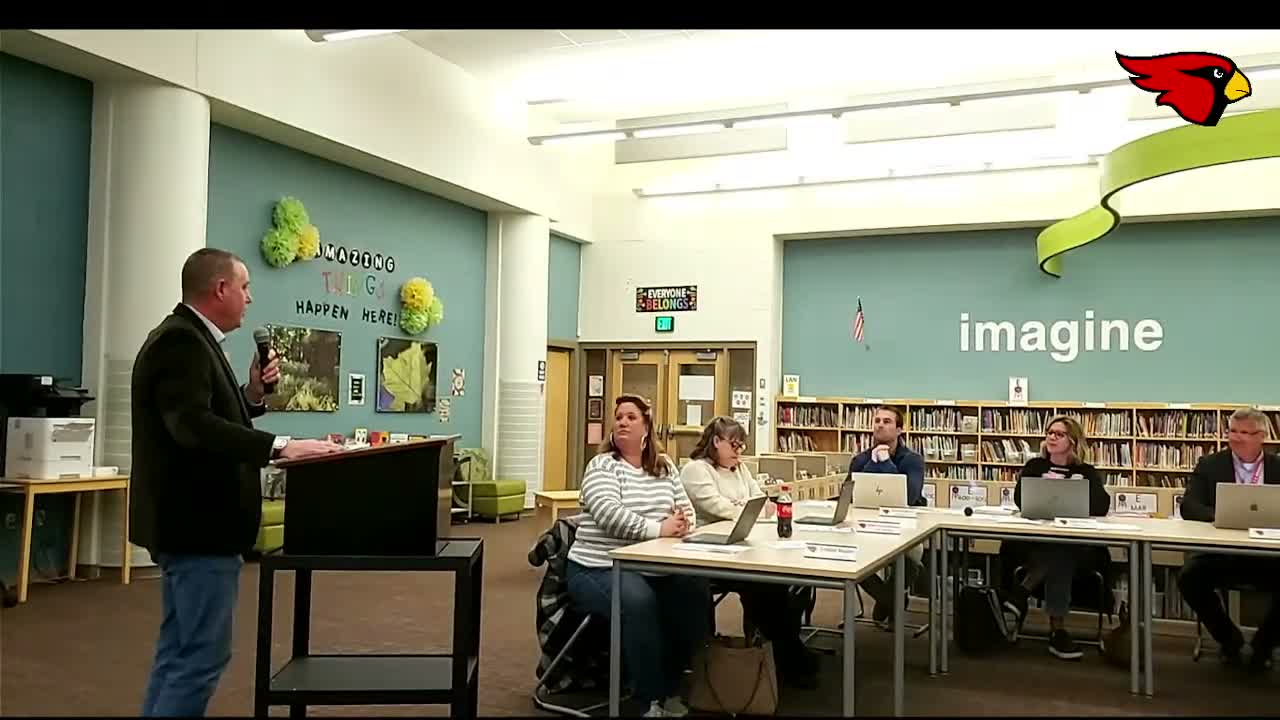
Summary
Wright Technical Center Executive Director Brian Nutter briefed the Annandale Public School District board on program enrollment, industry partnerships, recent grants and a $10.5 million capital grant request to the state to address long‑standing facility needs.
Brian Nutter, executive director of Wright Technical Center, told the Annandale Public School District board that the cooperative’s technical programs serve hundreds of students across eight member districts and highlighted opportunities for greater district participation. “So I'm Brian Nutter. I'm the somewhat new executive director at Wright Technical Center, started July 1,” Nutter said in his presentation.
Nutter said Wright Tech offers 12 technical programs (14 including two transitional programs) and serves about 530 students this year; Annandale currently has 31 students enrolled in various Wright Tech programs. He described program capacity and timing constraints — many programs run year‑long, making midyear student placement difficult — and noted Wright Academy (the ALC) fluctuates but historically averages roughly 85 students districtwide.
Why it matters: Nutter argued the programs fill local workforce needs and rely on business and union partnerships to operate. He described successes including heavy equipment operations (39 students, three from Annandale), a student‑built house in construction technology that has been sold, a retooled law‑enforcement/investigations class led by a retired FBI investigator, and a welding program whose students recently placed at competitions.
Nutter highlighted a Department of Education grant of $43,000 to begin concurrent enrollment in early childhood education with Hennepin Technical College; the program started Feb. 9 and offers students transferable college credit at no cost to them. He also described co‑located partners — Wright County Community Action head start and Masiko’s Cornerstones program — that provide practical learning sites for Wright Tech students.
On finance, Nutter explained Wright Tech’s access‑and‑usage fee that member districts pay, noting Annandale’s share was 7.2 percent this year and is projected at 6.76 percent next year for Wright Tech operations. He also described student support aid funding a 0.8 FTE social worker and a multi‑year fund stabilization effort to recover from past facility project deficits; he said the current projected deficit is being managed and estimated at around $150,000.
Nutter said Wright Tech will again ask the state legislature and the capital investment committee for a $10,500,000 capital bond grant, with the Minnesota Department of Education serving as fiduciary for any awarded funds. “We are preparing the workforce of the future, and we need their support because we can't make, necessary, repairs and upgrades to our facility and our programming without the support of, right now the state,” he said.
Board members asked operational questions — including where heavy equipment is stored (a one‑acre “sandbox” adjacent to the building) and whether programs prepare students for a commercial driver’s license; Nutter said no current program grants a CDL but partnerships could make such training possible.
The presentation concluded with an invitation for board members to tour Wright Tech to see programs and partnerships in person. The board did not take formal action on the presentation itself.