Get Full Government Meeting Transcripts, Videos, & Alerts Forever!
Get email alerts on the Meeting Room Policy topic
No spam. Unsubscribe anytime.
Wylie Library advisory board approves updated meeting‑room policy
Summary
The Wylie Library Advisory Board unanimously approved an updated meeting‑room policy that renames the Small Business Center as a Small Meeting Room, clarifies booking rules and capacity limits, and leaves enforcement authority with library staff.
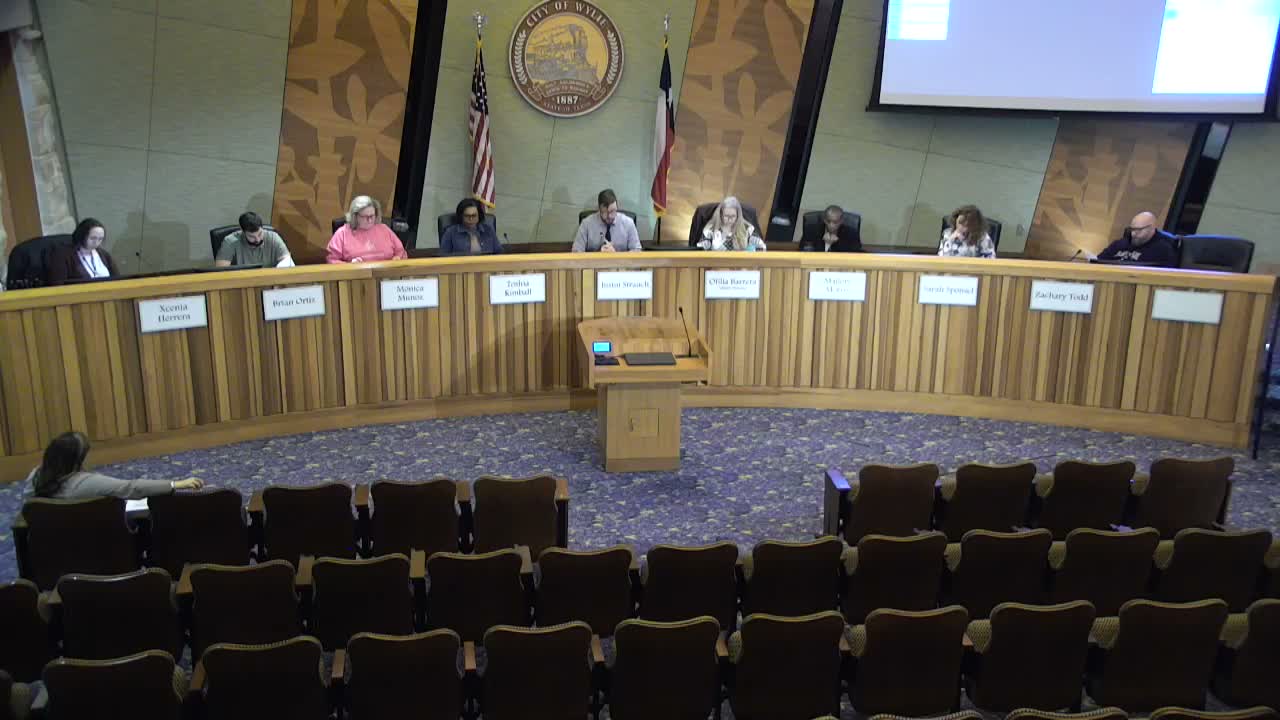
The Wylie Library Advisory Board voted 7–0 on Feb. 23 to adopt an updated meeting‑room policy that streamlines language, clarifies room capacities and booking rules, and renames the former "Small Business Center" as the Small Meeting Room for community use.
Library staff member Ophelia told the board the policy is a routine five‑year review and that the revision primarily simplifies wording and groups related provisions. The Small Meeting Room will be available free to the public, must be booked at least three days in advance and has a maximum capacity of eight people, the policy says. The packet lists capacity rules for other rooms and explains that furniture changes affect allowable occupancy.
Board members asked for clearer language defining "partisan events" and what it means for a meeting to be in "conflict with established programs and services." Ophelia said those provisions were added after past incidents — for example, a group displaying campaign signage in library windows — and described how staff uses reservation intake questions and on‑site observation to detect misuse. She also noted that a separate patron behavior policy contains a broader prohibited‑items list and that the attorney required an indemnification clause for organizations using rooms.
During discussion Chair asked whether the authority to cancel or deny reservations rests with the library director; Ophelia confirmed the policy states the library director may cancel or deny a reservation and said staff typically consult one another before taking action.
Committee member moved to approve the updated policy; another member seconded the motion. The board approved the policy 7–0.
The board did not send the policy back to attorneys for further review because staff said the changes are not substantive. The policy packet and the board's vote were recorded in the meeting minutes.