
Senate committee advances bill tightening public‑employee union certification after marathon hearing
Get AI-powered insights, summaries, and transcripts
Subscribe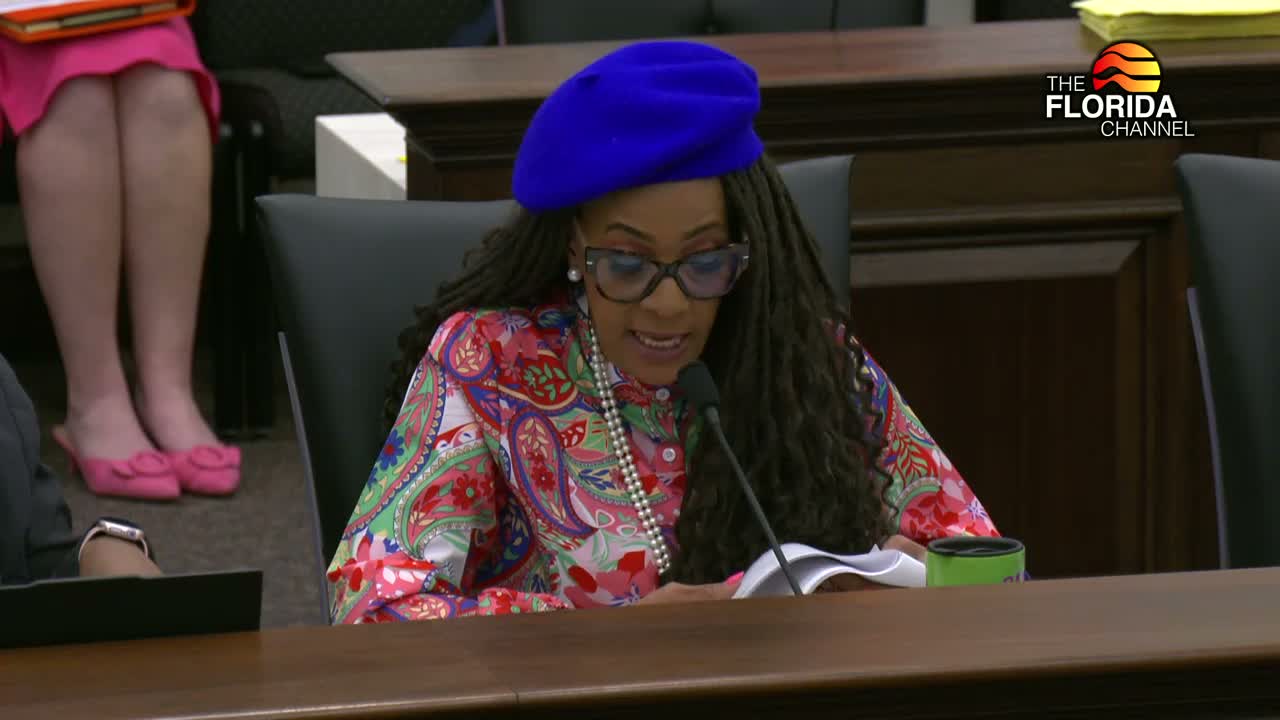
Summary
After hours of public testimony and wide legislative debate, the Florida Senate Fiscal Policy Committee advanced CS for SB 1296, a package of changes to recertification, election and disclosure rules for public‑employee bargaining units. Supporters said low turnout and recent fraud show a need for reform; opponents said the bill will weaken workers and raise constitutional questions.
TALLAHASSEE — The Senate Fiscal Policy Committee on Tuesday advanced CS for SB 1296, a sweeping package of changes to public‑employee relations that drew more than a hundred speakers and a daylong debate over whether the state should raise thresholds for union certification and tighten oversight.
Sponsor Sen. Jason Martin defended the changes as a practical fix for what he described as “a broken status quo,” pointing to low participation rates in past bargaining‑unit elections and to recent criminal convictions in Duval County as reasons to require stronger showing of interest and higher recertification thresholds. “If the workers of the state of Florida want to be better represented, their unions have to do a better job,” Martin said in committee testimony.
The bill, as amended in committee, creates higher participation and majority thresholds for some groups and preserves a lower bar for designated public‑safety bargaining units. It also adds procedural and reporting requirements for the Public Employee Relations Commission (PERC) and broadens the definitions and penalties related to strike‑related conduct, changes that supporters say will improve transparency and accountability.
Opponents — a steady stream of teachers, bus drivers, sanitation workers, nurses, electricians and union leaders — warned that the bill will make it harder for working Floridians to bargain for pay and safe working conditions. “This bill will silence the voice that public service employees like me use to speak up,” said Angela Barron, a Marion County school bus driver. Dozens of speakers described tight household budgets and argued that weakening collective bargaining would worsen recruitment and retention in public services.
Several senators raised constitutional concerns during floor debate in committee. Sen. Bracy Davis said the proposal raised significant equal‑protection and association issues and predicted litigation if the bill advances. “This is an unconstitutional train wreck,” she said, urging colleagues to reject the measure.
Sen. Stephanie Simon offered a late amendment that narrowed some provisions and set the specific quorum and majority thresholds that the committee adopted. After extensive questioning and negotiation, the committee voted to report the bill favorably to the Senate calendar.
Supporters pointed to a series of low‑turnout recertification votes cited in the sponsor’s presentation — examples where only a small fraction of eligible bargaining‑unit members voted — arguing that such results show unions sometimes operate with minimal active support. Opponents countered that low turnout reflects the practical barriers to participation and that the right to collective bargaining is constitutionally protected in Florida.
The hearing included a high volume of public testimony both for and against the measure: veterans, long‑time city and county workers, educators, and municipal technicians gave one‑minute statements describing how the proposal would affect wages, working conditions and service delivery. The Freedom Foundation and several school superintendents testified in favor, arguing that recertification rules should ensure unions represent an active majority.
After adoption of Senator Simon’s amendment and extended debate among committee members, the committee took a roll‑call vote and the chair announced that CS for SB 1296 was reported favorably. The committee also completed work on several other bills earlier in the day, reporting numerous bills favorably on matters including child protective investigations, a missing‑persons program for people with special needs, teacher mentoring, and environmental and housing measures.
What happens next: CS for SB 1296 will go to the Senate calendar for possible floor consideration. Given the legal questions raised in committee, proponents and opponents both acknowledged the bill could face post‑enactment court challenges if it becomes law.
Votes at a glance: The committee reported favorably on multiple bills during the session, including CS for CS SB 42 (child medical diagnosis and child protective investigations), SB 1570 (missing persons with special needs), CS for CS SB 182 (teacher training and mentoring), CS for CS SB 794 (APD and waiver support coordination) and CS for CS SB 1510 (Department of Environmental Protection package).