Get Full Government Meeting Transcripts, Videos, & Alerts Forever!
Get email alerts on the Budget Noninstructional topic
No spam. Unsubscribe anytime.
West Hempstead board warned of rising health‑insurance, pension and transportation costs in budget workshop
Summary
Administrators told the West Hempstead Union Free School District Board on March 5 that health‑insurance and transportation costs — along with higher pension contributions — are the major non‑instructional drivers pushing next year’s budget up and may require further cost reductions if revenue falls short.
Members of the West Hempstead Union Free School District Board of Education heard a non‑instructional budget briefing March 5 in which administrators said steadily rising health‑insurance, pension and transportation costs are the largest pressures on next year’s spending plan.
"Medical insurance is the biggest challenge right now," Brian Phelps, the assistant superintendent for business operations, told the board, saying the presentation projects a budget increase of more than $1,200,000 for health coverage and described the change as roughly an 11 percent uptick compared with current estimates. Phelps said the district’s health‑insurance costs have escalated in recent years and that the encumbered figures shown in the packet do not yet include all expected future charges.
Pensions and mandated state costs also factor heavily. Phelps said the Teacher Retirement System (TRS) contribution was presented at about 10.02 percent and that the Employee Retirement System (ERS) contribution has risen substantially, increasing pressure on the tax‑cap calculation.
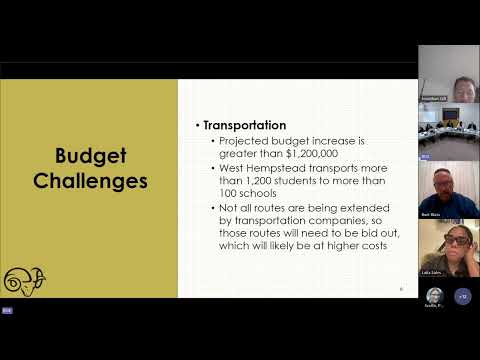
Transportation is another major driver: the packet lists roughly $8.7 million in transportation costs and Phelps said projected outlays for 2024–25 exceed $9 million. The district transports more than 1,200 students to over 100 schools, he said, and some contract carriers declined CPI‑rate extensions; routes not extended will be rebid, and the district has heard of rebids increasing by as much as 30 percent in other districts.
Phelps reviewed non‑instructional line items the Office of State Controller coding identifies — board expenses, district clerk, district meetings (vote costs), business‑office accounts, legal fees consolidated from prior personnel/legal codes, records management, public information, facilities operations, contractual security, and the district’s share of BOCES administrative costs.
Board members asked whether earlier warnings about possible personnel cuts had already been reflected in the packet. Phelps said the current spreadsheet incorporates some cost‑cutting iterations but not every potential future reduction; he added that final state aid figures, outstanding BOCES numbers and other revenue items remain unsettled and could require additional adjustments.
Several trustees requested clearer reconciliation between encumbrances and year‑to‑date expenditures, and asked the administration to provide more refined estimates for health‑insurance encumbrances and any other lines where year‑end variances could materially change the projected budget.
The board was reminded the instructional portion of the budget will be reviewed March 12, the budget hearing is scheduled for May 7 and the district’s budget vote is set for May 21.
Poughing forward on numbers and next steps, Phelps and other administrators said they would return with updated figures and clarified encumbrance data as the budget process continues.