Get Full Government Meeting Transcripts, Videos, & Alerts Forever!
Get email alerts on the Nuclear Weapons Lifecycle topic
No spam. Unsubscribe anytime.
Sandia National Laboratories outlines role as systems integrator in U.S. nuclear weapons lifecycle
Summary
A presenter from Sandia National Laboratories described the lab’s mission since 1949 to keep the U.S. nuclear arsenal safe, secure and reliable, detailed its responsibilities as the lead systems integrator and production agency for key components, and walked through the seven phases of the weapons lifecycle.
A presenter from Sandia National Laboratories said the lab’s primary mission since 1949 has been “to ensure that the nuclear weapons arsenal of The United States is safe, secure, reliable, and effective,” and described Sandia’s responsibilities as the lead systems integrator for the U.S. nuclear enterprise.
The presenter told the audience that Sandia has design responsibility for non‑nuclear components and serves as the production agency for key components, naming neutron generators, microelectronics and batteries as examples. The speaker said Sandia works across the eight labs, plants and sites of the nuclear security enterprise together with the National Nuclear Security Administration to deliver weapons and account for capabilities and capacity.
The presentation framed Sandia’s systems‑integration role as managing subsystem interfaces and ensuring that all elements of a weapon meet their allocated requirements so the entire system “works seamlessly as designed,” according to the presenter. The presenter said Sandia coordinates with the Department of Defense, the U.S. Air Force, the U.S. Navy and DoD prime contractors to ensure compliance with platform interfaces and overall system performance.
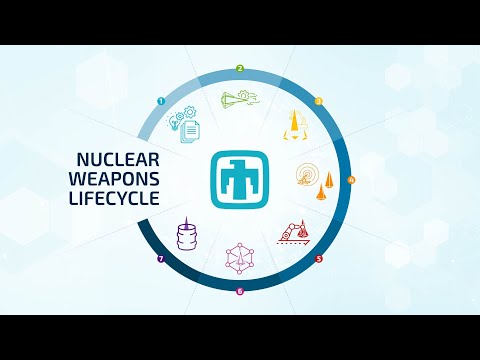
The presenter outlined the seven phases of the nuclear weapons life cycle. Phase 1, the speaker said, is research and concept work; Phase 2 is evaluation of design feasibility and resource requirements; Phase 3 covers warhead design and prototype test and evaluation; Phase 4 is production engineering to transition a developmental design into manufacturing processes; and Phase 5 is the First Production Unit milestone when the production line is established and moves to full‑rate production. Phase 6 places newly produced units into the U.S. stockpile, which the presenter described as an “important tool for nuclear deterrence.” Phase 7 covers retirement and dismantlement, with nuclear and non‑nuclear components either disposed of or stored for reuse.
The presenter emphasized durability and readiness, saying weapons are designed to survive complex and often harsh environments, may remain dormant for decades, and must be available during high alert levels. Closing the presentation, the speaker said Sandia is proud to “play a vital role in the nation’s national defense strategy by helping create an effective and sustainable nuclear deterrent both now and into the future.”
No formal actions, votes or decisions were recorded in the transcript; the event consisted of an informational presentation.