Lifetime Citizen Portal Access — AI Briefings, Alerts & Unlimited Follows
NNLM trainer shows librarians where to find free mental-health resources and toolkits
Loading...
Summary
Nick Barrett of NNLM Region 2 demonstrated federal mental-health resources (MedlinePlus, DailyMed, NLM guides, NIMH and SAMHSA) and urged libraries to use downloadable toolkits, multilingual handouts and program templates ahead of World Mental Health Day.
Nick Barrett, user experience and education strategist for the Network of the National Library of Medicine Region 2, opened a webinar by citing federal survey results and demonstrating several government-run mental-health information resources for library use.
Barrett told attendees that the 2023 National Survey on Drug Use and Health (SAMHSA) shows "nearly 1 in 4 adults in the United States or approximately 59,000,000 people have experienced some sort of mental illness in the past year," and that about 14,000,000 adults had a serious mental illness. He said libraries are often among the few public places where people can access health information without stigma, and that ready-to-use materials make it easier for staff to respond at a reference desk.
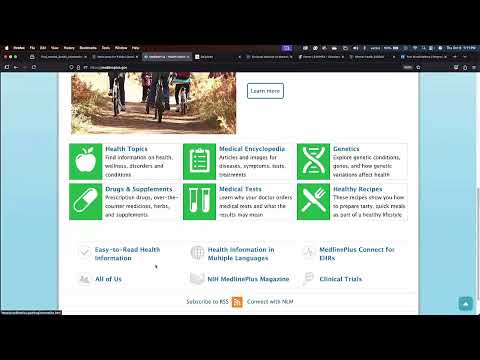
In a live demo Barrett walked through the NNLM LibGuide’s behavioral-and-mental-health tab, then focused on MedlinePlus (an NLM patient-facing resource). He showed the site’s "Start Here" guidance, the medical-encyclopedia box, and the ‘Español’ toggle that converts the site to Spanish. Barrett pointed out MedlinePlus patient handouts — printable PDFs often available side-by-side in English and another language — and noted links from topic pages to PubMed when deeper research is needed.
Barrett next demonstrated DailyMed, a joint NLM–FDA database of prescription and over-the-counter labels. "The database contains over 154,000 labels submitted to the FDA by drug manufacturing companies," he said, and he recommended staff check the label’s safety warnings — including black-box or red-box warnings — and the site’s recalls and alert features.
He also showed the National Institute of Mental Health site’s downloadable brochures (PDF and Español) and reminded attendees that while some institutes have suspended print orders, PDF downloads remain available. On SAMHSA’s site he highlighted crisis hotlines (Get Help line, disaster-stress helpline, veterans/youth lines) and the Libraries pages, which include publications, evidence-based practices and digital toolkits such as overdose-prevention and observance toolkits.
Barrett and attendees noted features useful for reference work: last-update dates on topic pages, RSS feeds or alerts for topic or drug updates, and the value of prominent hotline numbers on handouts. A participant reminded the group that NNLM is funded by the National Library of Medicine and recommended checking update dates on federally produced pages to confirm currency.
The session concluded with a reminder to complete the event evaluation to claim MLA continuing-education credit and a link to sign up for NNLM weekly training announcements.