Get Full Government Meeting Transcripts, Videos, & Alerts Forever!
Get email alerts on the Economic Development topic
No spam. Unsubscribe anytime.
Center City TIRZ board approves Herring Hotel developer agreement, 7–1
Summary
The Center City Tax Increment Reinvestment Zone No. 1 board approved a developer agreement with Herring Hotel Partners LLC to renovate the historic Herring building into a branded, upper-upscale hotel. The 10-year, 100% tax-increment reimbursement and a $900,000 façade/infrastructure grant are performance-based and contingent on at least $90 million in private investment.
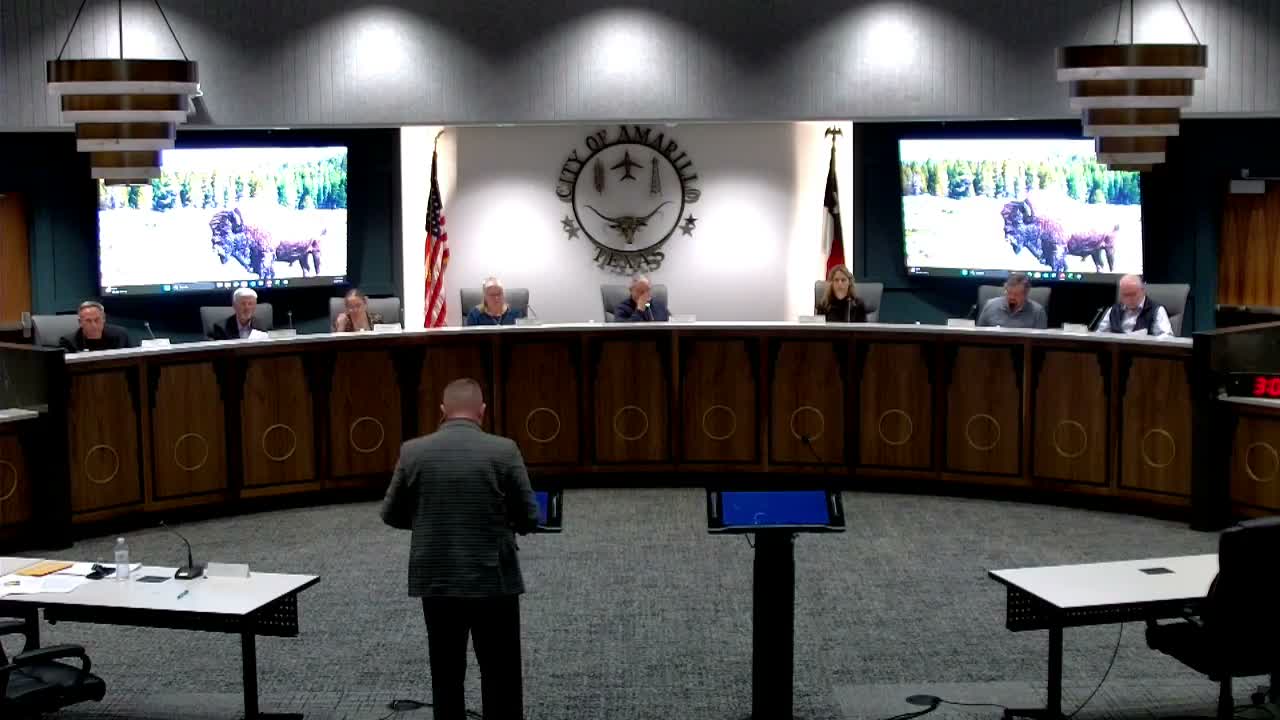
The Center City Tax Increment Reinvestment Zone No. 1 board voted 7–1 to approve a developer agreement with Herring Hotel Partners LLC to renovate the long-vacant Herring building into an upper-upscale, branded hotel.
The agreement, as described by staff, offers a 100% annual reimbursement of the ad valorem tax increment generated by the property for 10 years and a one-time grant not to exceed $900,000 for façade and infrastructure improvements. Payments are performance-based and contingent on a minimum of $90,000,000 in private capital investment, at least 200 guest rooms and completion of construction milestones; a separate $244,000 reimbursement will cover clearing a federal interest on city-owned property committed to the project.
"This is one of the shortest terms I have presented — 10 years — and everything is performance based," Drew, a tiers staff presenter, told the board, adding that rebates begin only after the hotel pays taxes each year. "If they don't hit those metrics, then they don't receive whatever incentive might have been tied to that metric."
Developer Todd Harmon said the project is structured using multiple financing sources commonly used in historic rehabilitation work, including PACE (property-assessed clean energy) financing, tax-credit equity and a modest construction loan. Harmon said developers already have commitments from a management firm (Aimbridge) and a brand (IHG Kempton) and that historic tax-credit equity and other sources leave the team roughly $4 million short of the target.
"The tax credits altogether are 45% (of QRE); after discounting, that converts to roughly 36% of the total budget as tax equity upon completion," Harmon said, describing the capital stack and prior experience with similar deals.
Architect John Campo, who described more than 40 years of adaptive-reuse projects, said the Herring's scale and location will have a catalytic effect on surrounding blocks. "These projects change the dynamics of downtown — they spur infill and additional investment," Campo said.
Public comment showed a split in the community. Supporters said the project would restore an iconic building and help downtown vibrancy. Wes Wright, an Amarillo business owner and attorney, said downtown already hosts courts, the civic center and state offices that attract visitors and that a top-tier hotel would support those uses. "I think the tiers tax opportunity is a tremendous tool," Wright said.
Opponents and questioners raised concerns about fairness and developer vetting. Tim Benson said the developer has filed for bankruptcy in the past and faces litigation and urged the board to investigate and ask how much federal and state grant money the developer seeks. "Please ask him how much federal and state grant money he's going after," Benson said during public comment.
Craig Gold, who identified himself as a local business owner, argued the incentive redistributes public resources and gives an unfair advantage to one private operator. "You are taking money from the poor and giving it to the rich," Gold said, urging consideration of other infrastructure projects in downtown that benefit a broader set of constituents.
Board members pressed staff and the developer on risk and oversight. Staff repeatedly stressed that the incentives are not upfront cash: rebates are drawn from taxes generated by the completed hotel and are paid after the hotel has paid taxes. "If the project doesn't come to fruition, we don't rebate anything," a staff member said.
Emily (board member) moved to approve the agreement; a fellow board member seconded. After brief discussion emphasizing historic preservation and economic opportunity, the motion carried by voice vote, recorded at the meeting as 7 in favor and 1 opposed.
The agreement requires the developer to satisfy performance benchmarks before receiving rebates or the $900,000 grant, and the city will not disburse any incentive funds until those conditions are met. The board also required that the developer affiliate the property with a nationally recognized upper-upscale boutique brand as part of the agreement.
The board asked staff to return with additional documentation where appropriate and noted that failure to meet the agreement's benchmarks would leave the tiers board — and taxpayers — without financial exposure.
The meeting record shows the deal is contingent on several conditions and that the city will not make any upfront payment; incentives are reimbursements tied to taxes generated by the property once it is operational.
The board's approval ends the tiers-level review; the agreement still requires any other city or council confirmations noted in the terms before final execution.