
Boston councilors and disability advocates press for clearer snow-removal plan as officials detail capacity and costs
Get AI-powered insights, summaries, and transcripts
Subscribe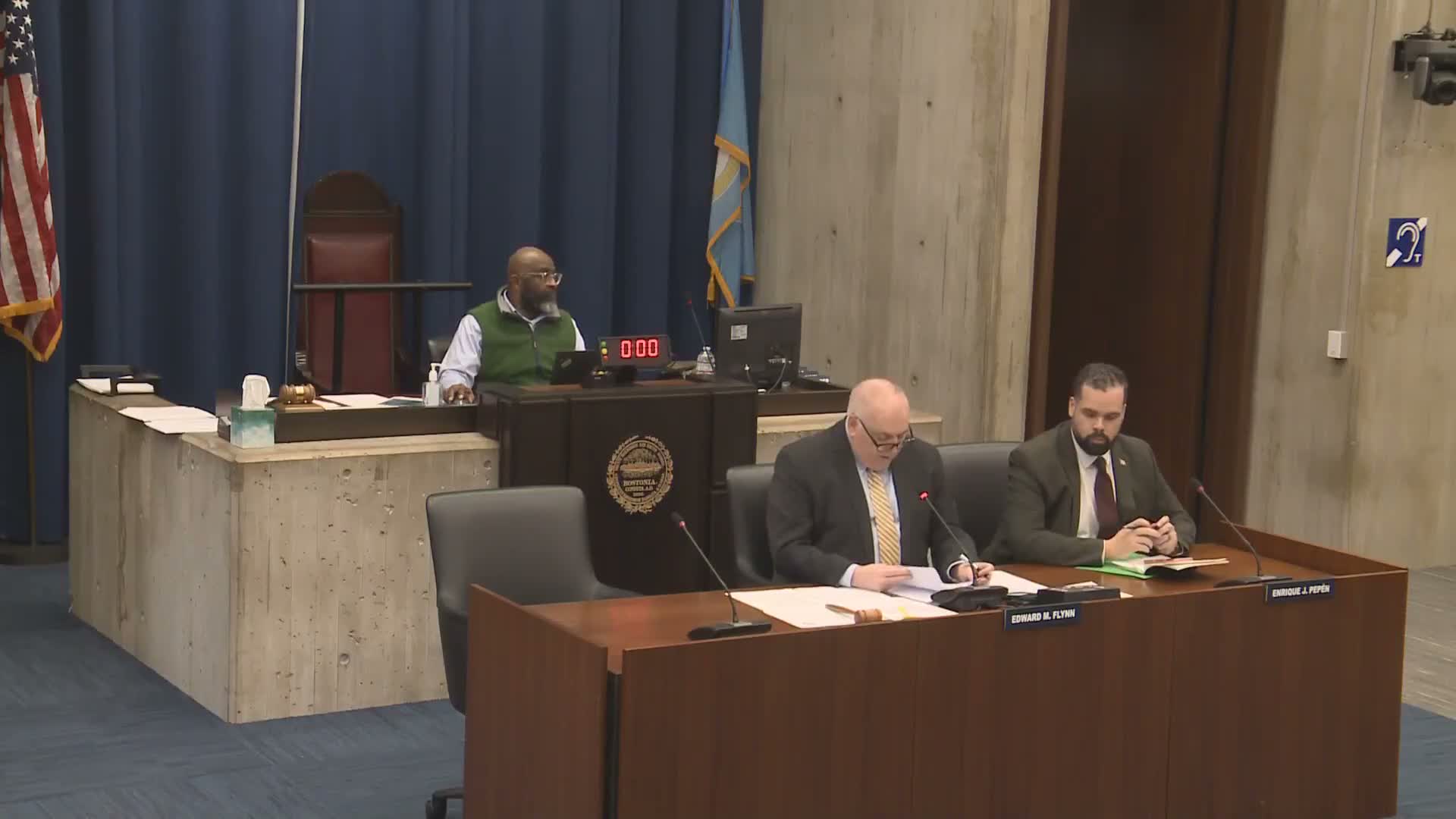
Summary
Residents and disability advocates told the City Council on March 3 that uncleared sidewalks, curb cuts and bus stops left many isolated after winter storms; the city described 61.6 inches of season snowfall, 14 peak snow farms, use of rented snow melters and the staffing limits of pilot volunteer programs.
Boston — At a March 3 hearing of the Boston City Council Committee on City Services, residents and disability advocates urged the city to adopt a clearer, prioritized snow‑removal plan after two historic storms this winter left sidewalks, curb cuts and bus stops impassable.
Chair Ed Flynn opened the hearing and read three dockets on snow‑removal relief, a proposed Snow Corps and the purchase or rental of snow melters. Councilor Enrique Pepin, sponsor of one docket, described a volunteer “Pepin’s Snow Angels” program that drew 39 volunteers and said his goal was to build on what worked rather than to criticize.
Why it matters: Witnesses said the failures were not only an inconvenience but a civil‑rights and public‑safety issue for seniors and people with disabilities. “I’ve been mostly stuck inside,” said Cassandra Xavier, a mobility advocate who demonstrated in a video how blocked curb cuts force pedestrians into traffic. “We are asking for our basic right to be respected every single time.”
The administration and advocates presented competing constraints and proposals. Interim Chief of Streets Nick Gove told councilors the city has handled an unusually heavy season — “61.6 inches of snow this winter,” he said — and listed operational figures: a storage capacity of roughly 44,000 tons of salt, about 115,000 tons deployed so far, approximately 28,000 tons left in inventory on March 3, four snow melters rented this winter and a peak of 14 snow farms to store hauled snow. Gove said hourly rental and operating costs for snow melters range from $2,500 to $4,800 an hour and that the city owns 16 trackless sidewalk machines (10 Public Works, 6 Parks).
Advocates proposed new models. Bill Taub, a legally blind advocate, urged a paid youth “Snow Brigade for Financial Literacy” that would pay 16–22‑year‑olds to clear sidewalks while teaching savings and financial skills. Community groups recommended a paid seasonal workforce like New York City’s emergency shovelers, a publicly available, data‑driven prioritization map for sidewalks, curb cuts and bus stops, and stronger enforcement of property‑owner responsibilities.
Officials flagged legal and capacity limits. Kristin McCosh, the city’s ADA/title II coordinator, said responsibility for sidewalk clearing is dispersed among private property owners, the MBTA, state and federal agencies and the city, and that previous small pilots (Snowcore/PowerCorps) were limited by staffing and verification challenges. "Creating a clear path of travel for people with disabilities requires attention to detail," McCosh said, noting the programmatic, legal and paperwork hurdles for a large‑scale assistance program.
Councilors asked for specifics: how many snow farms were used (Gove: 14 at peak), whether to buy or rent melters (Gove: expensive capital cost; city has investigated purchase but rented this season), and how to make crosswalks and curb cuts consistently accessible. Councilors also pushed for a follow‑up working session and a 30‑day review of operations and recommendations.
Multiple residents and neighborhood groups described a pattern: main roads cleared quickly, while pedestrian infrastructure was left behind. “When bike lanes are not cleared after a snowstorm, cyclists are pushed into traffic,” said Zachary Yarrow of the Boston Cyclists Union. Several witnesses urged a public prioritization framework, clearer 3‑1‑1 processes and penalties or liens for repeat noncompliant property owners.
No vote was taken. The committee committed to further working sessions on Snow Corps and winter maintenance priorities and said it would schedule a follow‑up review to track progress.
What’s next: Councilors said they will convene staff and advocates for a working session to outline implementation steps, and the committee will review outcomes in a follow‑up hearing in the coming weeks.
Quotes used in this story come directly from testimony and administration remarks during the March 3 hearing and are attributed to speakers who appear in the hearing record.