
Argyle ISD faces budget uncertainty after change to frozen-hold-harmless calculations
Get AI-powered insights, summaries, and transcripts
Subscribe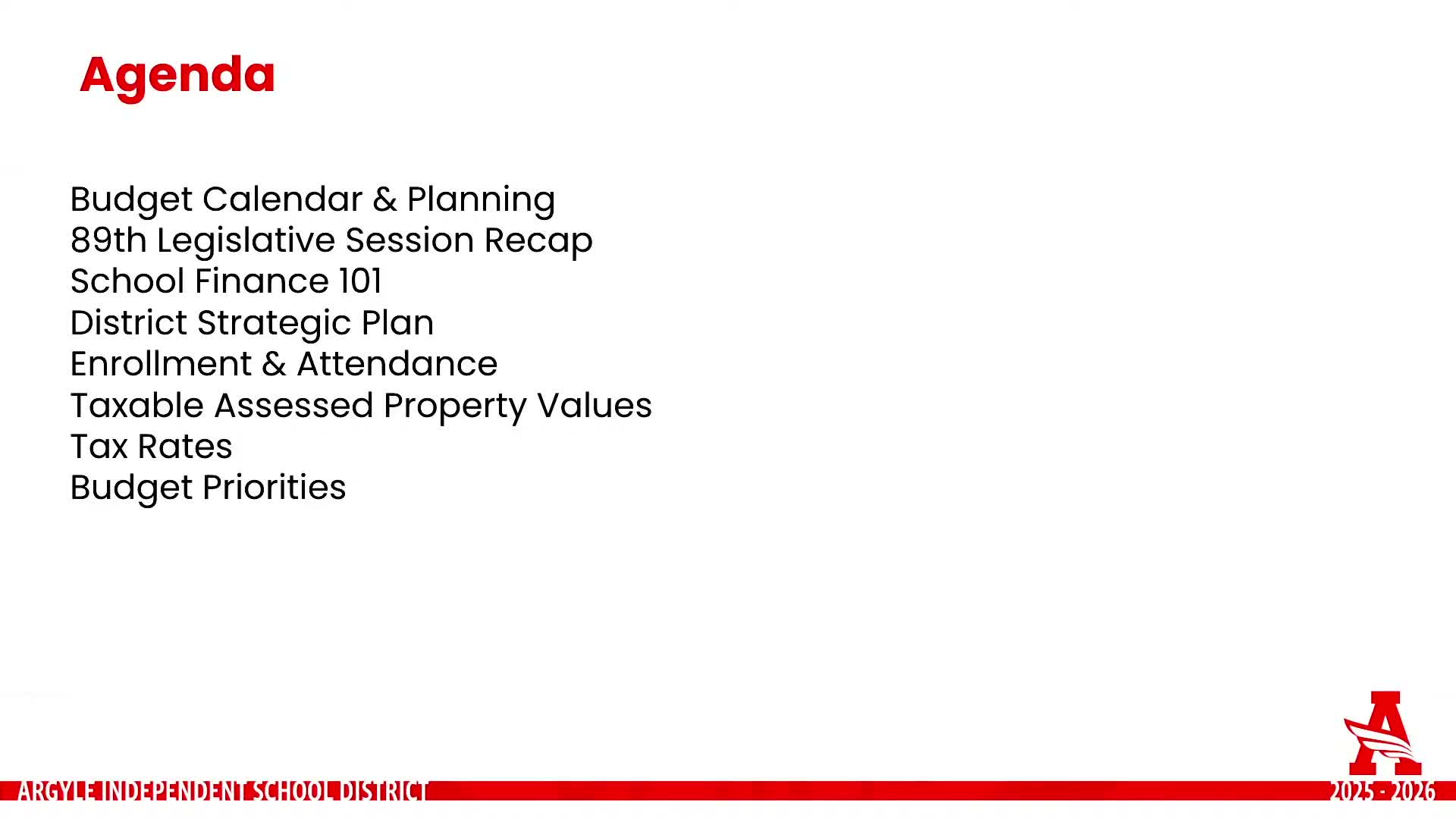
Summary
Argyle ISD officials told the board the district—annot count on a previously expected frozen "hold harmless" payment after a Comptroller methodology change reduced the district llocation to zero, complicating next year's budget and pushing administrators to plan conservatively.
Sam Slaton, president of the Argyle ISD Board of Trustees, opened a special meeting on March 2 to review the district's budget calendar and legislative changes that affect school funding.
Leon Argyle, the district presenter, told trustees that while House Bill 2 moved some money into the basic allotment, "it's not true not really an increase" for many districts because the bill reallocated existing funds rather than creating new dollars. He said other provision changes include increased early education allotments and new teacher- and support-staff retention allotments.
Argyle said the more immediate and material impact for the district is a change in the comptroller's methodology for calculating the frozen levy "hold harmless" aid: "Argyle ISD has lost it completely," he said, reporting that an expected payment of roughly $1 million for last year has been moved to $0 for the current year. He said the change was revealed when the Comptroller published preliminary PVS (property value study) data and that districts statewide were affected differently.
The district described uncertainty about special education funding as well. Argyle said the Legislature instructed TEA to move SPED funding from static weights to "tiers of intensity," with TEA expected to set those tiers and weights by September 2027. Until the tiers and weights are defined, he said, the district will budget based on current law because TEA cannot finalize those weights until settle-up.
Board members asked for clarifications on reserves and deficit scenarios. In response, the administration said the district is currently projecting a fund-balance level just above 25% (about three months), noting policy language calls for two months and some state ratings favor a roughly three-month reserve. Administrators said their revenue estimates are conservative and do not include frozen-hold-harmless aid until the district can confirm it.
Why it matters: The unexpected removal of roughly $1 million in anticipated revenue affects both this year and future-year planning, administrators said. The change could require adjustments to staffing or contingencies in future budget workshops, and the district plans to monitor the Comptroller and TEA processes and to advocate for either a methodology review or hold-harmless treatment from TEA.
Next steps: Administrators will continue budget workshops through the spring, provide detailed dollar amounts for Phase 1 and Phase 2 staffing proposals, and report further on the frozen-hold-harmless status as more information becomes available.