
Senate committee hears campaign-finance update to treat coordinated electioneering as in-kind contributions
Get AI-powered insights, summaries, and transcripts
Subscribe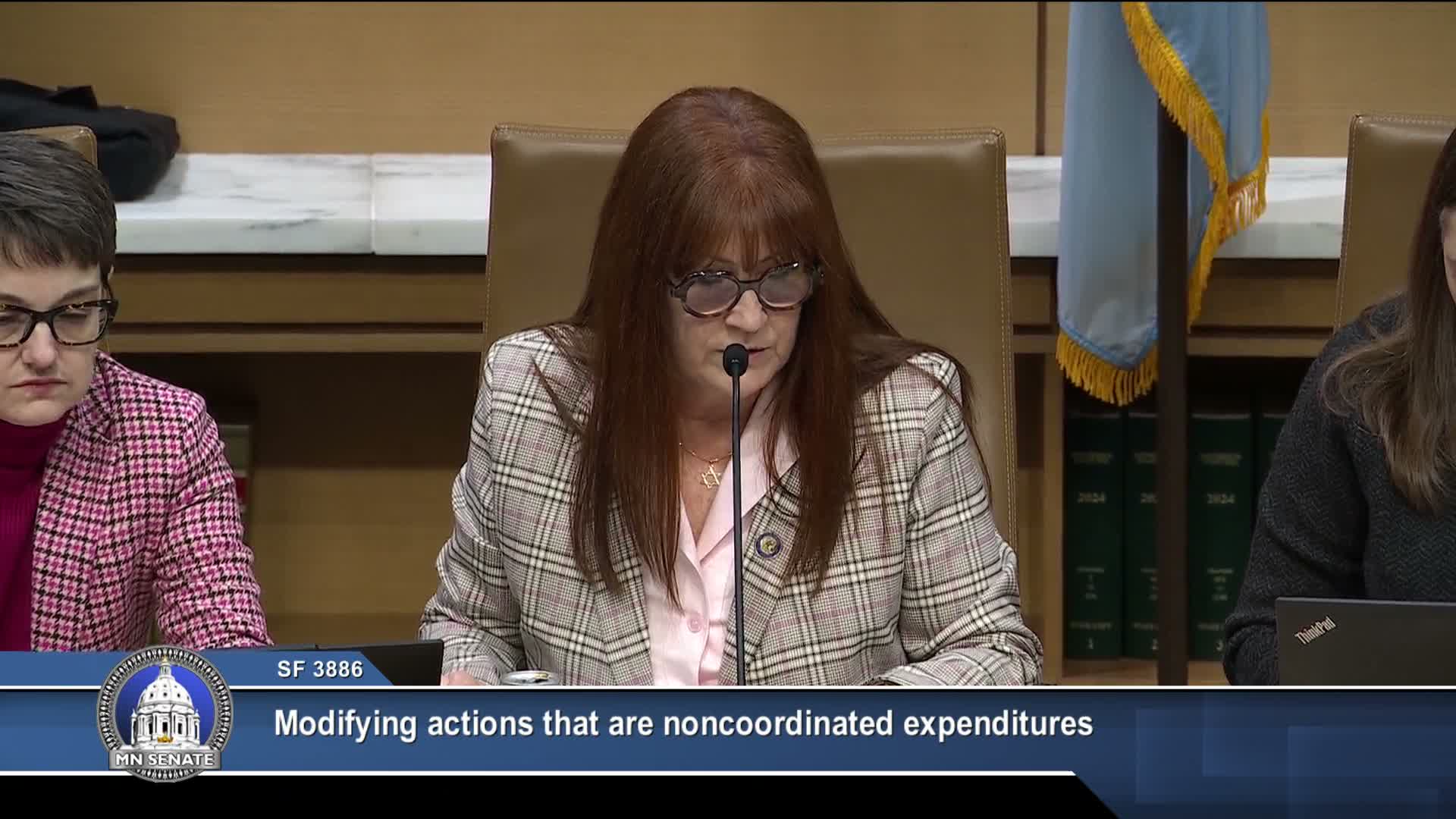
Summary
The Senate Elections Committee heard testimony in favor of SF 3886, which would treat coordinated electioneering communications as in-kind campaign contributions and add digital ad disclaimer rules; the bill was laid over for possible omnibus inclusion after committee discussion and no final vote on passage.
Senate Elections Committee acting chair opened the March 3 hearing and took up Senate File 3886, a campaign finance bill the author said updates coordination standards and modernizes disclaimer requirements.
Senator Marty presented the bill and two author's amendments (A2 to replace the bill text and A5 with technical edits). The committee adopted the A5 amendment to A2 and then adopted the amended A2 so the bill proceeded in the amended form.
Elizabeth Schimmick, senior legal counsel for the Campaign Legal Center, testified in support via Zoom. She said SF 3886 would close gaps that allow wealthy outside spenders to hide spending and would include coordinated electioneering communications as a covered form of coordinated spending so those expenditures are treated as in-kind contributions subject to contribution limits and disclosure. "Voters have a right to know who is spending big money to influence their vote," Schimmick said, urging the committee to advance the bill.
Committee members asked how the bill would treat broadcast outlets owned or controlled by political parties and whether podcasts or party-run channels would qualify for news exemptions. Schimmick and the author said bona fide news coverage by a licensed broadcasting facility or a publication of general circulation could remain exempt, but party-owned podcasts or partisan outlets would likely not qualify for that exemption.
Jeff Sigurdsson of the Campaign Finance and Public Disclosure Board described the investigative framework the board uses to identify coordination: statutes list indicia that constitute evidence of coordination, the board looks for direct communications and corroborating facts, and the board has administrative subpoena power to obtain emails, vendor records and other evidence when needed.
The bill also updates on-ad disclaimer rules to require disclaimers for digital political advertisements—on websites, social media and streaming—unless technically infeasible. Schimmick said the change would ensure voters have immediate access to who is behind online political ads.
After questions about enforcement discretion and whether old printed materials would be subject to complaints, the committee laid SF 3886 over for possible inclusion in an omnibus bill; no final action on passage occurred at the hearing.
The committee will take up the bill again in its omnibus process; staff and the campaign finance board will likely be sources for follow-up details on enforcement and implementation.