
UN spokesperson warns of regional escalation, urges restraint as humanitarian needs mount
Get AI-powered insights, summaries, and transcripts
Subscribe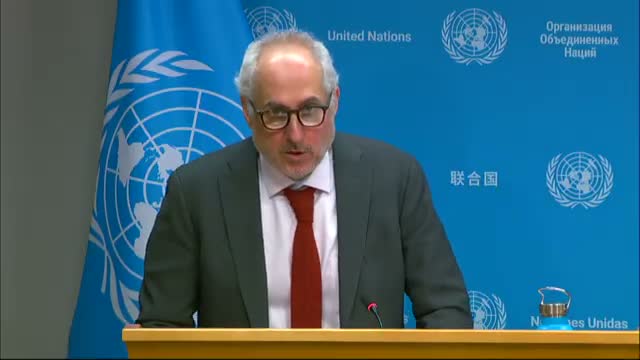
Summary
A UN staff member warned of escalating hostilities across the Middle East, detailed civilian casualties and displacement in Lebanon, Gaza and Iran, and said humanitarian operations are constrained by insecurity and funding shortfalls.
Steph, a UN staff member, warned Wednesday that the secretary‑general is closely following escalating hostilities across the Middle East and appealed to parties to exercise restraint.
"We call on both sides to exercise restraint and recommit to the full implementation of the cessation of hostilities arrangements of November 2024 as well as Security Council resolution 1701," Steph said, citing reports from UN peacekeepers and partners.
The briefing outlined a string of humanitarian impacts. Steph said airstrikes in Lebanon reportedly caused more than 50 deaths and over 150 injuries, and that Israeli authorities issued forced‑displacement orders affecting more than 100 towns; nearly 60,000 people were reported in newly opened emergency shelters or on the move. In Gaza, the UN Office for the Coordination of Humanitarian Affairs reopened the Kerem Shalom/Abu Salim crossing for delivery of fuel and assistance, while Steph said roughly 300,000 liters of fuel per day are required to sustain critical humanitarian operations.
Steph said the Rafah and Zikim crossings remained closed and international staff rotations were suspended, constraining aid delivery. "Falling missiles and drone debris, restricted airspace, and active hostilities continue to cause civilian casualties, damage infrastructure, and disrupt essential services," Steph said.
The briefing also reported sustained strikes in Iran that local authorities and the Iranian Red Crescent Society said affected more than 1,000 locations and caused hundreds of deaths and injuries; Steph described ongoing strikes in Israel that reportedly killed and injured civilians and damaged infrastructure.
Beyond the Middle East, Steph outlined acute needs elsewhere: fighting along the Afghanistan–Pakistan border has displaced nearly 66,000 people and damaged health facilities, and the World Food Programme has suspended assistance affecting some 160,000 people. Steph said the 2026 humanitarian response plan for Afghanistan was about 11% funded (approximately $181 million of about $1.7 billion requested), and that the 2026 Sudan response plan was roughly 14% funded, constraining assistance.
On accountability and investigations, Steph said the UN has documented that a school was hit and children died but has received differing narratives from parties; formal investigations will be required to determine responsibility. She reiterated that international humanitarian law requires protection of civilians and aid workers.
The briefing closed with administrative notes including a memorial ceremony in the ECOSOC chamber for the late UN official Rafidin (Rafi) Ahmed and an upcoming briefing by Sarah Hendricks of UN Women on access to justice for women and girls.