Get AI Briefings, Transcripts & Alerts on Local & National Government Meetings — Forever.
Lawmakers hear testimony urging owner-registration and tougher penalties to hold absentee landlords accountable
Summary
Witnesses, including a task‑force member and officials from Rocky Hill, urged the Planning & Development Committee to pass SB 274 (and related SB 272) to require owner registration and increase penalties so municipalities can reach owners hidden behind LLCs and act more quickly on repeated building and fire‑code violations.
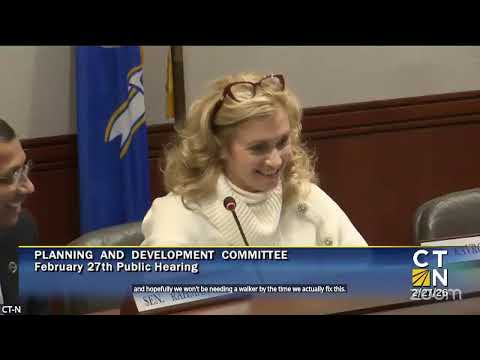
State legislators and municipal officials told the Planning and Development Committee on Feb. 27 that Connecticut needs new tools to hold absentee and corporate landlords accountable for repeated housing code failures.
"This is not a partisan issue," said State Representative Nick Menapace, summarizing a bipartisan task force that recommended a statewide registry and tougher penalties. Menapace told the committee that municipalities often cannot identify who controls a property because ownership is hidden behind layers of limited liability companies, and that a registry would give towns a point of contact "when there is a serious issue with a property."
Rocky Hill Mayor Alan Smith described a local crisis at a 544‑unit development that displaced hundreds of residents and left families living with recurring failures of utilities and life‑safety systems. "Accountability should not begin when something becomes a headline," Smith said, urging lawmakers to pass both SB 272, to allow earlier municipal intervention in repeat‑failure cases, and SB 274, to ensure ownership disclosure and stiffer penalties.
Committee members pressed witnesses on enforcement and remedies. Several legislators asked whether higher flat fines would be effective against large corporate owners; Smith and others recommended scaling penalties to property size or tax value so that fines would be meaningful to owners with large portfolios. "One thousand dollars isn't a big deal for somebody that has $15,000,000,000 in property," Smith said.
Fire Marshal Walter Summers and housing advocates echoed the need for better contact information and stronger enforcement. Summers said delayed identification of controlling parties often requires intensive work by prosecutors and state offices to locate decision‑makers. Eli Sabin of Connecticut Voices for Children linked housing code failures to child welfare, saying unsafe, moldy, or otherwise substandard housing harms children’s health and development.
The witnesses asked the committee to preserve privacy protections for any collected owner data while ensuring it is available to prosecutors and municipal officials for enforcement. No formal vote occurred at the hearing; committee discussion and possible amendments were left for committee consideration.
What happens next: The committee may refer the enforcement and penalty provisions for technical review and work with the chief state's attorney's office on language to ensure the bill strengthens enforcement without creating unintended procedural problems.