Get Full Government Meeting Transcripts, Videos, & Alerts Forever!
Get email alerts on the Public Health topic
No spam. Unsubscribe anytime.
Bellevue schools emphasize harm reduction as district places Narcan boxes, adopts "1 Pill Can Kill" curriculum
Summary
At an Education Connections event, Bellevue School District and partners described Narcan placement in every district building, adoption of the "1 Pill Can Kill" curriculum, and a student survey showing 3% of surveyed tenth-graders reported trying fentanyl.
Bellevue School District officials and community partners outlined steps this week to reduce youth overdoses, saying the district has placed naloxone (Narcan) boxes in every school building and is adopting the "1 Pill Can Kill" curriculum while promoting harm-reduction tools and parent guidance.
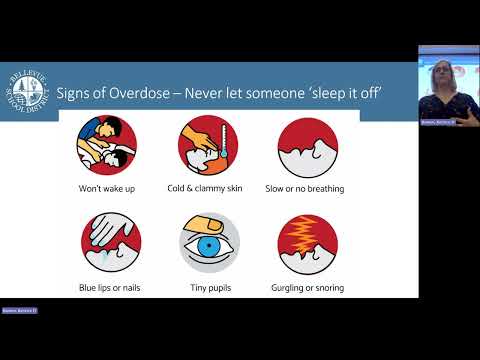
Carla Rimmer, Bellevue School District health services coordinator, told attendees the district installed Narcan boxes "in every 1 of our school buildings last school year" with help from a grant by the Bellevue Schools Foundation and that staff regularly check boxes to ensure they are stocked. Rimmer described fentanyl as a potent synthetic opioid and warned, "It only takes a little bit of fentanyl to be deadly." She also reviewed local safe-disposal options, including King County Medicine Return mailback and Family Safe Medication Return drop boxes, and urged families to keep prescription medications locked and tracked.
Billie Allen, opioid and overdose outreach coordinator with Bellevue Fire Cares, said fentanyl increasingly appears in counterfeit prescription pills and in powdered form and is often mixed into other drugs without users knowing. "Fentanyl is a synthetic opioid that is up to 50 times stronger than heroin and a 100 times stronger than morphine," Allen said, adding that peer sharing and social media are common ways students encounter drugs.
Wendell Hill, the district's PE and health curriculum developer, described how the district teaches substance topics by grade: elementary students learn about tobacco, alcohol and medicine safety with refusal skills; middle-school classes cover teenage addiction and brain development; and high-school lessons include genetics, treatment and legal issues. Hill said the Bellevue School District is "starting to adopt the '1 Pill Can Kill' curriculum" this year and that materials and parent handouts are available in English and Spanish.
Jennifer Klee, a drug counselor with Youth Eastside Services (YES), said a recent in-class survey of 247 anonymous tenth-grade students across two Bellevue School District high schools found 45% had been offered a substance and 3% had tried fentanyl. "Any amount of fentanyl being used by any 1 of our students is too much for our community," Klee said, and she encouraged parents to open nonjudgmental conversations and to take advantage of YES resources, including a free monthly Zoom class for parents and school-based counseling.
Presenters emphasized harm-reduction tools available to families and schools: fentanyl test strips (which can detect the presence of fentanyl but not potency), naloxone (Narcan) for immediate reversal of opioid overdose, and community disposal programs. Rimmer also noted Washington's Good Samaritan law, passed in 2010, which provides legal protections for people who call 911 during an overdose.
Organizers said the presentation aimed to give parents and caregivers practical steps to reduce risk and to encourage open, trauma-informed conversations so students will seek help without fear of punishment. The event closed with an invitation for attendees to ask questions during a Q&A session.