
Clarksburg Branch Line trail update draws supporters and landowner opposition over farm impacts
Get AI-powered insights, summaries, and transcripts
Subscribe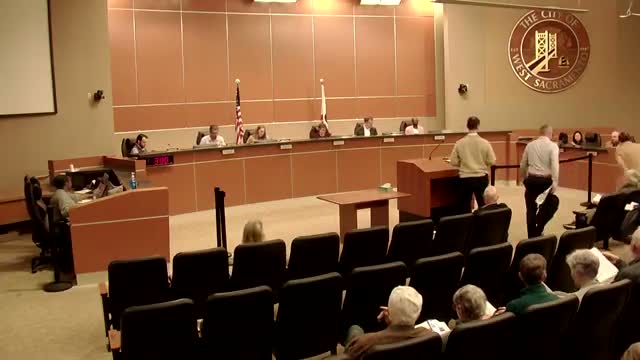
Summary
City project leads reported progress on a rail‑banked Clarksburg Branch Line trail and target shovel‑ready plans in 2027; adjacent landowners objected, saying the alignment would bisect farms and raise liability questions, while advocates and Rails‑to‑Trails cited economic and safety benefits.
City staff and consultants presented a progress report on the Clarksburg Branch Line Trail extension—an effort to design a Class I active‑use trail connecting West Sacramento to Clarksburg—while members of the public offered sharply divided views on whether the alignment can coexist with farming operations.
Steve Rosen, who presented the project on behalf of the city team, said West Sacramento purchased the right‑of‑way under federal rail‑banking provisions and is advancing design to make a city‑owned corridor shovel‑ready. Rosen described the corridor’s century‑old rail history, said the project avoids prime soils by staying in public right‑of‑way, and outlined benefits including a continuous, ADA‑compliant multi‑use path, potential broadband conduit installation and reduced exposure of vulnerable road users on narrow rural roads.
Rosen provided conservative estimates for travel‑mode and greenhouse‑gas impacts and said the design team identified about 4.35 miles of Class I trail along the rail corridor and roughly 2.05 miles in county road right‑of‑way. He said the city is completing environmental studies and boundary/topographic surveys, aims for shovel‑ready plans in 2027 and will seek construction funding afterward.
Pat Markham, an attorney speaking for adjacent landowners, described a different view: he said his clients own much of the land on either side of the corridor and that the proposal would bisect active farmland, expose farm workers and trail users to spray applications, and raise potential liability and conservation‑easement complications. Markham said an alternative alignment was approved in some plans and urged the city to meet with landowners to seek workable solutions rather than litigate.
City staff responded that the city holds the corridor in fee and that boundary and easement surveys are underway; staff said surveys should clarify property boundaries and deeded crossing rights within three to four weeks and that the city has invited further negotiations with landowners. Staff also said relinquishing the rail‑banked corridor could cause rights to revert to the railroad, potentially forcing the city to buy agricultural land for an alternative route.
Supporters at the meeting included bicycle advocates and the Rails‑to‑Trails Conservancy, which urged that many U.S. rail‑trail conversions successfully run through farmland with management programs that address spraying and access. “There are many examples nationwide of trails that go right through farmland. They have coexisted quite well,” Jesse Vorenberg of Rails‑to‑Trails said.
Commissioners asked about potential remedies, environmental review and timing. Staff said they are preparing targeted environmental documentation and that whether a full EIR is required could depend on whether adjacent landowners pursue litigation; staff estimated total project construction on the order of roughly $28–30 million and said they have sought about $12 million for critical in‑city segments and bridge work. No final alignment or permits were adopted at the meeting; city staff emphasized they will continue outreach, complete surveys and meet with landowners to explore mitigations and operational agreements.